
Eating Well Abroad Without Defaulting to Tourist-Priced Restaurants
Street food, markets, and local eateries often offer better food at a fraction of the cost. Here's how to find and navigate them confidently.
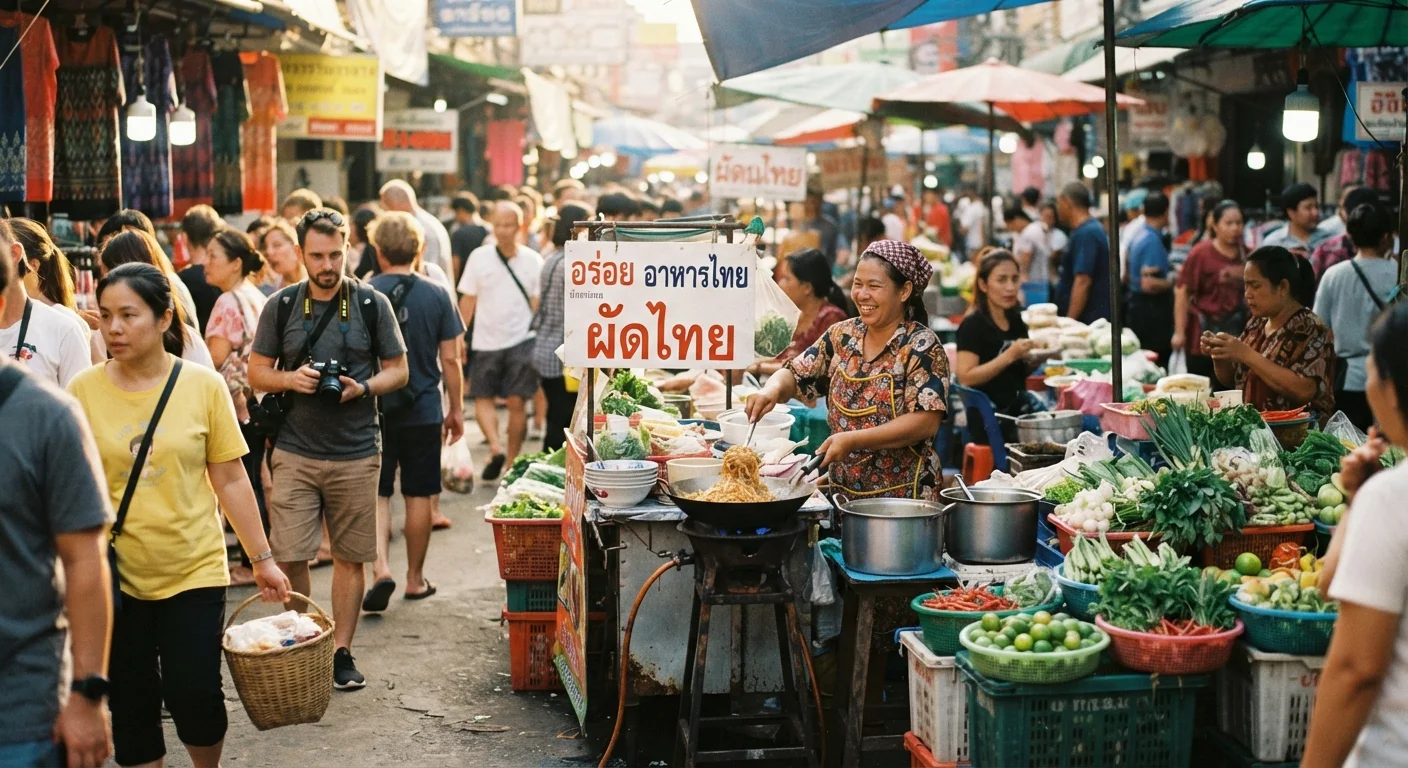
Photo: SummarizedReads.net | Just Read It! editorial
—— In This Article
Key Takeaways
- Eating where locals eat — markets, canteens, and street stalls — typically costs far less than tourist-facing restaurants.
- Researching a destination's food culture before arrival helps you identify safe, quality options faster.
- Midday is often the best time to eat a larger meal, when lunch specials and set menus offer the most value.
- Food safety abroad is manageable with a few consistent habits — high turnover and visible cooking are good signs.
- Simple language tools like translation apps can remove the intimidation barrier of ordering from non-English menus.
Why Tourist-Facing Restaurants Cost More
Restaurants clustered near major attractions are priced to capture one-time visitors, not repeat locals. The markup covers prime real estate, multilingual menus, and the assumption that guests won't return. For budget-conscious travelers, this model is worth stepping away from — not because quality is always worse, but because you're paying for convenience and location rather than food.
As part of any honest trip budget, food often gets underestimated. If you're building a full spending plan, the realistic travel budgeting guide breaks down where these hidden costs tend to accumulate.
“The best travel food experiences almost never happen in the restaurants that are easy to find. They happen in the places you have to look for.”
— Anthony Bourdain, Author and food journalist
How to Find Local Eating Options Before and During Your Trip
Preparation removes most of the friction. Before you leave, look up what a destination's everyday food scene actually looks like — not just its famous dishes, but where residents eat them. Search for local terms like comedor (Latin America), kopitiam (Southeast Asia), or trattoria (Italy) to get past the tourist restaurant layer in search results.
On arrival, walking a few blocks away from the main square or waterfront almost always reveals a different price tier. Morning food markets, covered municipal markets, and neighborhoods where office workers eat lunch are consistently reliable starting points. Translation apps on your phone — used offline if you're watching data costs — make navigating non-English menus far less intimidating.
Ask Your Accommodation Staff — Specifically
Rather than asking "where should I eat?", ask the front desk or host where they eat lunch on a workday. This produces far more useful answers. Staff are often glad to point out a nearby spot that doesn't show up in travel guides.
Best Practices for Eating Well and Affordably
These practices apply across most destinations and don't require specialized knowledge — just consistency.
Eat your largest meal at lunch, not dinner.
Many restaurants — particularly in Europe and Latin America — offer a set lunch menu (often called prix fixe, menu del día, or similar) that includes multiple courses at a significantly lower price than the same items ordered à la carte at dinner. These menus cater to working locals, not tourists.
Use covered municipal markets as your primary food source.
City markets — often housed in permanent buildings — typically contain prepared food stalls alongside fresh produce vendors. Prices are set for local residents, portions tend to be generous, and the cooking is often regional and traditional rather than adapted for outside tastes.
Apply basic food safety observation rather than avoiding street food entirely.
High turnover is one of the strongest indicators of food freshness — a busy stall replenishes its supply constantly. Visible, high-heat cooking (grilling, frying, boiling) in front of you reduces risk significantly. Avoiding pre-cut fruit left in the sun or cold dishes sitting uncovered is generally more useful than avoiding street food altogether.
Learn five to ten food-related phrases in the local language.
Vendors and small restaurant owners who don't regularly serve tourists are less likely to have English-language menus or staff. A few key phrases — asking for a recommendation, noting an allergy, or asking the price — open access to places most tourists walk past.
Shop in supermarkets and convenience stores for breakfasts and snacks.
You don't need to eat every meal out. Buying breakfast items, fruit, and snacks from a local supermarket or convenience store preserves budget for a quality lunch or dinner. This also gives you exposure to what locals actually eat and drink.
For a fuller framework on managing food costs alongside transport and accommodation, see the budget travel planning guide.
Quick Wins You Can Act On Today
If you're traveling soon or mid-trip, these actions take minutes and pay off immediately.
Before confirming your accommodation, it's also worth checking the pre-trip checklist to make sure you haven't overlooked any costs that could squeeze your food budget later.

Travel Editorial Team
Travel Editorial Team is the collective byline for our editorial team and contributor network. Articles published under this byline or an editorial pen name are researched, written, and reviewed according to our editorial standards for clarity, consistency, and independence before publication.
View author profile