
Packing Light Without Sacrificing Comfort or Preparedness
Explore the principles behind minimalist packing that still keeps you comfortable and ready for weather changes, delays, and everyday surprises.
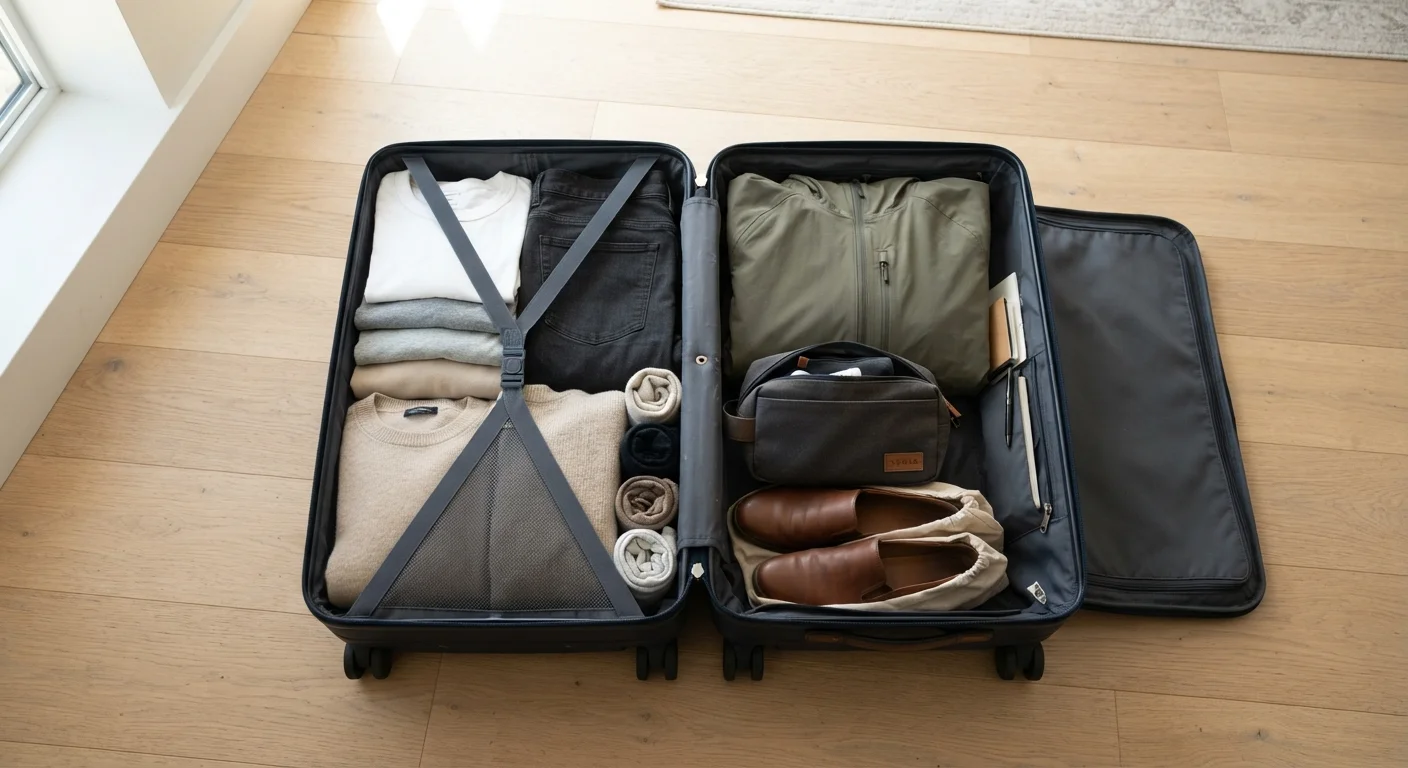
Photo: SummarizedReads.net | Just Read It! editorial
—— In This Article
Key Takeaways
- Choosing versatile, layerable clothing covers more scenarios with fewer items.
- A consistent packing checklist prevents both overpacking and forgetting critical items.
- Carry-on-only travel reduces luggage fees and eliminates checked-bag delays.
- Toiletries and tech accessories are the most common sources of unnecessary weight.
- Planning for one weather surprise or travel disruption keeps you prepared without bulk.
Why Overpacking Hurts More Than It Helps
Most travelers overpack out of anxiety — the "what if" thinking that loads a bag with options for scenarios that rarely materialize. The result is a heavy bag that slows you down, costs more at check-in, and makes navigating airports or transit far more exhausting than it needs to be.
Packing light isn't about deprivation. It's about choosing deliberately so every item earns its place. Travelers who carry less often report feeling more mobile, less stressed, and better prepared — because a manageable bag is one you actually control. For a full comparison of luggage strategies, see our carry-on vs. checked luggage breakdown.
“The more constraints one imposes, the more one frees oneself. And the arbitrariness of the constraint serves only to obtain precision of execution.”
— Igor Stravinsky, Composer, widely cited on the creative value of working within limits
Core Practices for Packing Light Without Gaps
The following practices are grounded in what frequent travelers consistently find effective across different trip types — from weekend drives to two-week international trips.
Build your wardrobe around a neutral color palette with pieces that mix and match freely.
Neutral tones — grays, navy, black, tan — combine easily, so five clothing items can generate far more outfit combinations than five mismatched pieces. This strategy directly reduces the item count without reducing your options. It also makes repacking faster and cleaner throughout a trip.
Use the layering principle instead of packing for specific weather forecasts.
Weather forecasts become less reliable beyond three days, and conditions vary significantly within a single destination. Layers — a base, a mid-layer, and a wind or rain shell — handle a wide temperature range in far less space than bulkier single-purpose garments. This approach also adapts to indoor-outdoor temperature swings common in airports and hotels.
Consolidate toiletries to only what you'll actually use daily, in travel-sized quantities.
Toiletries are one of the heaviest, most overpacked categories in most travelers' bags. Full-size bottles are rarely necessary for trips under ten days, and many accommodations provide basics. Solid formulations — shampoo bars, solid moisturizers — eliminate liquid-volume restrictions and reduce weight further.
Audit your tech and chargers before every trip and remove anything you won't reach for daily.
Cables, adapters, and backup devices accumulate quickly and add significant weight. Most travelers carry redundant tech — two cameras, multiple cables for the same port type, or devices they plan to use but rarely do. One honest audit before packing typically cuts this category by a third.
Set a firm weight or volume limit before you start packing, not after.
Most overpacking happens incrementally — each item seems reasonable in isolation. Committing to a specific limit (such as a carry-on bag under 22 pounds) before you begin forces trade-off decisions upfront, where they're easier to make objectively. This constraint is the single most reliable check against "just in case" additions.
Quick Actions You Can Take Before Your Next Trip
If you're short on time or packing for the first time with a lighter approach, these actions cut straight to the highest-impact changes.
For a broader pre-departure review, the pre-trip safety and comfort checklist walks through documents, health prep, and packing essentials in one place.
Staying Prepared for Weather and Disruptions
Packing light doesn't mean ignoring real risks. Weather shifts, delayed flights, and lost items happen. The key is building in a thin layer of resilience without padding your bag.
Plan for One Disruption, Not Every Possibility
Trying to pack for every potential problem leads to a bag that creates its own problems. A practical approach is to prepare for one realistic disruption — a one-day weather shift, a single overnight delay, or a lost toiletry bag. That framing keeps your contingency items lean and purposeful rather than sprawling. Airline policies on delayed or lost luggage vary, so it's worth reviewing your carrier's terms and any travel insurance coverage you carry before departure.
Keep one complete change of clothing and any critical medications in your personal item or personal carry-on, never in checked luggage. If your bag is delayed, this buffer handles the first 24 hours comfortably. Pair this mindset with solid trip planning — our pre-trip confirmation checklist covers what to verify before you leave home so disruptions don't catch you flat-footed.
This article provides general travel guidance only. Conditions, airline policies, and local requirements vary — always verify current rules with your airline and relevant official sources before traveling.

Travel Editorial Team
Travel Editorial Team is the collective byline for our editorial team and contributor network. Articles published under this byline or an editorial pen name are researched, written, and reviewed according to our editorial standards for clarity, consistency, and independence before publication.
View author profile