
Solo Travel vs. Group Travel: Honest Trade-Offs to Consider Before You Book
From cost-sharing to decision fatigue, compare the real advantages and drawbacks of travelling alone versus with others.
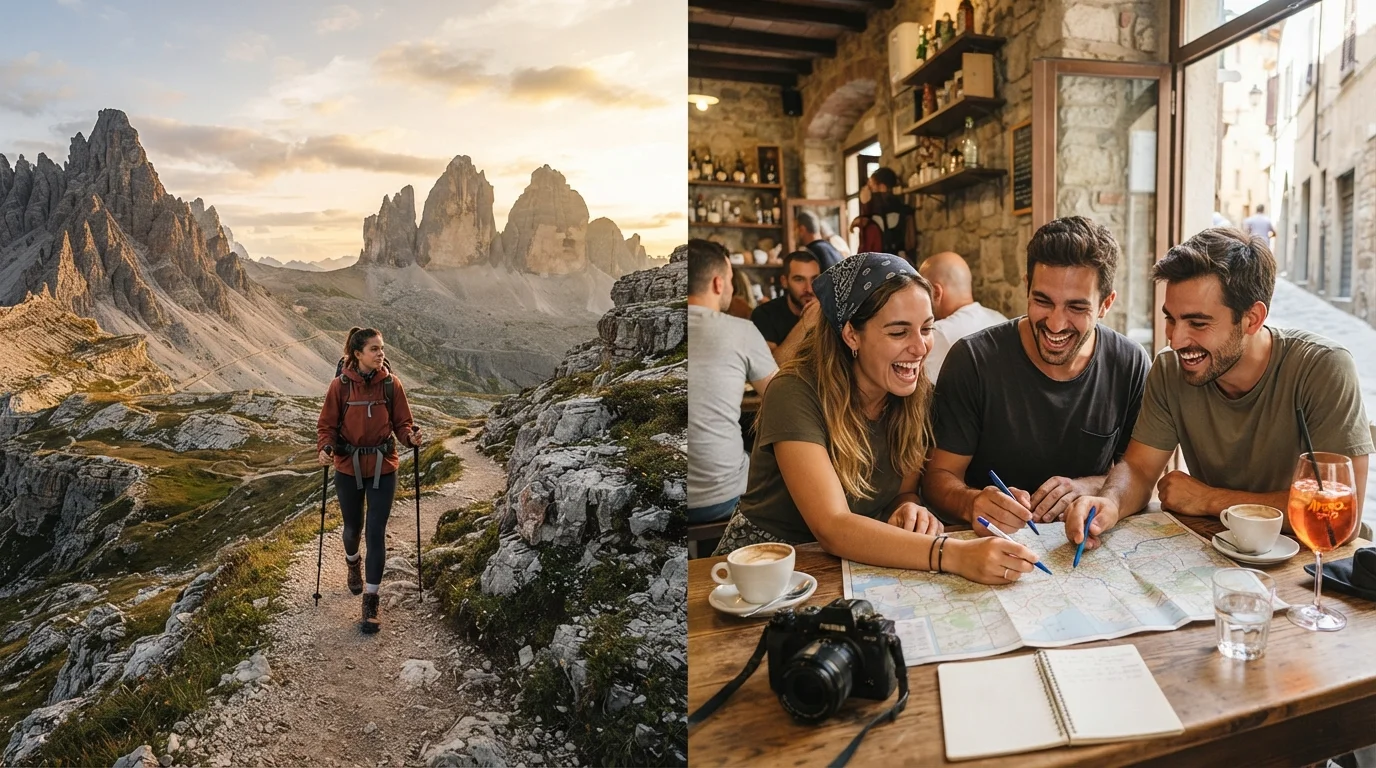
Photo: SummarizedReads.net | Just Read It! editorial
—— In This Article
Key Takeaways
- Solo travel offers maximum flexibility but typically costs more per person for accommodation and transport.
- Group travel reduces per-person costs but introduces coordination challenges and compromised itineraries.
- Decision fatigue affects both styles differently — solo travelers face all choices alone, groups face conflict.
- Safety dynamics shift meaningfully depending on your destination and whether you're traveling alone or with others.
- Your travel personality and trip goals matter as much as budget when choosing between these two approaches.
Full itinerary control without group compromise
Solo travelers set their own pace, change plans without negotiation, and prioritize whatever genuinely interests them — a significant advantage for travelers with niche interests or unpredictable energy levels.
Stronger incentive to connect with locals and other travelers
Without a built-in social group, solo travelers are more likely to strike up conversations, join group tours, or linger in communal spaces — often leading to richer, more spontaneous interactions.
Simpler logistics for bookings and scheduling
Finding a single bed in a hostel dorm or a last-minute seat on a tour is considerably easier than coordinating accommodation and availability for a group of five.
Cost-sharing reduces per-person accommodation expenses
Vacation rentals, private transport, and multi-night bookings become substantially more affordable when split among multiple travelers, sometimes making options accessible that would otherwise be out of reach.
Built-in support during travel disruptions
Missed connections, language barriers, and navigating unfamiliar systems are less stressful when at least one other person is alongside you to problem-solve in real time.
Single-occupancy premiums raise per-person costs significantly
Hotels, cruises, and tour packages typically charge single-supplement fees that can add 25–50% to the per-night cost, making solo travel noticeably more expensive for accommodation-heavy trips.
All situational awareness falls on one person
Solo travelers must stay alert to their environment, manage their belongings, and make judgment calls independently — a workload that can contribute to mental fatigue, particularly in busy or unfamiliar destinations.
Group coordination creates friction and potential conflict
Mismatched budgets, different energy levels, and competing priorities are common sources of tension; without upfront conversations about expectations, group dynamics can derail an otherwise well-planned trip.
Itinerary compromise may leave individuals dissatisfied
When group decisions are made by majority or dominated by one vocal planner, some travelers end up visiting places they have no interest in and missing experiences they'd genuinely value.
Solo travel can feel isolating on extended trips
Several days without a familiar face can be emotionally draining for travelers who aren't strongly self-sufficient, especially during downtimes like long transit legs or quiet evenings.
The Core Trade-Off at a Glance
Choosing between solo and group travel isn't just a personality question — it has real implications for your budget, itinerary, and day-to-day experience on the road. Both formats have genuine advantages and genuine friction points, and the right choice depends heavily on where you're going, what you want to get out of the trip, and who you'd be traveling with.
Before committing to either format, it's worth mapping out the specific trade-offs rather than defaulting to whichever style feels most familiar. For a deeper look at how planning structures interact with travel style, see our breakdown of fixed vs. flexible itineraries.
Full itinerary control without group compromise
Solo travelers set their own pace, change plans without negotiation, and prioritize whatever genuinely interests them — a significant advantage for travelers with niche interests or unpredictable energy levels.
Stronger incentive to connect with locals and other travelers
Without a built-in social group, solo travelers are more likely to strike up conversations, join group tours, or linger in communal spaces — often leading to richer, more spontaneous interactions.
Simpler logistics for bookings and scheduling
Finding a single bed in a hostel dorm or a last-minute seat on a tour is considerably easier than coordinating accommodation and availability for a group of five.
Cost-sharing reduces per-person accommodation expenses
Vacation rentals, private transport, and multi-night bookings become substantially more affordable when split among multiple travelers, sometimes making options accessible that would otherwise be out of reach.
Built-in support during travel disruptions
Missed connections, language barriers, and navigating unfamiliar systems are less stressful when at least one other person is alongside you to problem-solve in real time.
Where Group Travel Has a Real Edge
Traveling with others creates economies of scale that solo travelers simply can't replicate. Vacation rentals, airport transfers, and multi-day tours all become cheaper on a per-person basis when costs are divided. A four-bedroom house that would be prohibitive for one person becomes reasonable split four ways.
There's also a built-in support structure: navigating an unfamiliar transit system, handling a language barrier, or managing a travel disruption is less stressful when someone else is alongside you. Group travel economics break down exactly when cost-sharing helps and when it creates friction.
Single-occupancy premiums raise per-person costs significantly
Hotels, cruises, and tour packages typically charge single-supplement fees that can add 25–50% to the per-night cost, making solo travel noticeably more expensive for accommodation-heavy trips.
All situational awareness falls on one person
Solo travelers must stay alert to their environment, manage their belongings, and make judgment calls independently — a workload that can contribute to mental fatigue, particularly in busy or unfamiliar destinations.
Group coordination creates friction and potential conflict
Mismatched budgets, different energy levels, and competing priorities are common sources of tension; without upfront conversations about expectations, group dynamics can derail an otherwise well-planned trip.
Itinerary compromise may leave individuals dissatisfied
When group decisions are made by majority or dominated by one vocal planner, some travelers end up visiting places they have no interest in and missing experiences they'd genuinely value.
Solo travel can feel isolating on extended trips
Several days without a familiar face can be emotionally draining for travelers who aren't strongly self-sufficient, especially during downtimes like long transit legs or quiet evenings.
Where Solo Travel Pulls Ahead
Solo travel's defining advantage is full autonomy. Your itinerary bends to your energy, interests, and budget — not a group vote. If you want to spend three hours at a single museum exhibit or skip a tourist site entirely, you can. That flexibility can make a trip significantly more satisfying for self-directed travelers.
Solo travelers also tend to engage more with their destination. Without a built-in social buffer, many find it easier to connect with locals, fellow travelers at hostels, or people on guided day tours. For accommodation options that particularly suit solo travelers, compare hostels, guesthouses, and vacation rentals to find what fits your style and budget.
~25–50%
Typical single-supplement surcharge on shared rooms
Industry-standard hotel and tour pricing commonly applies a single-supplement fee in this range when solo travelers occupy rooms priced for double occupancy.
4-in-5
Solo travelers who report increased self-confidence
A recurring finding in travel behavior surveys is that the large majority of solo travelers cite increased self-reliance and confidence as a key outcome of independent travel.
Safety and Comfort: Honest Considerations
Safety dynamics differ meaningfully between the two formats. Group travelers benefit from collective awareness — someone is more likely to notice if something feels off, and there's strength in numbers in ambiguous situations. Solo travelers carry all situational awareness themselves, which can be mentally tiring in unfamiliar or high-stimulation environments.
That said, solo travel is not inherently unsafe, and group travel is not inherently safe. Destination, behavior, and preparation matter far more than group size. For a dedicated look at how these dynamics play out, see solo vs. group travel safety trade-offs. Always verify current safety conditions and entry requirements with official government sources before traveling — conditions can change.
Verify Safety Information Before You Travel
Safety conditions, travel advisories, visa requirements, and local laws can change with little notice. Before finalizing any trip — solo or group — check your government's official travel advisory site (such as travel.state.gov for US travelers) and the destination's official tourism or immigration resources. No article, including this one, can substitute for up-to-date official guidance.
Decision Fatigue and Coordination Costs
Both travel styles carry cognitive overhead — just in different forms. Solo travelers make every decision independently: where to eat, when to leave, whether to take a risk on an unreviewed guesthouse. This is liberating until it's exhausting, particularly on longer trips or in destinations where reliable information is harder to find. Knowing which sources to trust can significantly reduce that burden.
Group travelers trade individual decision fatigue for coordination costs. Mismatched budgets, differing energy levels, and conflicting priorities create friction. Groups that haven't explicitly discussed expectations — around spending, pacing, and alone time — are more likely to hit avoidable conflicts mid-trip. For travelers weighing how much planning involvement they want overall, DIY planning vs. using a travel agent is worth reading alongside this comparison.

Travel Editorial Team
Travel Editorial Team is the collective byline for our editorial team and contributor network. Articles published under this byline or an editorial pen name are researched, written, and reviewed according to our editorial standards for clarity, consistency, and independence before publication.
View author profile