
Agreed Value vs. Actual Cash Value: How Your Car's Worth Affects a Claim Payout
The valuation method in your policy determines what you receive after a total loss. Here's how agreed value and actual cash value differ.
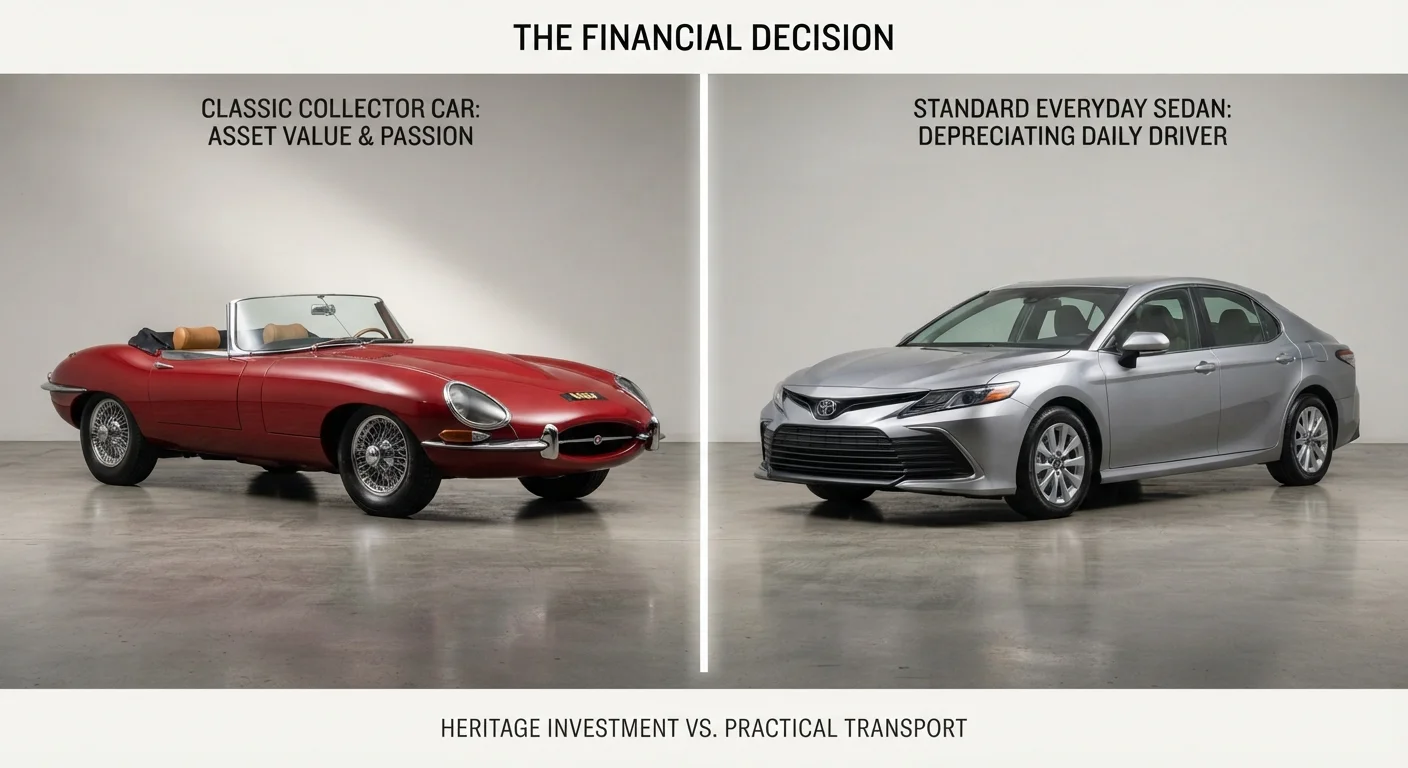
Photo: SummarizedReads.net | Just Read It! editorial
—— In This Article
Key Takeaways
- Agreed value policies pay a fixed amount set upfront; actual cash value policies pay what your car is worth at the time of loss.
- Depreciation is the critical difference - ACV deducts it, agreed value does not.
- Agreed value coverage typically costs more in premiums but eliminates payout uncertainty after a total loss.
- ACV is standard in most personal auto policies; agreed value is common in specialty or collector vehicle insurance.
- Neither valuation method is universally superior - the right choice depends on your vehicle type, loan status, and financial situation.
Why Valuation Method Matters More Than Most Drivers Realize
When your car is declared a total loss - whether from a collision, flood, or fire - the dollar amount your insurer issues isn't arbitrary. It flows directly from the valuation method written into your policy. Most drivers never scrutinize this detail until a claim is in progress, at which point the outcome is already determined.
The two most common methods are agreed value and actual cash value (ACV). Understanding how each works before you purchase or renew a policy can meaningfully affect what you walk away with after a loss. This is especially true as vehicle prices and depreciation rates shift unpredictably in used-car markets.
For a broader picture of what your policy covers before valuation even becomes relevant, see our overview of liability, collision, and comprehensive coverage.
| Criterion | Agreed Value | Actual Cash Value (ACV) |
|---|---|---|
| Payout basis | Fixed amount set at policy start | Market value at time of loss |
| Depreciation applied | None | Yes - reduces payout over time |
| Premium cost | Generally higher | Generally lower |
| Payout certainty | High - amount is pre-agreed | Variable - depends on market conditions |
| Common vehicle types | Classic, collector, modified vehicles | Standard daily-use vehicles |
| Appraisal typically required | Yes | No |
| Loan gap risk | Low - fixed payout is predictable | Higher - ACV may fall below loan balance |
| Policy availability | Specialty/collector insurers primarily | Standard personal auto policies |
Actual Cash Value: The Standard Approach
Actual cash value is the default valuation method in most personal auto insurance policies. At the time of a covered total loss, the insurer calculates what your vehicle was worth in the open market immediately before the loss occurred - then subtracts your deductible.
That market value calculation accounts for depreciation: the natural reduction in a vehicle's worth due to age, mileage, wear, and changing market conditions. A car purchased for $28,000 three years ago may carry an ACV of $18,000 or less depending on its condition and the current used-car market. The insurer typically references third-party valuation guides and comparable local listings to arrive at that figure.
The practical consequence: if your remaining loan balance exceeds your vehicle's ACV at the time of loss, you could owe money to your lender even after the claim is settled. This is precisely the scenario that gap insurance is designed to address.
20%
Average first-year vehicle depreciation
Industry data consistently shows new vehicles lose roughly 15-20% of their value in the first year, making early ACV payouts significantly lower than purchase price.
~50%
Value lost in first five years
Most conventional vehicles depreciate to roughly half their original purchase price within five years, according to general automotive valuation benchmarks.
Agreed Value: Certainty in Exchange for Higher Premiums
Agreed value policies work differently. Before the policy takes effect, the insurer and the vehicle owner negotiate and document a specific dollar amount - the agreed value - that will be paid out in the event of a total loss, with no depreciation deduction applied.
This approach is standard in specialty and collector vehicle insurance, where market-based valuation tools often fail to capture a car's true worth. A restored 1968 muscle car, a low-production limited edition, or a vehicle with documented provenance may be worth far more than any algorithm would assign based on age and mileage alone.
Because the insurer is accepting a fixed payout obligation upfront, agreed value coverage generally carries higher premiums than comparable ACV policies. Insurers may also require a vehicle appraisal, usage restrictions (mileage caps or storage requirements), or documentation of the car's condition at policy inception.
It's worth noting that some policies use a third term - stated value - which can be easily confused with agreed value. Stated value typically sets a maximum payout cap rather than a guaranteed amount, meaning the insurer may still pay ACV if that figure is lower. Always read policy language carefully. Our auto insurance glossary explains these distinctions in plain language.
How to Decide Which Valuation Method Fits Your Situation
The right valuation method depends on your vehicle, your financial exposure, and how predictable you need your payout to be.
- Vehicle type: Standard daily drivers depreciate in ways that ACV captures reasonably well. Collector, classic, heavily modified, or low-production vehicles often require agreed value to avoid significant undercompensation.
- Loan or lease status: If you finance or lease, your lender has an interest in how a total loss is settled. Confirm whether gap coverage is needed to protect against an ACV shortfall - depreciation can outpace loan payoff schedules early in a loan term.
- Premium budget: Agreed value costs more. Weigh that against the financial risk of accepting a depreciated payout on a vehicle whose value you believe the market underrepresents.
- Documentation: Agreed value requires supporting evidence of worth - appraisals, receipts for restorations, and condition records. If you can't substantiate the agreed figure, getting coverage at that level may be difficult.
For everyday drivers with conventional vehicles and no outstanding loan concerns, ACV with a well-chosen deductible is typically sufficient. For anyone with a vehicle whose value the standard market doesn't reflect accurately, agreed value coverage deserves a serious look. You can also explore how collision vs. comprehensive coverage decisions interact with your valuation choice.
This article is for general informational purposes only and does not constitute personalized insurance, financial, or legal advice. Coverage terms, availability, and definitions vary by insurer and state. Review your actual policy documents and consult a licensed insurance professional for guidance specific to your situation.

Auto Editorial Team
Auto Editorial Team is the collective byline for our editorial team and contributor network. Articles published under this byline or an editorial pen name are researched, written, and reviewed according to our editorial standards for clarity, consistency, and independence before publication.
View author profile