
Collision vs. Comprehensive Coverage: Knowing the Difference Could Save You Money
Collision and comprehensive are often bundled but cover very different risks. Here's how to tell them apart and decide what your situation needs.
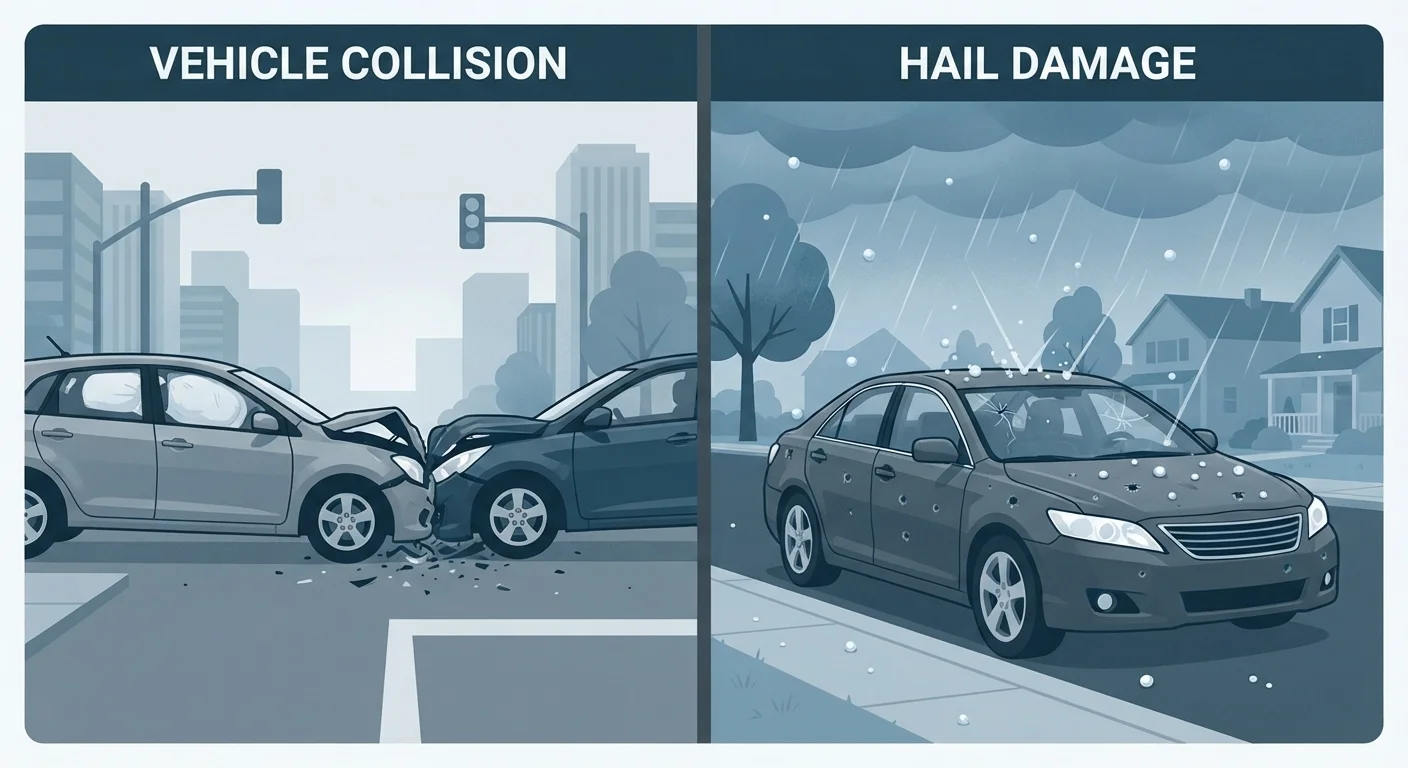
Photo: SummarizedReads.net | Just Read It! editorial
—— In This Article
Key Takeaways
- Collision covers damage from your car striking another vehicle or object; comprehensive covers almost everything else.
- Both are optional in most states but are typically required by lenders if you finance or lease your vehicle.
- Your car's market value relative to your deductible is a key factor in deciding whether either coverage is worth the cost.
- Comprehensive is generally cheaper than collision because non-collision claims are statistically less frequent.
- Dropping coverage on a low-value vehicle may save money, but it shifts all repair risk onto you.
What Each Coverage Actually Does
Collision coverage pays to repair or replace your vehicle when it's damaged by impact - hitting another car, a guardrail, a pole, or rolling over. It applies regardless of fault, though if another driver is at fault, your insurer may recover costs from theirs through a process called subrogation.
Comprehensive coverage handles physical damage from causes outside a collision. That includes theft, vandalism, falling objects, fire, flooding, hail, and strikes involving animals such as deer. Think of it as the catch-all for events beyond typical driving risk.
For a fuller breakdown of how these fit alongside liability protection, see our guide to all three core coverage types.
| Criterion | Collision Coverage | Comprehensive Coverage |
|---|---|---|
| What triggers a claim | Impact with vehicle, object, or rollover | Theft, weather, fire, animals, vandalism |
| Fault relevance | Applies regardless of fault | Fault not applicable |
| Typical premium cost | Higher on average | Lower on average |
| Deductible applies | Yes | Yes |
| Required by lenders | Yes, if financed or leased | Yes, if financed or leased |
| Covers single-car accidents | Yes | No |
| Covers animal strikes | No | Yes |
| Covers flood or hail damage | No | Yes |
Cost Differences and What Drives Them
Comprehensive premiums are typically lower than collision premiums. The Insurance Information Institute has noted that collision claims tend to be both more frequent and more costly than comprehensive claims, which is reflected in pricing.
Both coverages carry a deductible - the amount you pay out of pocket before insurance covers the rest. Common deductible levels range from $250 to $1,500. Raising your deductible lowers your premium but increases what you owe at claim time, so that trade-off deserves careful thought based on your cash reserves.
~$290
Average annual comprehensive premium (US)
According to the National Association of Insurance Commissioners, comprehensive premiums are consistently lower than collision premiums nationwide.
~$490
Average annual collision premium (US)
NAIC data shows collision is the more expensive of the two optional coverages due to higher claim frequency and severity.
1 in 8
Drivers estimated to be uninsured
The Insurance Research Council estimates roughly one in eight drivers on US roads carries no insurance, increasing the value of collision coverage for others.
Your location, driving history, vehicle make and model, and the deductible you choose all feed into your final premium. Comprehensive costs also vary by ZIP code - areas with high vehicle theft rates or frequent severe weather typically carry higher premiums.
When It Makes Sense to Drop One or Both
The standard rule of thumb: if the annual cost of a coverage plus your deductible exceeds 10% of your vehicle's actual cash value (ACV), reconsidering that coverage is reasonable. For example, if your car is worth $4,000 and collision costs $600 per year with a $1,000 deductible, you're paying $1,600 in combined exposure for a car the insurer would cap a payout at $4,000.
To understand how ACV is calculated and how it affects claim payouts, our article on agreed value vs. actual cash value explains the key differences.
Keep in mind that dropping coverage is only viable if you own your vehicle outright. Lenders and lessors contractually require both collision and comprehensive - this isn't optional.
Gap Insurance May Also Be Worth Considering
If you financed a new vehicle, you may owe more on your loan than the car's current market value - especially in the early years of ownership. In a total-loss scenario, collision or comprehensive pays ACV, not your loan balance. Gap insurance (often available through lenders or insurers) covers the difference. It's a separate add-on and worth reviewing if you carry a loan balance that exceeds your vehicle's depreciated value.
For a broader look at how these choices fit into your overall policy level, full coverage vs. minimum coverage walks through the trade-offs in detail.
Common Mistakes to Avoid
One frequent error is assuming comprehensive covers collision because the name sounds broader. It doesn't. A single-car accident where you hit a tree is a collision claim, not comprehensive - even if no other vehicle was involved.
Another mistake is setting an unrealistically high deductible to cut premiums without having that amount liquid. If you can't cover a $1,500 deductible without financial strain, the savings aren't worth the exposure.
Drivers also sometimes confuse what their policy excludes. Mechanical breakdown, normal wear and tear, and personal belongings stolen from inside a vehicle are generally not covered under either collision or comprehensive. Reviewing your policy's exclusions before a claim is far less stressful than discovering gaps afterward. Our piece on common auto insurance pitfalls covers several of these traps in depth.
This article is for general informational purposes only and does not constitute personalized insurance, financial, or legal advice. Coverage terms, exclusions, and premiums vary by insurer, policy, and state. Consult a licensed insurance agent or adviser for guidance specific to your situation.

Auto Editorial Team
Auto Editorial Team is the collective byline for our editorial team and contributor network. Articles published under this byline or an editorial pen name are researched, written, and reviewed according to our editorial standards for clarity, consistency, and independence before publication.
View author profile