
Private Seller vs. Dealership: Comparing the Two Ways to Buy a Used Car
Buying privately can mean a lower price, but a dealership offers different protections. Here's a balanced look at both routes.
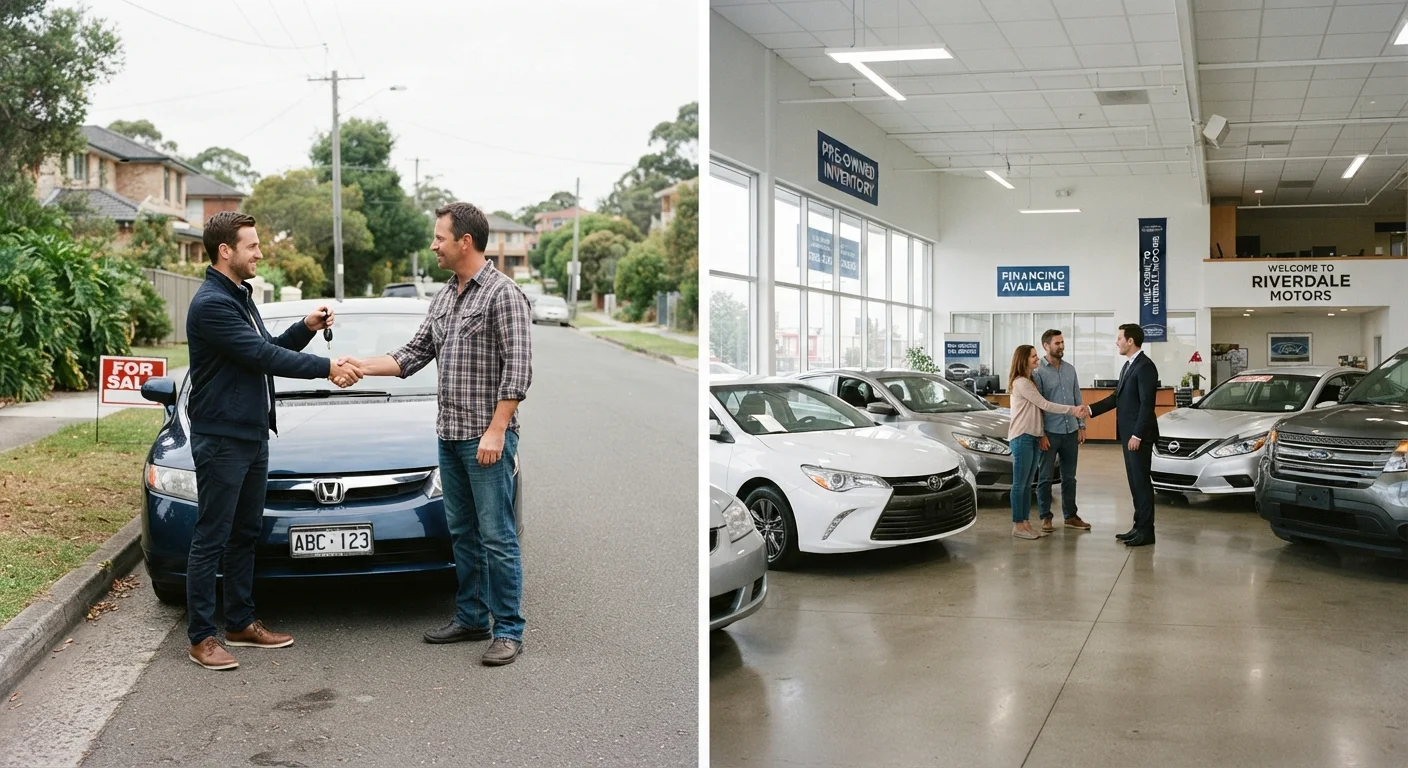
Photo: SummarizedReads.net | Just Read It! editorial
—— In This Article
Key Takeaways
- Private sellers typically list vehicles at lower prices, but offer no consumer protections or warranties.
- Licensed dealerships must meet state disclosure requirements and often provide limited warranties or return windows.
- Both routes require an independent vehicle history report and a pre-purchase inspection by a qualified mechanic.
- Financing options differ significantly - banks and credit unions generally cannot finance private-party purchases as easily.
- Your risk tolerance, budget flexibility, and mechanical knowledge should guide which route fits your situation.
The Core Difference: Who Is Accountable?
When you buy a used car from a private individual, the transaction is largely governed by the principle of caveat emptor - buyer beware. The seller is under no obligation to disclose defects unless required by state law, and once money changes hands, recourse is extremely limited. There is no warranty, no return window, and no regulatory body overseeing the seller's conduct.
A licensed dealership operates under a different framework. Dealers must comply with state consumer protection laws, Federal Trade Commission (FTC) used car rules (including the Buyers Guide disclosure requirement), and often have internal complaint processes. This does not guarantee a problem-free purchase, but it does mean there are more formal channels if something goes wrong. If you plan to go the dealership route, review our pre-signing checklist before committing to paperwork.
Price and Negotiation
Private listings typically reflect lower asking prices than equivalent vehicles at a dealership. Dealers factor in reconditioning costs, overhead, and profit margin into their pricing. A private seller is usually just trying to close quickly, which can create negotiating room - especially if the vehicle has sat listed for a while.
That said, private prices are not always a bargain. Some sellers price high based on emotional attachment or inaccurate market research. Always compare asking prices against independent valuation sources before making an offer. For negotiation strategies that work in either context, see our guide on negotiating a car price.
| Private Seller | Dealership | |
|---|---|---|
| Typical Price | Often lower asking price | Higher; includes overhead and margin |
| Consumer Protections | Minimal; state law varies | FTC Buyers Guide + state regulations |
| Warranty | None (sold as-is) | Limited warranty or certified options available |
| Financing Access | Requires separate bank/CU loan | On-site financing through multiple lenders |
| Title & Paperwork | Buyer handles DMV transfer | Dealer manages most paperwork |
| Negotiation Flexibility | High; motivated sellers may discount | Moderate; structured pricing and manager approval |
| Inspection Cooperation | Variable; seller may resist | Generally expected and accommodated |
Financing and Paperwork
Financing a private-party purchase is more complicated. Most banks and credit unions do offer private-party auto loans, but rates may differ from dealer-arranged financing, and the process requires more legwork from the buyer - including verifying a clean title and handling DMV paperwork independently.
Dealerships streamline this process. They handle title transfers, handle sales tax collection, and can arrange financing through multiple lenders in one sitting. However, convenience has a cost: dealer-arranged financing can carry higher rates or add-on products that inflate the total. Understanding the difference between dealer financing and a direct bank loan is worth doing before you sit down at any desk - our dealer financing vs. bank loan breakdown covers this in detail.
Get Pre-Approved Before You Shop
Whether you are buying from a private seller or a dealer, arriving with a pre-approved loan from your bank or credit union gives you a concrete benchmark. It makes it easier to evaluate any financing offer a dealer presents and ensures you are not caught off-guard by unfavorable terms. Pre-approval does not obligate you to use that loan - it simply gives you leverage and clarity.
Due Diligence: What You Must Do Either Way
Regardless of the seller type, certain steps should be non-negotiable. First, run a vehicle history report using the vehicle identification number (VIN). This can surface prior accidents, odometer discrepancies, title issues, or flood damage. Second, arrange a pre-purchase inspection with an independent, qualified mechanic - not one affiliated with the seller. Expect to pay a modest fee for this service; it is significantly cheaper than discovering a hidden problem after purchase.
Private sellers may resist an inspection or feel offended by the request. That reluctance itself is useful information. A confident seller with nothing to hide will typically accommodate a reasonable inspection window. If you are also weighing whether used is the right call at all, our article on new car vs. used car trade-offs provides useful context on depreciation and warranty differences.
Never Skip the Title Check
A vehicle with a salvage title, lien, or fraudulent odometer reading can cause serious legal and financial problems after purchase. Always verify the title is clean and matches the seller's name before transferring any funds. For private purchases, consider using an escrow arrangement or meeting at a DMV office to confirm the transfer is legitimate. If a seller pressures you to skip this step, walk away.

Auto Editorial Team
Auto Editorial Team is the collective byline for our editorial team and contributor network. Articles published under this byline or an editorial pen name are researched, written, and reviewed according to our editorial standards for clarity, consistency, and independence before publication.
View author profile