
New Car vs. Used Car: Understanding the Real Trade-Offs
Depreciation, warranty coverage, financing rates, and reliability all differ between new and used vehicles. Here's what to weigh.
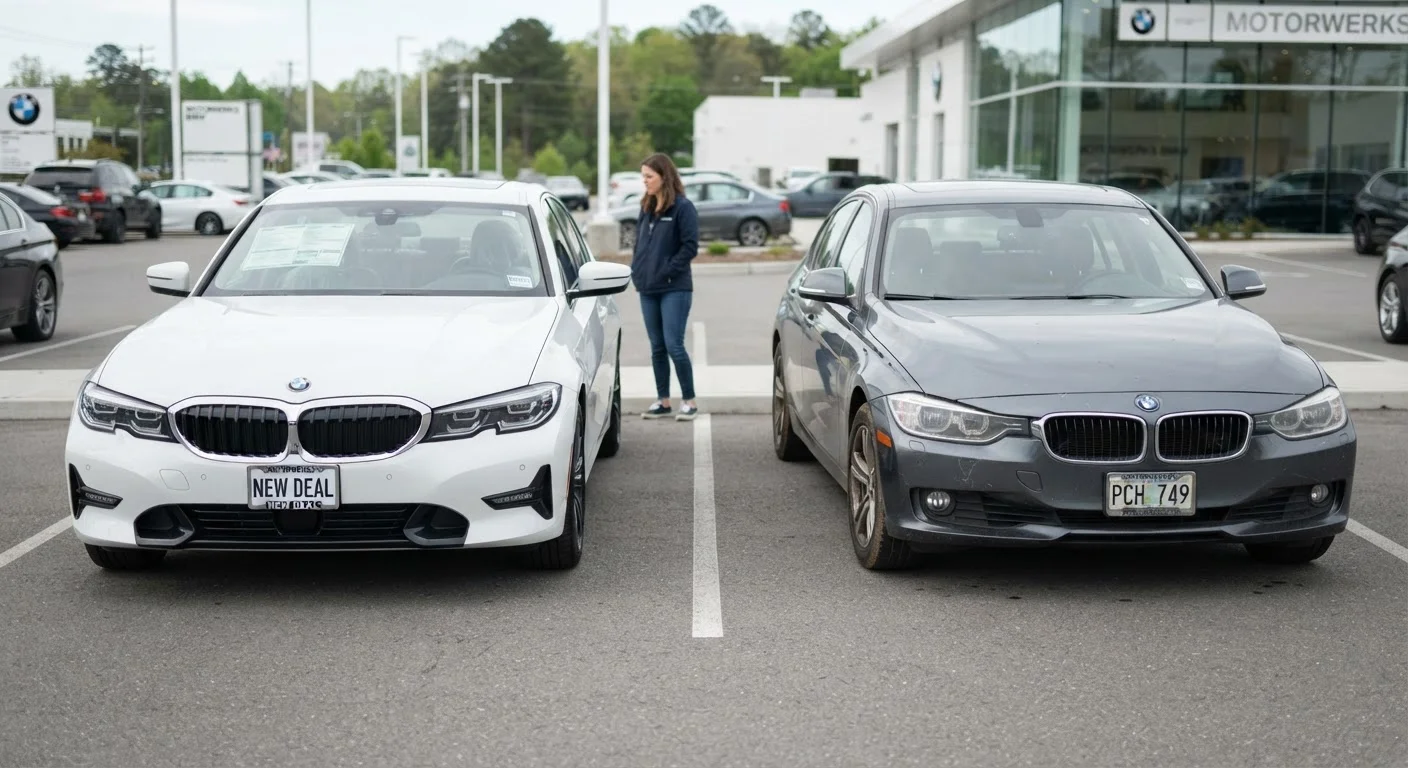
Photo: SummarizedReads.net | Just Read It! editorial
—— In This Article
Key Takeaways
- New cars lose roughly 20% of value in the first year, making depreciation the single largest hidden cost.
- Used vehicles typically carry higher interest rates than new cars, partially offsetting the lower purchase price.
- Manufacturer warranties on new cars can significantly reduce out-of-pocket repair costs in the first few years.
- A certified pre-owned (CPO) vehicle can bridge some of the gap between new and used protections.
- Total cost of ownership - not just sticker price - is the most reliable basis for comparison.
- Insurance premiums, registration fees, and financing terms all differ between new and used vehicles.
The Depreciation Gap - and Why It Matters
Depreciation is the largest cost most car buyers never see on the sticker. A new vehicle typically loses a significant portion of its value within the first year of ownership, and continues depreciating steeply through years two and three. By contrast, a used car that is already two or three years old has absorbed the sharpest part of that curve, so its value declines more gradually from the point you purchase it.
For budget-conscious buyers, this arithmetic has a direct implication: the previous owner - not you - funds the steepest value drop. That said, depreciation only hurts you if you sell the vehicle before its useful life ends. Drivers who keep a new car for a decade spread that initial loss across many more miles, which changes the calculus considerably.
~20%
Average first-year value loss for a new vehicle
Widely cited across automotive and consumer finance sources as a general depreciation benchmark for new cars.
~50%
Approximate value retained after five years
Depreciation curves vary significantly by make, model, and market conditions, but many vehicles retain roughly half their value at the five-year mark.
Understanding what total cost of ownership really includes helps put depreciation in proper context alongside fuel, insurance, and maintenance.
Financing, Rates, and the Real Monthly Cost
New cars generally qualify for lower interest rates than used vehicles. Lenders view new cars as lower collateral risk, and manufacturers sometimes offer promotional financing through their captive finance arms. Used-car loans, by comparison, typically carry rates that are one to several percentage points higher, depending on the borrower's credit profile and the vehicle's age.
The practical result: the lower purchase price of a used car does not always translate directly into a proportionally lower monthly payment, particularly on shorter loan terms. Running the numbers on both scenarios - including the interest paid over the life of the loan - gives a more honest picture than comparing sticker prices alone.
Before settling on a financing path, it is worth reviewing how dealer financing and bank loans compare in structure and cost, since the source of your loan can affect the effective rate you receive on either a new or used purchase.
| Criterion | New Car | Used Car |
|---|---|---|
| Purchase price | Higher sticker price | Lower sticker price |
| Depreciation impact | Steepest in year one | Prior owner absorbed peak drop |
| Typical financing rate | Generally lower | Generally higher |
| Warranty coverage | Full manufacturer warranty | Limited or none (CPO varies) |
| Vehicle history | No prior ownership | Requires verification |
| Insurance cost | Higher (greater vehicle value) | Lower (reduced vehicle value) |
| Registration fees | Higher in early years | Lower (value already declined) |
| Technology & safety features | Latest standards | Depends on model year |
Warranty, Reliability, and the Unknown History Problem
New vehicles come with a manufacturer's bumper-to-bumper warranty - typically three years or 36,000 miles - plus a separate powertrain warranty that often extends to five years or 60,000 miles. These coverages can meaningfully reduce out-of-pocket repair costs during the ownership window most likely to include any manufacturing defects.
Used vehicles carry no such blanket protection unless they fall under a certified pre-owned (CPO) programme. CPO programmes vary widely by manufacturer, so it is important to read the specific terms rather than assuming coverage is comparable to a new-car warranty.
Beyond the warranty question, a used vehicle's reliability depends partly on how the previous owner maintained it. A vehicle history report and a pre-purchase inspection by an independent mechanic are standard due-diligence steps that can surface red flags before you commit. Ongoing car maintenance practices also heavily influence long-term reliability regardless of which route you choose.
What a Pre-Purchase Inspection Covers
An independent pre-purchase inspection (PPI) - performed by a mechanic not affiliated with the seller - typically reviews the engine, transmission, brakes, suspension, and body condition. It usually costs between $100 and $200 and can identify issues that a vehicle history report alone will not reveal. For any used vehicle purchase, this step is widely recommended by consumer advocates as a baseline safeguard.
Insurance, Registration, and Ongoing Costs
Insurance premiums generally track vehicle value: a more expensive new car typically costs more to insure than a comparable older model. Comprehensive and collision coverage - which most lenders require on financed vehicles - is priced relative to the cost to repair or replace the car. As a used car's value falls, some owners choose to adjust their coverage levels, though this involves genuine trade-offs that are worth discussing with a licensed insurance professional. See our auto insurance overview for a grounded explanation of coverage types.
Registration and excise taxes in most states are also tied to vehicle value, meaning a new car typically carries higher annual fees in its early years. These figures are worth including in any side-by-side cost comparison. If you currently own a vehicle, trading in versus selling privately is a separate decision that can affect how much capital you bring to either a new or used purchase.
This article provides general information for educational purposes only and does not constitute financial, legal, or purchasing advice. Costs, rates, and terms vary by market, lender, and individual circumstances. Consult a qualified professional for guidance specific to your situation.

Auto Editorial Team
Auto Editorial Team is the collective byline for our editorial team and contributor network. Articles published under this byline or an editorial pen name are researched, written, and reviewed according to our editorial standards for clarity, consistency, and independence before publication.
View author profile