
What Total Cost of Ownership Really Includes for a Used Vehicle
Purchase price is just the beginning. Fuel, insurance, maintenance, and depreciation all shape what a car actually costs over time.
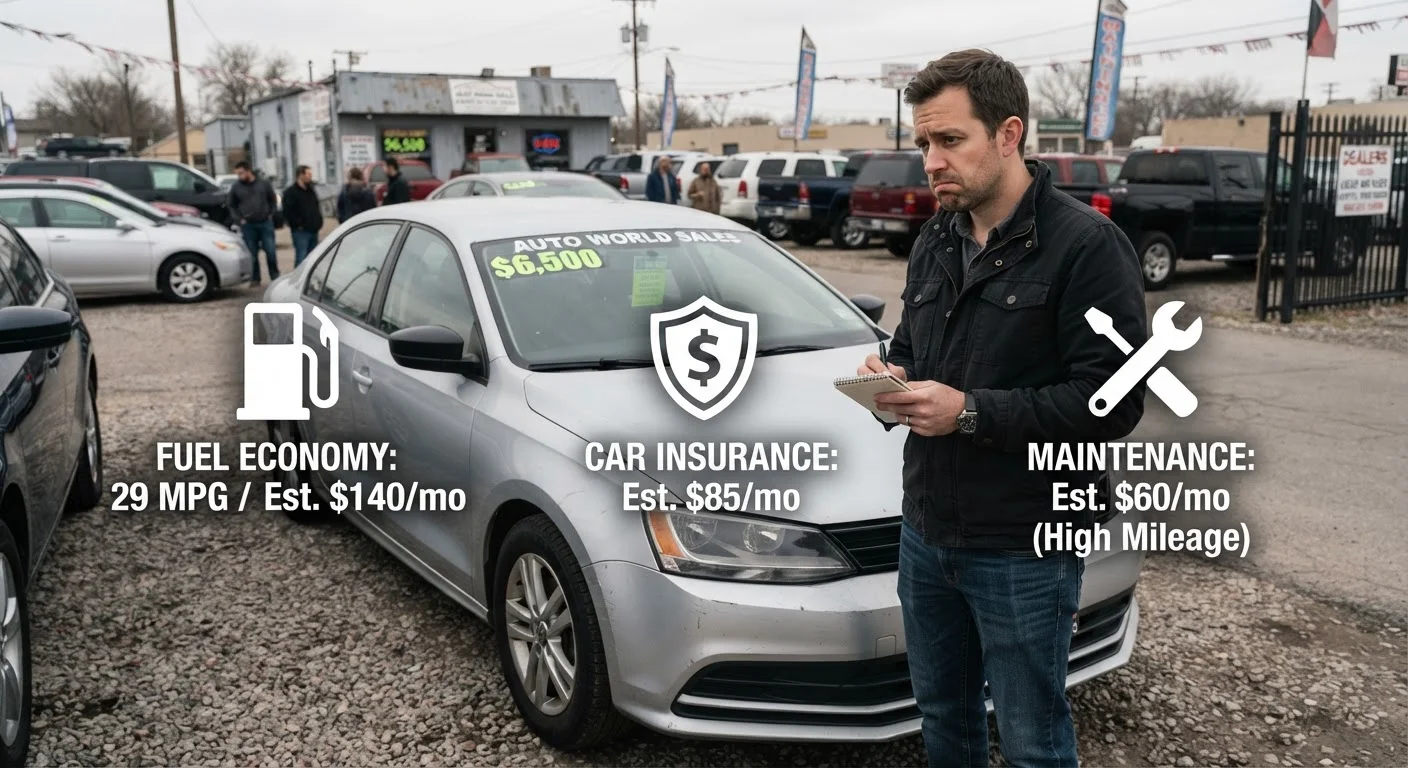
Photo: SummarizedReads.net | Just Read It! editorial
—— In This Article
- Why Purchase Price Is a Misleading Starting Point
- Depreciation: The Cost Nobody Hands You a Bill For
- Fuel, Insurance, and Financing: The Recurring Trio
- Maintenance and Repairs: Where Budget Surprises Hide
- Registration, Taxes, and Other Overlooked Line Items
- How to Build Your Own TCO Estimate Before You Buy
Key Takeaways
- Purchase price typically represents less than half of a vehicle's true five-year cost.
- Depreciation, fuel, insurance, and maintenance together often exceed the original transaction price.
- Used vehicles can carry lower depreciation exposure but higher maintenance risk than new ones.
- Estimating total cost of ownership before purchase helps avoid financially painful surprises.
- Financing costs compound over time and should be included in any honest ownership calculation.
Why Purchase Price Is a Misleading Starting Point
When shoppers compare used vehicles, the negotiated sale price dominates the conversation. It shouldn't. Purchase price is a one-time event; ownership is a multi-year financial commitment with recurring expenses that accumulate quietly in the background.
Total cost of ownership (TCO) is the framework that captures all of those costs together. It accounts for what you pay to acquire a vehicle, what you pay to operate it, and what you lose when you eventually sell or trade it in. Understanding TCO as a framework applies well beyond cars - but few purchases expose its importance more starkly than a used vehicle.
For budget-conscious buyers, ignoring the downstream costs of a cheaper car can produce a worse financial outcome than paying slightly more for a model with lower ongoing expenses.
The Sticker Price Tells an Incomplete Story
Industry analysis has consistently found that purchase price represents a minority of total five-year vehicle costs for average drivers. Operating expenses - fuel, insurance, maintenance, and financing - often exceed what was paid at the time of purchase. Evaluating a used vehicle on sticker price alone is a common and costly error. Build a full cost estimate before committing.
Depreciation: The Cost Nobody Hands You a Bill For
Depreciation is the single largest component of vehicle ownership cost for most buyers, yet it arrives silently. It's the gap between what you paid and what the vehicle is worth when you sell it.
Used vehicles have already absorbed the steepest portion of the depreciation curve - typically the first two to three years of a car's life, when a new vehicle can shed 30-40% of its value. Buying used means a prior owner absorbed that loss, which is one of the genuine financial advantages of the used market.
However, depreciation doesn't stop. A used vehicle continues to lose value each year, and higher-mileage vehicles or those with reliability concerns can depreciate faster than average. When comparing two used vehicles at similar prices, estimating their likely resale value in three to five years is a meaningful part of the true cost calculation.
~40%
New car value lost in first 3 years
Industry data consistently shows new vehicles lose a significant share of value in the first few years, which used-car buyers largely avoid.
$10,000+
Estimated 5-year fuel cost for an average driver
Based on roughly 15,000 miles per year at typical US fuel prices for a vehicle averaging 25 MPG - costs shift significantly with fuel economy and mileage.
~$1,500
Average annual car maintenance and repair spending
Consumer expenditure surveys suggest US households spend roughly this amount per year on vehicle upkeep, though costs rise with vehicle age and mileage.
Fuel, Insurance, and Financing: The Recurring Trio
Fuel costs depend on two factors you can estimate before purchase: the vehicle's EPA fuel economy rating and your own annual mileage. A vehicle rated at 25 MPG versus 18 MPG can represent a difference of several hundred dollars per year at typical fuel prices - a gap that compounds across a five-year ownership period.
Insurance premiums vary by vehicle make, model, age, safety rating, local claims history, and your own driving record. Older vehicles may qualify for reduced coverage in some cases, but vehicles with higher repair costs or theft rates can offset those savings. Always get an insurance quote on a specific vehicle before finalizing a purchase, not after. This is general information; actual premiums depend on your individual circumstances and insurer - consult a licensed agent for personalized guidance.
Financing is another recurring cost that buyers frequently underestimate. Borrowing $12,000 at a higher interest rate over five years adds meaningfully to what you actually pay. Carrying a balance has compounding costs that extend well beyond the monthly payment figure. Including total interest paid is essential to an honest TCO calculation.
Request the vehicle's full service history and cross-reference it with the manufacturer's recommended maintenance schedule to identify what's overdue - that overdue work is a direct addition to your true purchase cost.
Deferred maintenance is frequently priced into the seller's asking price in ways that aren't transparent; identifying it upfront gives you a negotiating data point and a realistic cost projection.
When comparing two vehicles at similar prices, calculate the five-year fuel cost difference first - it often settles the comparison faster than any other factor.
Fuel is one of the most predictable recurring costs and one of the most frequently ignored; even a 7 MPG difference can amount to $1,500-$2,500 over five years for an average driver.
Maintenance and Repairs: Where Budget Surprises Hide
Used vehicles carry maintenance histories - sometimes documented, sometimes not. The older a vehicle and the higher its mileage, the more likely it is approaching scheduled services that carry significant price tags: timing belt replacement, transmission fluid service, brake overhauls, or cooling system work.
Before buying, a pre-purchase inspection by an independent mechanic (not the seller's shop) is one of the highest-value steps a buyer can take. An inspection costing $100-$200 can reveal deferred maintenance or emerging issues worth thousands of dollars in near-term repairs.
Beyond catch-up maintenance, ongoing upkeep is unavoidable. Oil changes, tire rotations, filters, and brake pads accumulate over time. Understanding basic maintenance tasks helps new owners anticipate these costs rather than be blindsided by them. Vehicles with more available aftermarket parts and independent mechanic support typically have lower ongoing repair costs than those requiring dealer-only service.
Budget for a Pre-Purchase Inspection
An independent mechanic inspection before buying a used vehicle is one of the most cost-effective steps available to buyers. It typically costs under $200 and can surface deferred maintenance or hidden mechanical issues worth far more. Never skip this step based on a seller's assurances or a clean visual appearance.
Registration, Taxes, and Other Overlooked Line Items
Several costs fall outside the four major categories but still belong in a complete TCO picture. Annual registration fees vary significantly by state and, in many states, are tied to vehicle value or age. Sales tax on a used vehicle purchase can add hundreds to thousands of dollars at closing, depending on the transaction price and local rates.
Parking, tolls, emissions testing, and inspection fees are smaller but consistent expenses. For some buyers in urban areas, parking costs alone can rival insurance premiums over a year. If your vehicle requires emissions testing and fails, repair costs to bring it into compliance become part of ownership cost - something worth investigating before purchasing an older vehicle in a state with mandatory testing.
Registration Fees Vary Widely by State
Some states calculate annual registration fees based on a vehicle's assessed value or age, meaning fees decrease as the car gets older. Others charge flat fees regardless of vehicle value. Checking your specific state's DMV fee schedule before purchase prevents surprises at renewal time and belongs in any thorough TCO estimate.
How to Build Your Own TCO Estimate Before You Buy
A practical TCO estimate doesn't require specialized software. A simple five-year projection captures the essentials:
- Purchase price minus estimated resale value - this is your net depreciation cost.
- Fuel cost - divide your expected annual miles by the vehicle's MPG rating, then multiply by an assumed fuel price per gallon, across five years.
- Insurance - get an actual quote, then multiply by five.
- Financing interest - use a loan amortization calculation to find total interest paid, if financing.
- Maintenance and repairs - use published reliability data and known upcoming service needs as a baseline estimate.
- Registration and taxes - check your state's DMV for annual registration cost schedules.
Adding these figures gives you a more honest comparison point than sticker price alone. Two vehicles priced $2,000 apart can end up thousands of dollars different in five-year cost once all the factors are included. The Car Maintenance hub has additional guidance on keeping ongoing costs predictable once you've made your purchase decision.
This article is for general informational purposes only and does not constitute financial, insurance, or legal advice. Costs vary significantly based on individual circumstances, location, and vehicle condition. Consult qualified professionals for guidance specific to your situation.

Auto Editorial Team
Auto Editorial Team is the collective byline for our editorial team and contributor network. Articles published under this byline or an editorial pen name are researched, written, and reviewed according to our editorial standards for clarity, consistency, and independence before publication.
View author profile