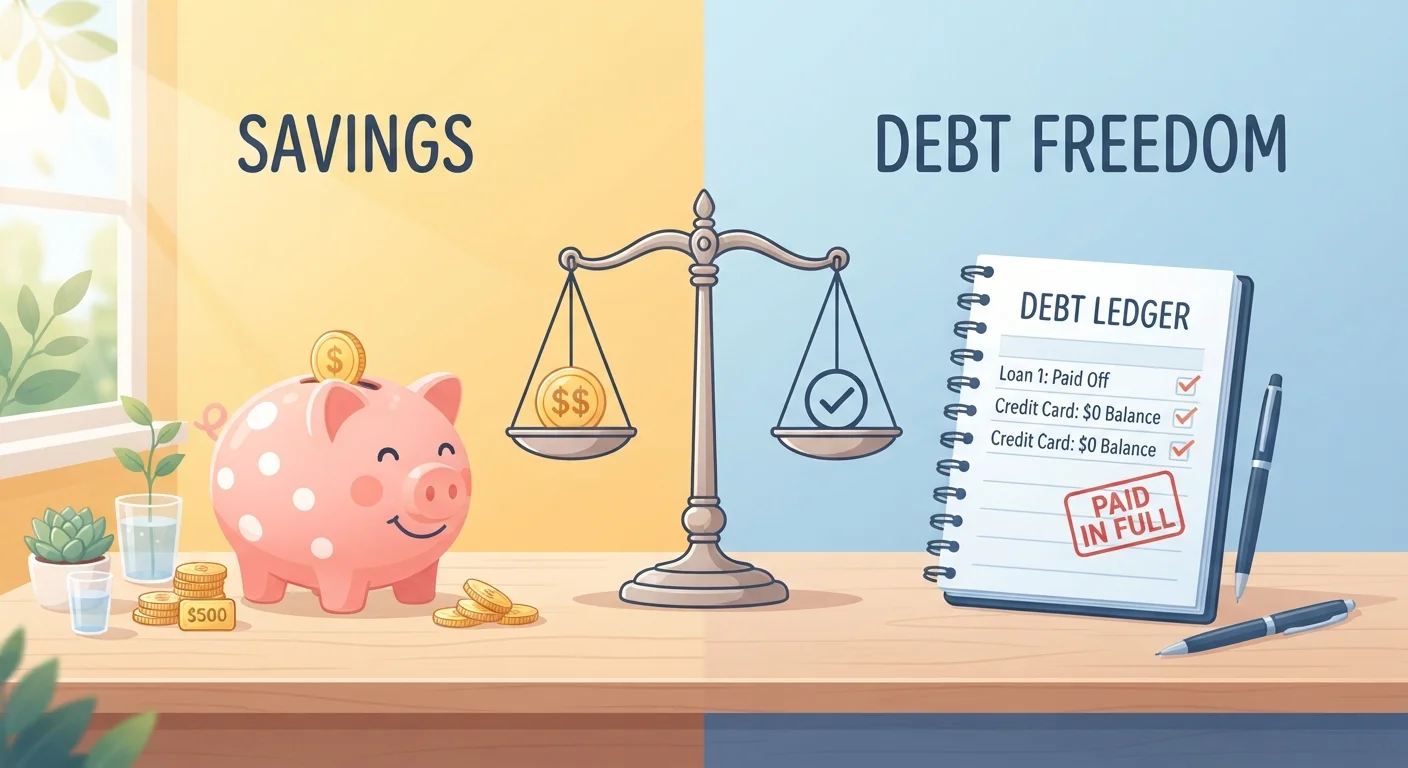
The True Cost of Carrying a Balance: Interest, Opportunity, and Time
Beyond the monthly statement, carried debt has compounding costs that extend well beyond the interest rate. A clear look at the full picture.
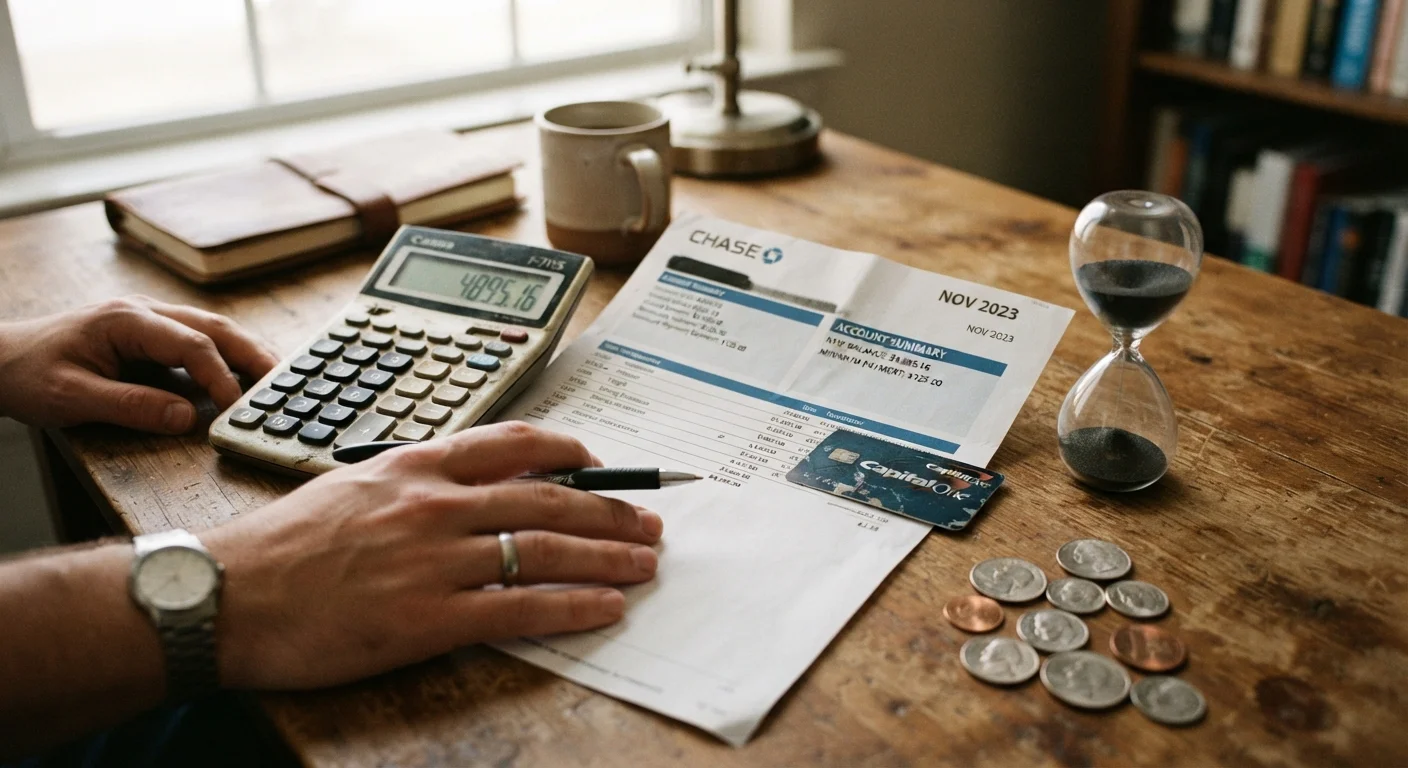
Photo: SummarizedReads.net | Just Read It! editorial
—— In This Article
Key Takeaways
- Credit card interest is calculated daily, so even a short delay costs more than borrowers expect.
- The opportunity cost of debt payments can exceed the interest charge itself over time.
- Credit utilization above 30% actively reduces your credit score, raising future borrowing costs.
- Minimum payments are designed to extend repayment - paying more than the minimum is essential.
- Balancing debt repayment with an emergency fund requires deliberate prioritization, not guesswork.
What 'Carrying a Balance' Actually Means
When you don't pay your credit card bill in full by the due date, the unpaid portion becomes a carried balance. Most cards offer a grace period - typically 21 to 25 days after the billing cycle closes - during which no interest accrues. The moment you carry any balance past that window, interest begins and the grace period disappears on new purchases too, depending on your card's terms.
This distinction matters: a balance isn't just a convenience. It's a loan from your card issuer, one that typically carries a much higher interest rate than other consumer debt. Understanding the mechanics is the first step toward seeing the full cost. For a deeper look at the underlying math, see our guide on how compound interest works.
The Real Math: How Interest Accumulates
Credit card interest is typically expressed as an APR, but it's charged daily. Your issuer divides the APR by 365 to get a daily periodic rate, then applies that rate to your average daily balance. On a $3,000 balance at a 22% APR, the daily rate is roughly 0.060% - which adds about $1.81 per day, or around $54 per month, just in interest charges.
The compounding effect is what makes this punishing. Interest is added to your balance, and the next day's interest is calculated on that slightly higher number. Over months, this compounds materially. If you make only minimum payments - typically 1-2% of the balance - a $3,000 balance could take over a decade to retire, and you could pay more in interest than the original purchases were worth.
22%
Average credit card APR in the US
The Federal Reserve tracks average credit card interest rates, which have reached historically high levels in recent years.
10+ years
Minimum-payment payoff timeline on a typical balance
Consumer finance educators frequently illustrate that minimum payments on a mid-size balance can extend repayment well over a decade.
30%
Utilization threshold that signals risk to credit models
Credit scoring guidance widely recognizes that utilization ratios above 30% begin to negatively affect scores.
The myth that carrying a small balance helps build credit is particularly costly. Our analysis of carrying a balance vs. paying in full explains why that belief is simply not supported by how credit scoring works.
The Opportunity Cost You Don't See on Your Statement
Every dollar spent on interest is a dollar that cannot be saved, invested, or used to build financial resilience. This is the opportunity cost of carried debt - and it rarely appears on your statement.
Consider a straightforward example: $60 per month in interest payments, maintained for three years, equals $2,160 in lost capital. Had that same amount been directed into a savings vehicle earning even a modest return, the compounding would work in your favor instead. The gap widens significantly over longer periods.
When comparing the "return" on paying off debt versus saving, use the interest rate as your benchmark. Eliminating a 22% APR balance is a guaranteed 22% return on that dollar - hard to beat in any savings product.
High-interest debt repayment delivers a certain, immediate financial benefit that low-risk savings vehicles rarely match, making it a priority for most budget-conscious consumers.
Before transferring a balance, calculate the transfer fee against the interest you'll save during the promotional period. A 3-5% fee only makes sense if your savings outpace it.
Balance transfer offers look attractive on the surface, but fees and post-promotion rates can erode or eliminate the benefit if not evaluated carefully.
This dynamic is also relevant when weighing debt repayment against saving goals. Paying off high-interest debt often delivers a guaranteed "return" equivalent to the interest rate you'd have paid - frequently higher than what a savings account offers in the current environment. Our guide to emergency funds and debt repayment walks through how to think about this tradeoff practically.
Minimum Payments Are a Trap, Not a Solution
Minimum payment amounts are calculated to keep balances alive as long as possible, maximizing interest income for the issuer. Paying only the minimum on a high-rate balance is rarely a viable path to becoming debt-free. Always pay as much above the minimum as your budget allows.
How Carried Debt Affects Your Credit Profile
Beyond the direct cost of interest, carrying a balance has measurable effects on your credit utilization ratio - the percentage of your available revolving credit that you're using. Credit scoring models generally treat utilization above 30% as a negative signal, and the impact grows as utilization climbs.
A higher utilization ratio can reduce your credit score, which in turn affects the interest rates you're offered on future loans - mortgages, auto financing, personal loans. The cost of a lower credit score isn't abstract: it can mean thousands of dollars in additional interest paid over the life of a loan. To understand how a single payment lapse can compound these effects, see our piece on the ripple effects of a missed payment.
The Credit Explained hub covers utilization, score factors, and credit reports in plain language if you want a fuller foundation.
Utilization Is Calculated Monthly
Your credit utilization is typically reported to bureaus once per billing cycle, based on the statement balance. Paying down your balance before the statement closing date - not just the due date - can reduce the utilization figure that gets reported, potentially improving your score sooner.
Balancing Debt Paydown with Other Financial Goals
Knowing that debt is costly doesn't automatically tell you how aggressively to pay it down relative to other priorities. A realistic framework involves three layers:
- Cover essentials first. Ensure minimum payments are always made on all accounts. Missing payments triggers fees, penalty APRs, and credit damage - all of which make the situation worse.
- Build a small emergency buffer. A modest emergency fund (even $500-$1,000) prevents new debt from being the only option when an unexpected expense hits.
- Accelerate payoff on the highest-rate balance. This is the core of the debt avalanche method - directing extra payments toward the balance with the highest APR, while maintaining minimums elsewhere. It minimizes total interest paid.
Budgeting is the mechanism that makes all of this possible. The Budgeting Basics hub offers straightforward approaches to tracking spending and finding the margin to accelerate debt repayment.
Practical Steps to Stop the Bleeding
Reducing the cost of a carried balance doesn't always require a dramatic overhaul. Several concrete actions can meaningfully cut what you pay:
- Pay more than the minimum, consistently. Even an extra $25-$50 per month shortens the repayment timeline and cuts total interest substantially.
- Request a lower APR. Issuers sometimes lower rates for customers with a strong payment history. It costs nothing to ask.
- Explore a balance transfer option. Transferring high-rate debt to a card with a promotional low-rate period can reduce interest accrual - but read the transfer fee and post-promotion rate carefully before proceeding.
- Stop adding to the balance. Using the card for new purchases while carrying a balance makes payoff progressively harder.
- Track the actual dollar cost. Knowing that your balance is costing you $54 a month in interest - not just an abstract 22% - makes the urgency concrete.
For a broader lens on how financing affects the true price of a major purchase, the framework in our article on total cost of ownership applies directly to financed goods. The same logic extends to auto loans - our piece on APR, loan term, and total cost shows how lender math shapes what you actually pay.
Make Interest Visible Every Month
Find the interest charge line on your statement and write it down alongside your balance. Seeing the raw dollar amount - not just the APR percentage - makes the cost of inaction tangible. Many people accelerate repayment simply by making this number impossible to ignore.
This article is for general informational purposes only and does not constitute personalised financial or credit advice. Consult a licensed financial professional for guidance specific to your situation.

Finance Editorial Team
Finance Editorial Team is the collective byline for our editorial team and contributor network. Articles published under this byline or an editorial pen name are researched, written, and reviewed according to our editorial standards for clarity, consistency, and independence before publication.
View author profile