
The Numbers Behind a Car Loan: APR, Loan Term, and Total Cost
A lower monthly payment doesn't always mean a cheaper loan. Understand how interest rate and term length shape what you actually pay.
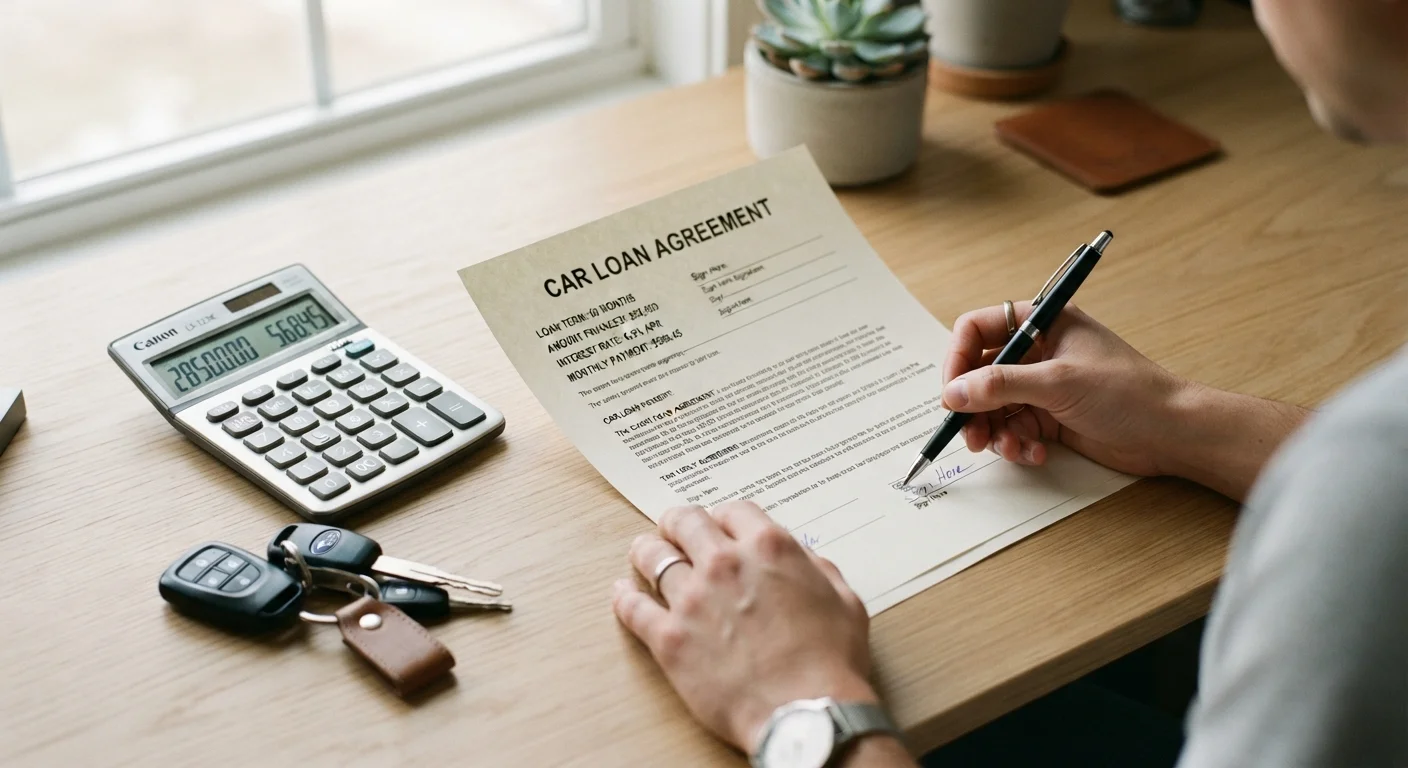
Photo: SummarizedReads.net | Just Read It! editorial
—— In This Article
Key Takeaways
- A lower monthly payment can mean a longer loan term - and significantly more interest paid overall.
- APR is a more reliable cost comparison than the interest rate alone because it includes lender fees.
- Longer loan terms increase the risk of becoming "underwater" - owing more than the car is worth.
- Even a small difference in APR can add hundreds of dollars to total loan cost on a typical vehicle.
- Your credit score is one of the strongest factors determining the APR a lender will offer you.
Why Monthly Payment Isn't the Whole Story
When shoppers focus only on the monthly payment, they're seeing just one dimension of a loan. A dealer or lender can make almost any monthly figure sound manageable - by stretching the loan term. But the total amount you repay is what ultimately comes out of your wallet.
Three numbers define what a car loan actually costs: the principal (the amount borrowed), the APR (Annual Percentage Rate, the annualized cost of borrowing), and the loan term (the number of months you'll repay). Each one affects the others. Understanding how they interact is more useful than any single figure a salesperson quotes you.
For background on the vocabulary used in borrowing conversations, see plain-language definitions for terms like APR and amortization.
72 months
Average new car loan term in recent years
According to Federal Reserve data, the average auto loan term has steadily extended, with 72-month loans now among the most common in the U.S.
~$2,100
Extra interest on a 72- vs. 48-month loan
On a $28,000 loan at 7% APR, extending from 48 to 72 months adds roughly $2,100 in total interest paid, based on standard amortization calculations.
20%+
Vehicle value lost in year one
Many new vehicles depreciate more than 20% in the first year of ownership, creating early negative equity risk for buyers with long loan terms.
How APR Actually Works
APR is not the same as the interest rate, though the two are related. The interest rate is the base percentage charged on the outstanding loan balance. APR folds in any required lender fees, producing a number that more accurately reflects total borrowing cost. Under the federal Truth in Lending Act, lenders are required to disclose APR before you sign.
On a simple-interest auto loan - the most common structure - interest accrues daily on the remaining balance. Every payment you make reduces that balance, which in turn reduces the amount of future interest that accumulates. This is why making even slightly larger payments early in a loan can have an outsized effect on total cost.
Your credit profile is one of the primary factors lenders use to set your APR. See how credit scores and reports actually work for a fuller explanation of what goes into those calculations.
Get Pre-Approved Before You Shop
Obtaining a loan pre-approval from a bank or credit union before visiting a dealership gives you a rate benchmark to compare against any financing offer you receive on the lot. It also separates the loan discussion from the vehicle price negotiation, making both easier to evaluate clearly.
The Real Cost of a Longer Loan Term
Auto loan terms have stretched considerably over the past two decades. 72- and even 84-month loans are now commonplace, largely because they produce smaller monthly payments on expensive vehicles. But duration is a cost multiplier.
Consider a $28,000 loan at 7% APR. Over 48 months, total interest paid is roughly $4,200. Extend that same loan to 72 months and total interest climbs to approximately $6,300 - even though the monthly payment drops by around $175. You pay less each month but significantly more in the end.
There's also a depreciation risk. Vehicles lose value fastest in the first two to three years. A long loan term can leave you "underwater" - owing more on the loan than the car is worth. This creates problems if the vehicle is totaled, stolen, or if you need to sell or trade it before the loan is paid off. For a full picture of ongoing vehicle costs beyond the loan, see what total cost of ownership really includes.
Comparing Loan Offers the Right Way
When evaluating loan offers, compare APRs - not just monthly payments or interest rates. Two loans can have identical interest rates but different APRs if one includes origination fees. The APR levels the playing field.
Financing through a dealership and financing through a bank or credit union each carry different dynamics. Dealers sometimes mark up the rate offered by the underlying lender, while direct lenders offer a rate based solely on your creditworthiness. How dealer financing and bank loans differ is worth understanding before you sit down at the finance desk.
It's also worth separating the loan negotiation from the vehicle price negotiation. Mixing them together makes it harder to evaluate either clearly - a point covered in common car buying myths that cost people money.
This article provides general financial information for educational purposes only and is not personalized financial or lending advice. Loan terms, rates, and conditions vary by lender and individual circumstances. Consult a licensed financial professional before making borrowing decisions.
Frequently Asked Questions

Auto Editorial Team
Auto Editorial Team is the collective byline for our editorial team and contributor network. Articles published under this byline or an editorial pen name are researched, written, and reviewed according to our editorial standards for clarity, consistency, and independence before publication.
View author profile