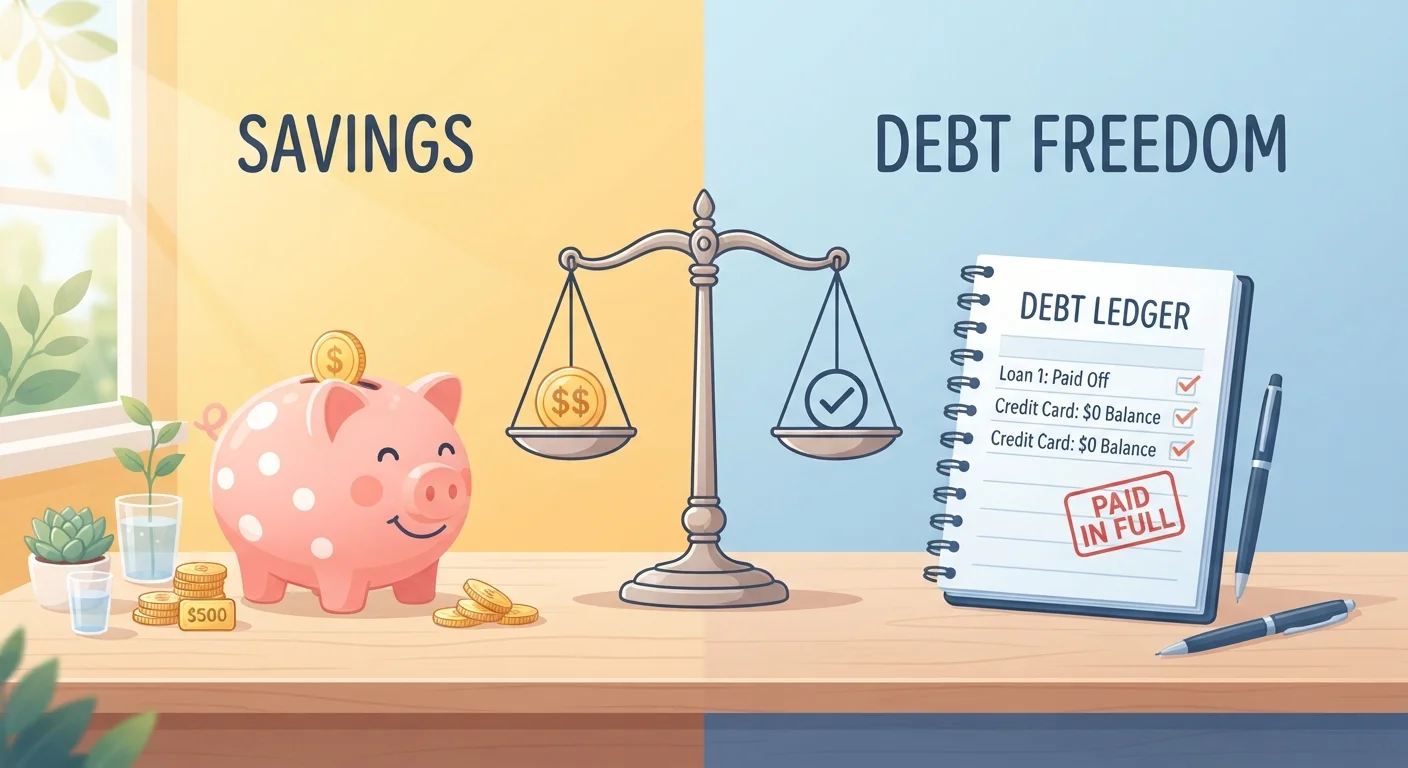
How Compound Interest Works - and Why It Matters on Both Sides of Your Balance Sheet
Compound interest builds wealth in savings accounts and deepens debt on loans. Understanding it is fundamental to managing both well.
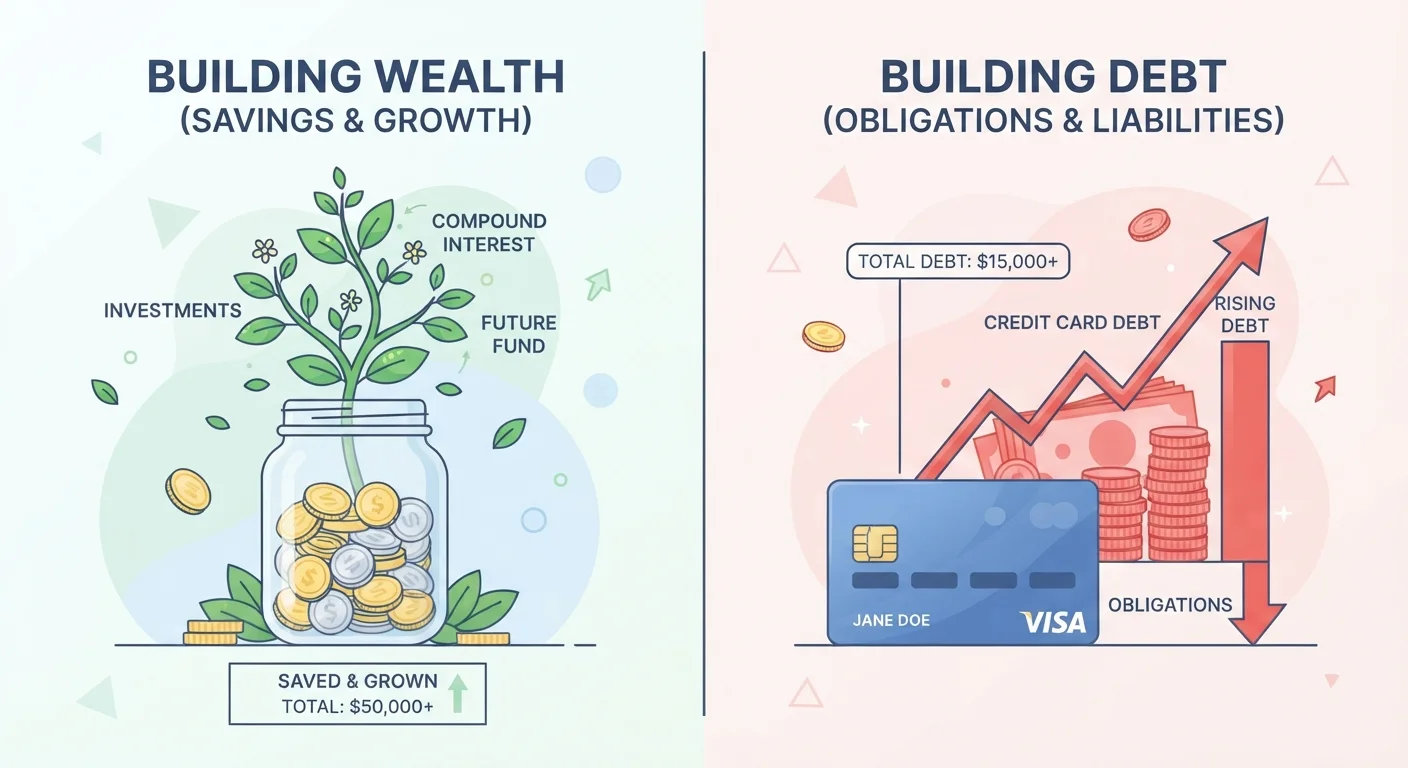
Photo: SummarizedReads.net | Just Read It! editorial
—— In This Article
Key Takeaways
- Compound interest accelerates growth in savings accounts and accelerates debt on unpaid loans.
- The compounding frequency - daily, monthly, or annually - affects how quickly a balance grows.
- Starting to save earlier amplifies returns dramatically due to the time component of compounding.
- High-interest debt, such as credit cards, compounds against you faster than most savings rates work for you.
- Understanding both sides of compound interest helps you make smarter decisions about saving and debt repayment simultaneously.
The Core Mechanic: Interest on Top of Interest
At its most basic, compound interest means you earn (or owe) interest on interest you've already accumulated - not just on the original amount you deposited or borrowed. That distinction sounds small but becomes enormously significant over time.
Here's a simple illustration: deposit $1,000 in a savings account with a 5% annual interest rate. After year one, you've earned $50 in interest, giving you $1,050. In year two, you earn 5% on $1,050 - not the original $1,000 - adding $52.50 instead of $50. The balance is now $1,102.50. Each year, the base grows, and so does the interest calculated on it.
The same process applies to debt. If you carry a $1,000 credit card balance at 20% APR and make no payments, the interest charges are added to what you owe, and next month's interest is calculated on that larger total. The debt climbs without you adding a single new purchase.
For a deeper look at how this plays out on a loan balance over time, see the true cost of carrying a balance.
~$1,629
Value of $1,000 after 10 years at 5% compound interest
Illustrates how a lump sum grows when interest compounds annually at a 5% rate - no additional contributions required.
20%+
Typical credit card APR in the US
According to the Federal Reserve, average credit card interest rates have exceeded 20% APR in recent periods, making carried balances compound quickly against borrowers.
Daily
Most common compounding frequency for credit cards
Most US credit card issuers calculate interest daily on the outstanding balance, making the effective cost higher than the stated annual rate alone implies.
Time Is the Most Powerful Variable
Compound interest rewards patience on the savings side - and punishes delay on the debt side. The longer money sits in a compounding account, the more dramatic the growth curve becomes. This is sometimes called the "time value of money" in personal finance.
An example illustrates the gap starkly: someone who begins saving $200 per month at age 25 and earns an average 6% annual return will have significantly more at age 65 than someone who starts the same habit at 35, even if the later saver contributes more total dollars. The early saver's interest has more years to compound on itself.
On the debt side, the same principle applies in reverse. The longer a high-interest balance goes unpaid, the larger the total owed becomes - often far exceeding the original amount borrowed. This is especially relevant with revolving credit like credit cards, where minimum payments can barely keep pace with accruing interest.
Check Your Compounding Frequency Before Comparing Accounts
When evaluating savings accounts, look at the APY rather than the stated interest rate. APY accounts for compounding frequency, giving you an apples-to-apples comparison. Two accounts with the same nominal rate but different compounding schedules will deliver different actual returns over time.
For a plain-language breakdown of related financial terms like APR and amortization, this reference on key debt and savings terms is a useful starting point.
Compounding Frequency: Why the Fine Print Matters
Not all compounding is created equal. Interest can compound annually, monthly, or daily. The more frequently it compounds, the faster a balance grows - a factor that works in your favor with savings and against you with debt.
Most US savings accounts compound interest daily or monthly and express their actual return through the Annual Percentage Yield (APY). APY already folds in the compounding frequency, so it's the most useful figure when comparing savings accounts. A 4.5% APY account that compounds daily will outperform a 4.5% APR account that compounds annually.
On the borrowing side, credit cards typically compound daily. This is why the Annual Percentage Rate (APR) on a card doesn't fully capture the real cost of carrying a balance - daily compounding makes the effective rate slightly higher than the stated APR suggests.
APR vs. APY: Know the Difference
APR (Annual Percentage Rate) is the stated interest rate without accounting for compounding. APY (Annual Percentage Yield) reflects the actual return or cost after compounding is applied. Savings accounts typically advertise APY; loans and credit cards use APR. Always check which figure you're looking at before making comparisons. For more on these and related terms, see key personal finance terms explained.
Using This Knowledge to Make Smarter Money Decisions
Understanding compound interest on both sides of your finances changes how you approach money decisions. If you're carrying high-interest debt while also saving, compound interest is likely working harder against you (on the debt) than for you (on the savings). That's a useful lens for prioritization.
That said, this isn't a simple argument for abandoning savings entirely to pay down debt. Having a small emergency fund prevents you from going deeper into debt when unexpected expenses arise - and that matters too. The question is usually about proportions and interest rates, not all-or-nothing choices.
Saving while carrying debt is more feasible than many people assume, especially when you understand which debts are compounding most aggressively against you. Similarly, structuring savings goals alongside debt repayment gives you a practical framework for doing both without losing ground on either front.
Compound interest is neither a magic trick nor a threat - it's a mechanical process. Once you understand how it scales with time and frequency, you can position it to work more in your favor.
This article is for general informational purposes only and does not constitute personalised financial or investment advice. Consult a qualified financial adviser for guidance tailored to your individual circumstances.
Frequently Asked Questions

Finance Editorial Team
Finance Editorial Team is the collective byline for our editorial team and contributor network. Articles published under this byline or an editorial pen name are researched, written, and reviewed according to our editorial standards for clarity, consistency, and independence before publication.
View author profile