
Saving While in Debt: Why You Don't Have to Choose One Over the Other
Many people assume debt must be gone before saving begins. Here's why doing both at once is often the smarter financial approach.
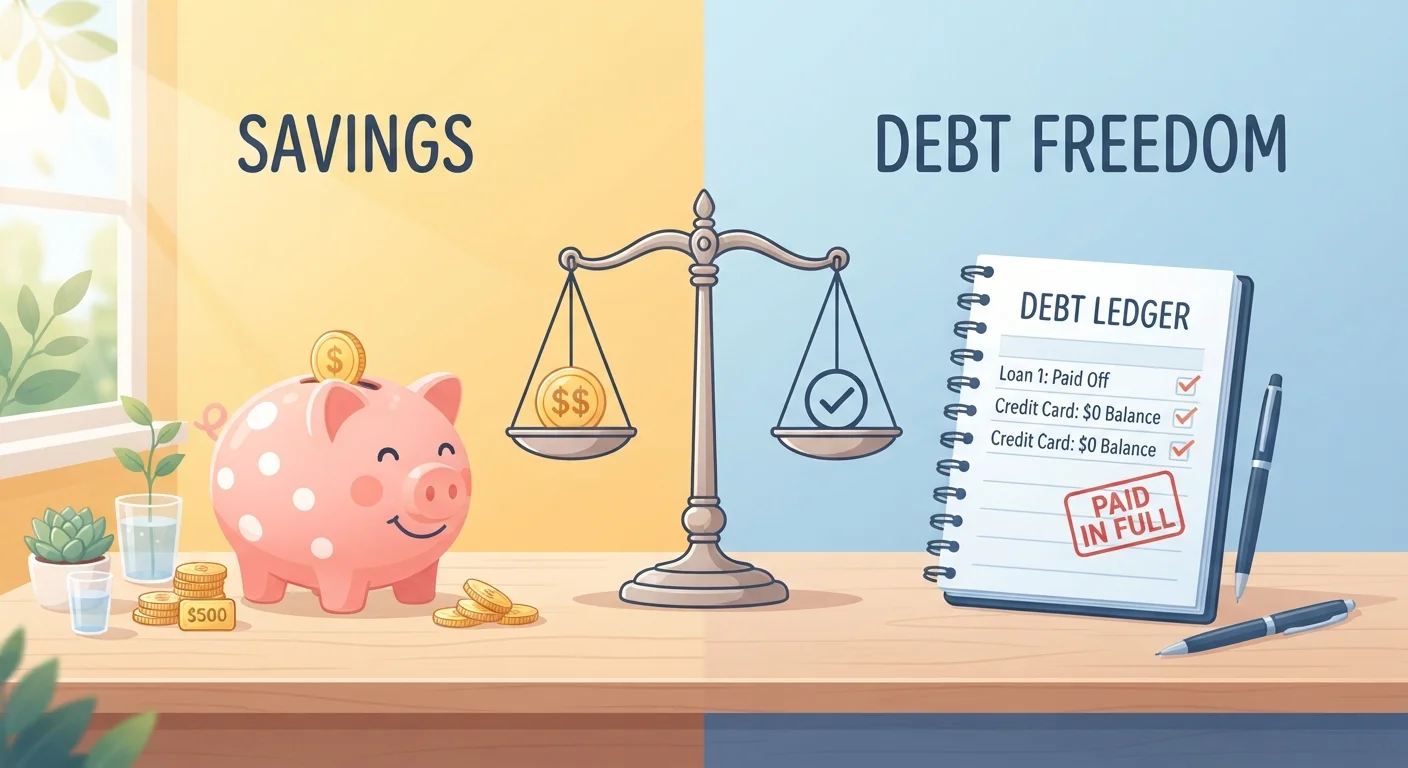
Photo: SummarizedReads.net | Just Read It! editorial
—— In This Article
Key Takeaways
- Waiting until debt is gone before saving can leave you financially exposed to unexpected costs.
- A small emergency fund - even $500-$1,000 - can prevent new debt when surprises hit.
- High-interest debt typically costs more over time than low-yield savings earns, but both still matter.
- The right balance between saving and debt repayment depends on interest rates, income stability, and your goals.
- Automating both debt payments and savings contributions reduces the friction of doing both at once.
The All-or-Nothing Trap
The conventional wisdom goes something like this: debt is a financial emergency, so every spare dollar should go toward eliminating it before you even think about saving. It sounds disciplined, but in practice, this approach leaves a lot of people financially fragile - and often deeper in debt.
When there's no savings cushion, a single unexpected expense - a medical bill, a broken appliance, a car repair - forces you to borrow again. That new debt erases months of repayment progress. The all-or-nothing mindset doesn't just fail mathematically; it fails psychologically, too. People who make no visible saving progress often feel like they're spinning their wheels and lose momentum entirely.
The smarter framing is to treat saving and debt repayment as parallel efforts, not competing ones. The proportions will shift depending on your situation - but both deserve a place in your plan. For a deeper look at common beliefs that hold people back, see myths that keep people from saving sooner.
This Is General Financial Education
The information in this article reflects broadly accepted personal finance principles and is intended as general education only. Everyone's debt types, interest rates, income, and goals differ. For decisions specific to your financial situation, consult a licensed financial adviser or credit counselor.
Why Even a Small Savings Buffer Changes Everything
The primary reason financial educators broadly support some saving even during debt repayment comes down to how debt accumulates. Without an emergency fund, every unexpected expense is a potential setback. Even a modest buffer of $500 to $1,000 - what some frameworks call a starter emergency fund - dramatically reduces the likelihood of reaching for a credit card when life goes sideways.
This isn't a new idea. The concept of separating a baseline safety net from aggressive debt repayment appears in widely recognized personal finance frameworks, including the general structure of the debt snowball and avalanche approaches, both of which typically recommend establishing a small emergency reserve first. You can read more about how those methods work in our overview of the debt avalanche and debt snowball.
40%
Americans who cannot cover a $400 emergency
According to Federal Reserve surveys on household economic well-being, a significant share of U.S. adults would struggle to cover a $400 unexpected expense without borrowing or selling something.
20%+
Typical credit card APR in the US
Federal Reserve data shows average credit card interest rates have frequently exceeded 20% APR in recent years, making high-rate debt one of the costliest financial burdens for households.
50%
Employer 401(k) match rate (common)
Many U.S. employers match employee 401(k) contributions at 50 cents per dollar up to a salary percentage, representing an immediate return that can outpace the cost of most consumer debt.
The Interest Rate Equation - and Its Limits
Here's where the math matters. If you're carrying credit card debt at a 22% annual percentage rate (APR) and your savings account earns 4.5%, every dollar sitting in savings is effectively costing you roughly 17.5 cents per year compared to paying down that balance. The arithmetic strongly favors aggressive debt payoff for high-interest debt.
But that math has limits. It assumes a static situation with no surprises - and most households don't operate that way. It also ignores the value of employer retirement matching, which can represent an immediate 50%-100% return on contributed dollars, often exceeding the cost of even high-rate debt on a per-dollar basis.
The practical takeaway: rank your debts by interest rate. Direct extra payments toward the highest-rate balances first while maintaining minimum payments on all others. Simultaneously, direct a smaller but consistent amount into savings. This approach - sometimes called a parallel strategy - accepts a slightly longer debt payoff timeline in exchange for meaningful financial resilience. Our article on structuring savings goals alongside a debt repayment plan walks through how to set realistic milestones for both.
Start Small, Stay Consistent
You don't need to save hundreds of dollars a month to build a meaningful buffer. Even $25 to $50 per paycheck, automated and directed to a separate account, adds up over time without putting major pressure on your debt payments. Consistency matters more than the size of individual contributions when you're managing competing financial goals.
Putting It Into Practice
A parallel approach to saving and debt repayment works best when it's structured, not improvised. A few practical principles to guide the setup:
- Automate both. Schedule automatic transfers to savings and automatic debt payments on payday. Removing the manual decision reduces the chance you'll skip either one. For more on how automation helps - and where it falls short - see automating your finances.
- Separate your accounts. Keep your emergency fund in a separate account from your everyday checking. Out of sight, out of reach.
- Understand your spending types. Knowing which expenses are fixed and which are variable helps you find room to redirect money toward both goals without upending your budget. Fixed vs. variable spending is worth understanding before restructuring your plan.
- Revisit the split periodically. As debt balances fall and interest costs shrink, you can shift more toward savings. As income changes, adjust accordingly.
If you're deciding how to prioritize from the very first dollar, pay-yourself-first vs. traditional budgeting offers two frameworks worth considering before you commit to a structure.
This article is for general informational and educational purposes only and does not constitute personalized financial advice. Please consult a qualified financial adviser for guidance specific to your situation.
Frequently Asked Questions

Finance Editorial Team
Finance Editorial Team is the collective byline for our editorial team and contributor network. Articles published under this byline or an editorial pen name are researched, written, and reviewed according to our editorial standards for clarity, consistency, and independence before publication.
View author profile