
Pay-Yourself-First vs. Traditional Budgeting
Two different philosophies for managing money: one starts with savings, the other with expenses. Understand the difference before choosing your approach.
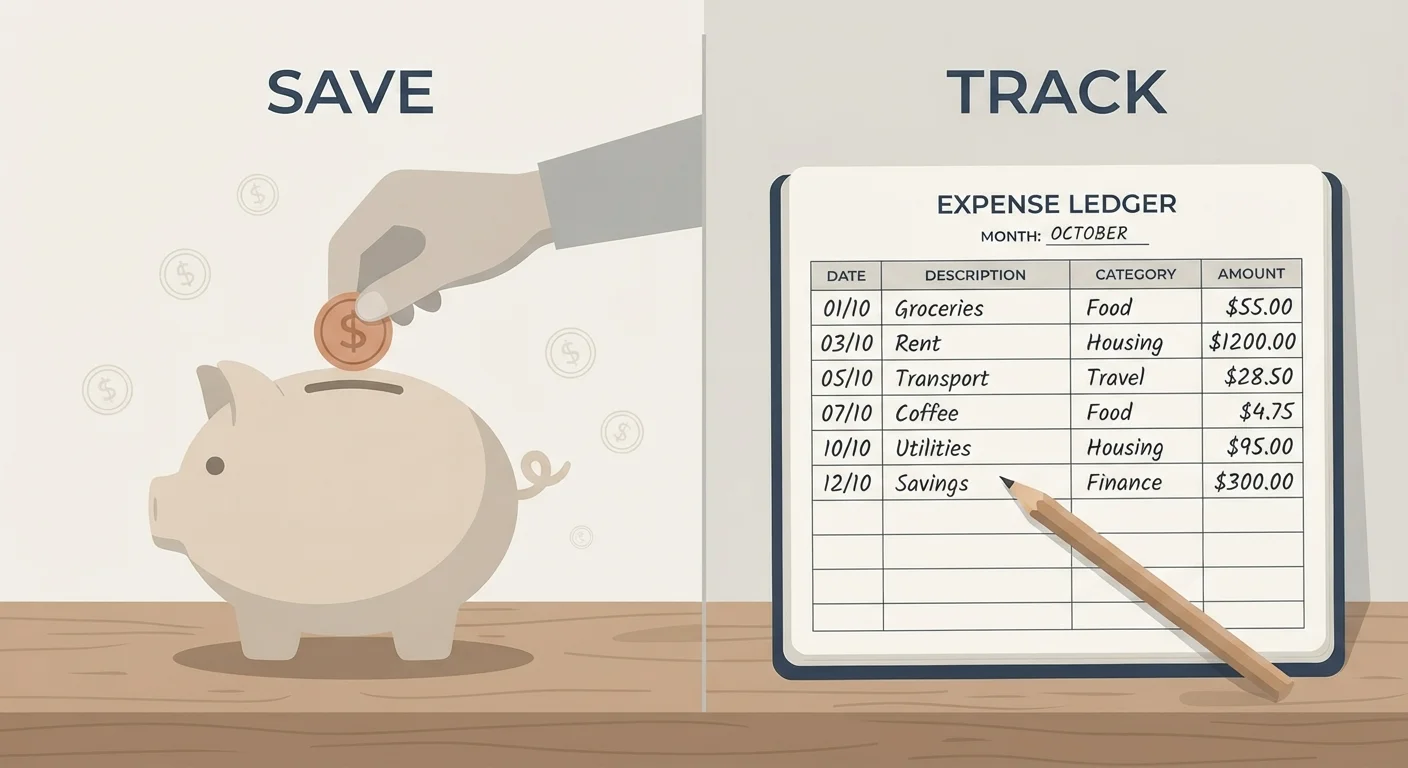
Photo: SummarizedReads.net | Just Read It! editorial
—— In This Article
Key Takeaways
- Pay-yourself-first budgeting moves savings automatically before you spend anything.
- Traditional budgeting tracks expenses first, then allocates whatever is left to savings.
- Pay-yourself-first tends to build savings faster but requires stable income to work smoothly.
- Traditional budgeting offers more visibility into spending but savings often get deprioritized.
- Neither method is universally superior - income stability and financial goals should guide your choice.
The Core Difference Between the Two Approaches
At their heart, these two budgeting philosophies disagree on one question: what comes first - saving or spending?
Pay-yourself-first answers that savings should be treated as a non-negotiable bill, transferred automatically at the start of each pay period before any discretionary spending begins. Whatever remains covers living expenses. The logic is behavioral: if the money is already moved, you can't spend it accidentally.
Traditional budgeting - sometimes called expense-first or category budgeting - works in the opposite order. You list all anticipated expenses, allocate money to each category, and save whatever is left over. This approach prioritizes ensuring bills are paid and needs are met before committing to savings.
Neither framing is wrong. They reflect different assumptions about human behavior and different financial realities. Understanding which assumptions match your situation is what makes the choice meaningful. For a broader overview of how budgeting frameworks fit together, see our complete budgeting overview.
How Pay-Yourself-First Works in Practice
The mechanics are straightforward. When your paycheck arrives, an automatic transfer moves a predetermined amount - to a savings account, retirement contribution, or investment account - before you see it in your checking balance. You then live on the remainder.
This system leans heavily on automation. Set up recurring transfers through your bank or employer payroll splits, and the habit runs without willpower. Behaviorally, it uses a concept sometimes called pre-commitment: removing the option to spend that money eliminates the daily decision of whether to save.
Start Small and Automate Early
When using pay-yourself-first, prioritize setting up the automatic transfer on day one, even if the amount is modest. Automation removes the need to make a savings decision each pay period, which is where many people stall. Increasing the amount by 1-2% every few months is a sustainable way to build toward a meaningful savings rate without feeling the pinch all at once.
The percentage you save matters less at the start than building the habit. Many financial educators suggest starting with a small, sustainable amount - even 5% of take-home pay - and increasing it incrementally over time. Consistency builds momentum more reliably than an aggressive rate you can't sustain.
This approach works naturally within frameworks like the 50/30/20 rule, where savings are explicitly assigned their own slice before needs and wants are addressed.
How Traditional Budgeting Works in Practice
Traditional budgeting starts with a full picture of your expenses. You map out fixed costs - rent, utilities, loan payments - and variable costs like groceries, transportation, and entertainment. Once every category is accounted for, you allocate remaining income to savings.
This approach demands more ongoing effort: tracking receipts, reviewing categories monthly, and adjusting allocations when real spending differs from the plan. But it rewards that effort with detailed visibility. You know exactly where money is going, which matters when managing debt repayment strategies or navigating irregular costs. For a practical reference on how to structure those categories, see our guide to budget categories.
| Pay-Yourself-First | Traditional Budgeting | |
|---|---|---|
| Order of operations | Savings moved first, remainder spent | Expenses allocated first, savings last |
| Effort required | Low - relies on automation | Higher - ongoing category tracking |
| Spending visibility | Limited without extra tracking | High - categories mapped in detail |
| Savings consistency | Strong - automatic and fixed | Variable - depends on discipline |
| Best income type | Stable, predictable income | Variable or irregular income |
| Flexibility | Less flexible mid-month | More flexible to adjust categories |
| Debt management | Less granular control | Well-suited to directed debt payoff |
The risk with traditional budgeting is what financial educators often call "savings as an afterthought" - when expenses fill available income, savings contributions shrink or disappear entirely. Without a firm savings commitment built into the plan, life's variable costs tend to expand to fill the gap.
When Each Approach Fits Best
Pay-yourself-first is most effective when:
- Your income is consistent and predictable month to month
- Your fixed expenses are manageable relative to your income
- Your primary struggle is saving rather than controlling spending
- You want a low-maintenance system with minimal ongoing tracking
Traditional budgeting tends to work better when:
- Income varies significantly - common for freelancers and contractors (see strategies for variable income)
- Expenses are complex or unpredictable
- You're actively paying down debt and need to direct funds precisely
- You and a partner share finances and need shared category visibility (see budgeting for households)
It's also worth noting that these approaches aren't mutually exclusive. Many people automate a savings transfer - effectively paying themselves first - and then use a traditional category budget for the remaining income. That hybrid can capture the consistency of automation with the control of expense tracking.
~57%
Americans without adequate emergency savings
A Federal Reserve report on the economic well-being of U.S. households found a significant share of adults would struggle to cover an unexpected $400 expense from savings alone.
10-15%
Commonly cited savings rate target
Many personal finance frameworks suggest saving 10-15% of gross income for retirement alone, not including short-term or emergency savings goals.
Common Pitfalls to Avoid With Either Method
With pay-yourself-first, the main risk is setting your savings rate too high too quickly. If the automatic transfer leaves insufficient funds for essential expenses, you may overdraft, pull from savings, or rack up credit card balances - defeating the purpose. Start conservatively and adjust upward as you verify the budget holds. Also consider the relationship between saving and debt: if you carry high-interest debt, it may make sense to redirect some of that automated amount toward repayment. The saving while in debt framework addresses this tension directly.
With traditional budgeting, the common failure is under-estimating variable expenses or omitting irregular costs entirely. Annual expenses - insurance premiums, vehicle registration, holiday spending - catch many budgets off guard. Building sinking funds into your plan is one practical way to neutralize this problem.
Don't Skip Irregular Expenses in Your Plan
One of the most common reasons traditional budgets break down is failing to account for costs that don't appear every month - annual subscriptions, car maintenance, or seasonal expenses. Divide these annual amounts by 12 and treat them as monthly line items, or build a dedicated sinking fund. Ignoring them doesn't make them disappear; it just makes them a crisis when they arrive.
This article provides general financial information for educational purposes only. It is not personalized financial advice. For guidance specific to your circumstances, consult a qualified financial professional.

Finance Editorial Team
Finance Editorial Team is the collective byline for our editorial team and contributor network. Articles published under this byline or an editorial pen name are researched, written, and reviewed according to our editorial standards for clarity, consistency, and independence before publication.
View author profile