
The Case for a Sinking Fund (And How to Build One Into Your Budget)
Sinking funds turn large, predictable expenses into manageable monthly amounts. Here's what they are and how to incorporate them into any budget.
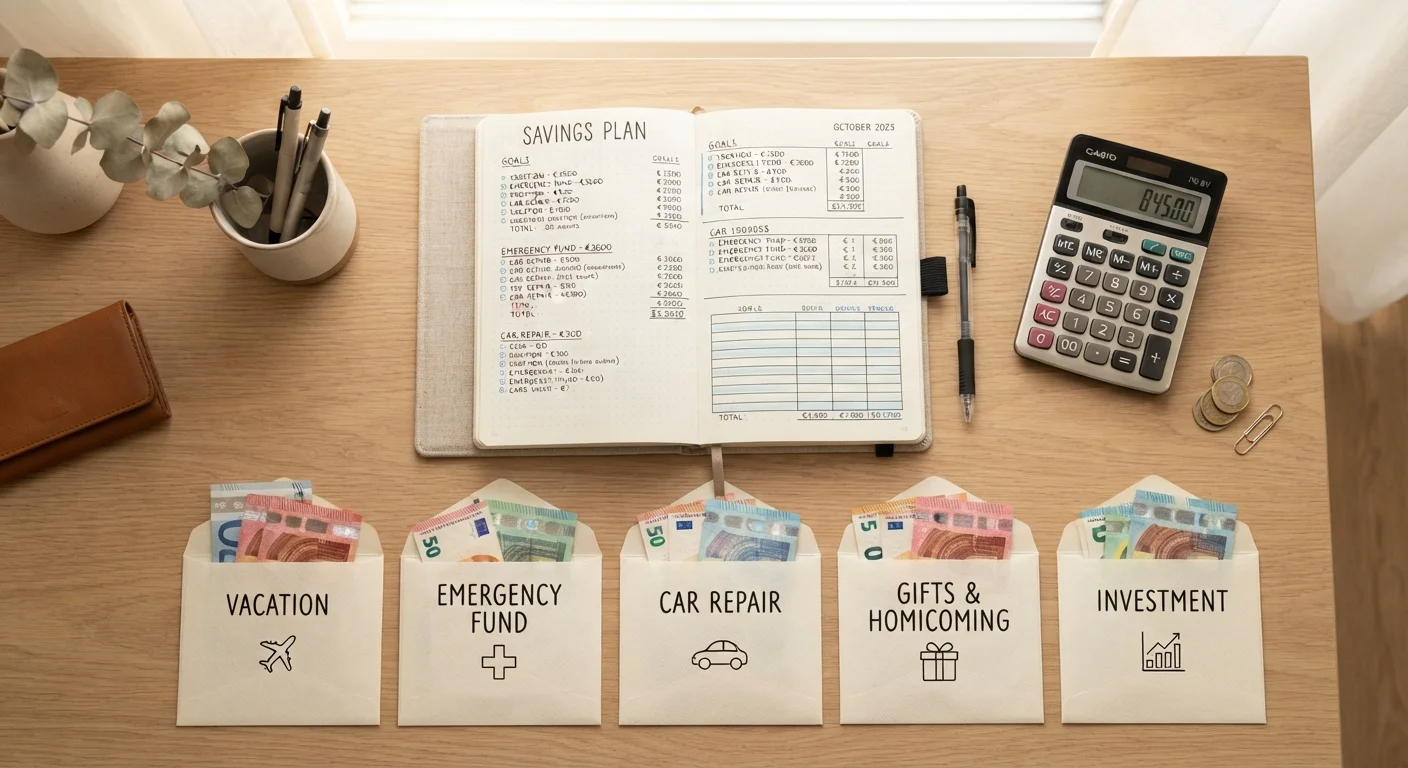
Photo: SummarizedReads.net | Just Read It! editorial
—— In This Article
Key Takeaways
- A sinking fund is a savings category reserved for one specific future expense, not general emergencies.
- You calculate the monthly contribution by dividing the total cost by the number of months until you need it.
- Sinking funds prevent large annual or irregular bills from derailing your monthly budget.
- Most people benefit from running multiple sinking funds simultaneously for different expense categories.
- Keeping sinking funds in a separate savings account reduces the temptation to spend the money early.
Why Large Expenses Keep Catching People Off Guard
Car registration. A new set of tires. Holiday gifts. Annual insurance premiums. These are not surprises - you know they are coming. Yet for many households, they still land like an emergency, pulling money from savings or pushing charges onto a credit card.
The problem isn't a lack of discipline. It's a structural gap in how most budgets are built. A typical monthly budget accounts for recurring bills but ignores the large, irregular costs that arrive once or twice a year. Sinking funds close that gap by turning annual or semi-annual expenses into predictable monthly contributions.
If you're just getting started with budgeting, building a monthly spending plan first gives you the foundation sinking funds need to work effectively.
~$400
Expense many households can't cover from cash
Federal Reserve surveys have consistently found a large share of U.S. adults would struggle to cover an unexpected $400 expense without borrowing or selling something.
1%
Annual home maintenance benchmark
A widely cited rule of thumb in personal finance suggests homeowners budget roughly 1% of their home's purchase price per year for maintenance and repairs.
How a Sinking Fund Actually Works
The mechanics are straightforward. Identify an upcoming expense, estimate its total cost, decide when you'll need the money, and divide the total by the number of months between now and then. That result becomes your monthly contribution.
For example: if your car registration costs $240 and it's due in six months, you contribute $40 per month to a dedicated account. When the bill arrives, the money is already there. No scrambling, no debt.
You can run multiple sinking funds at the same time - each with its own label and target. Common categories include:
- Vehicle maintenance and registration
- Home repairs (a useful rule of thumb is budgeting 1% of your home's value annually)
- Medical and dental costs not covered by insurance
- Holiday and gift spending
- Travel or vacations
- Annual subscriptions and memberships
For guidance on where sinking funds fit among your other spending categories, see this budget categories reference guide.
Label Each Fund Clearly
If your bank allows savings sub-accounts or buckets, name each one specifically - 'Car Registration,' 'Holiday Gifts,' 'Dentist.' Vague labels like 'savings' make it easier to rationalize spending the money on something else. Clear labels reinforce the fund's purpose every time you see it.
Building Sinking Funds Into Your Budget
Sinking funds work best when they're treated as non-negotiable monthly line items - not leftover money you save when things go well. Allocate them alongside your rent, utilities, and groceries so they're funded before discretionary spending begins.
If you're choosing between a pay-yourself-first approach or a traditional expense-first budget, understanding those two philosophies can help you decide where sinking funds fit in your flow.
A practical starting point:
- List your irregular expenses from the past 12 months - look at bank statements to catch what your memory misses.
- Estimate annual totals for each category.
- Divide by 12 to get your monthly contribution per fund.
- Open a labeled savings account (or use sub-accounts if your bank offers them) and automate transfers on payday.
Automation is key. When the contribution moves automatically the day you're paid, it never competes with discretionary spending. Over time, you stop noticing it - and you stop being caught off guard by predictable expenses.
Sinking Funds as a Long-Term Habit
Beyond the immediate relief of having money ready when a bill arrives, sinking funds shift your relationship with money. Rather than reacting to expenses, you're anticipating them - which is the foundation of financial stability.
They're also a practical complement to an emergency fund. Your emergency fund stays intact for genuine surprises; your sinking funds absorb the predictable costs that would otherwise drain it. That distinction matters: saving and debt management work best when each dollar has a clear, defined role.
For homeowners especially, a dedicated home repair sinking fund can prevent renovation costs from becoming a debt spiral. The home improvement hub offers context on the kinds of maintenance costs worth planning for.
Starting small is fine. Even funding one or two categories initially - whatever trips you up most often - builds the habit and demonstrates that the approach works. Once it clicks, adding more funds becomes natural.
This article is for general informational purposes only and does not constitute personalised financial advice. For guidance tailored to your situation, consider consulting a qualified financial professional.
Frequently Asked Questions

Finance Editorial Team
Finance Editorial Team is the collective byline for our editorial team and contributor network. Articles published under this byline or an editorial pen name are researched, written, and reviewed according to our editorial standards for clarity, consistency, and independence before publication.
View author profile