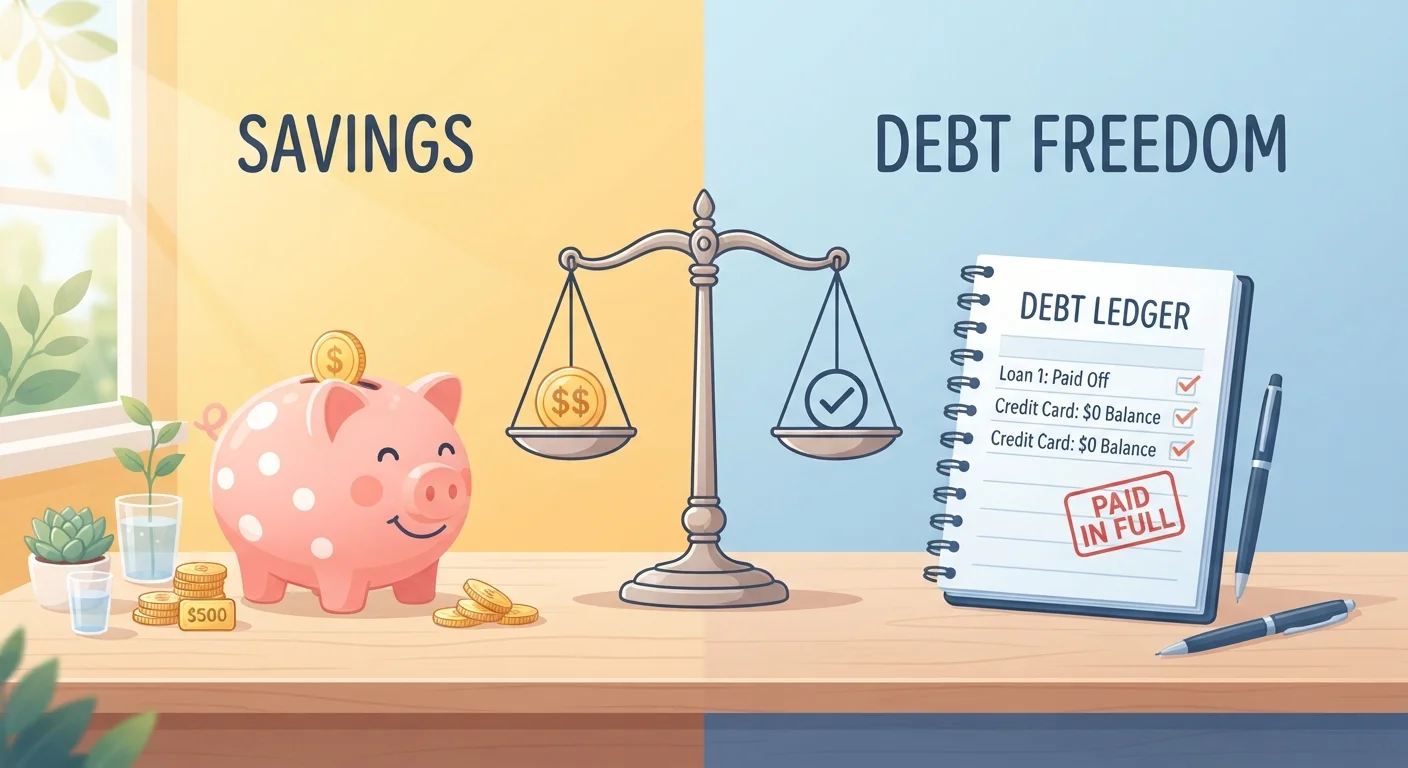
Fixed Expenses vs. Variable Spending: What Each One Means for Your Debt and Savings Strategy
Fixed and variable costs respond differently to budget pressure. Understanding the distinction helps when redirecting money toward debt or savings.

Photo: SummarizedReads.net | Just Read It! editorial
—— In This Article
Key Takeaways
- Fixed expenses stay the same each month and are harder to cut without a major lifestyle change.
- Variable spending fluctuates and is where most short-term budget adjustments are possible.
- Identifying which costs are fixed versus variable helps prioritize debt payoff and savings contributions.
- Reducing fixed expenses creates permanent budget relief; reducing variable spending offers flexible control.
- Both categories must be understood before choosing a debt or savings strategy that actually holds.
Defining the Two Categories
A fixed expense is any recurring cost that stays the same amount each billing cycle regardless of how much you use a product or service. Rent or mortgage payments, car loan payments, insurance premiums, and certain subscription fees are common examples. These costs are contractual or structural - they do not shrink because you had a lean month.
A variable expense is any cost that changes based on behavior or consumption. Groceries, gas, dining out, utilities, clothing, and entertainment all fall here. The dollar amount shifts month to month based on choices you make and circumstances you face.
Some costs blur the line. Utility bills, for instance, have a fixed base charge but a variable usage component. When building a budget, it helps to categorize these as variable since the portion you can influence is what matters. The Budgeting Basics hub covers practical ways to map out both categories across your real spending.
| Criterion | Fixed Expenses | Variable Spending |
|---|---|---|
| Amount each month | Stays the same | Changes with behavior |
| Examples | Rent, loan payments, insurance | Groceries, dining, gas, utilities |
| Ease of reducing | Requires structural action | Adjustable month to month |
| Impact when reduced | Permanent recurring savings | Immediate but reversible relief |
| Risk if ignored | Leaves no room to maneuver | Quietly erodes savings or debt progress |
| Best lever for | Long-term budget restructuring | Short-term cash flow control |
Why This Distinction Changes Your Debt and Savings Math
When money is tight, most people instinctively cut the nearest visible expense. But fixed and variable costs respond differently to budget pressure, and treating them the same leads to frustration.
Fixed costs require structural action - renegotiating a contract, refinancing a loan, or making a lifestyle change like moving to a lower-cost area. These moves take effort upfront but create reliable, recurring room in your budget once done. If you are carrying high-interest debt, permanently reducing a fixed expense and redirecting that amount toward debt principal is one of the most effective strategies available.
Variable spending, by contrast, is your immediate toolkit. You can spend less on groceries this month, skip a subscription for 90 days, or cut restaurant meals during a tight stretch - and none of those choices require a long-term commitment. That flexibility makes variable spending the right place to look when you need to boost a savings contribution quickly or accelerate a debt payment without locking yourself into anything permanent.
~67%
Americans living paycheck to paycheck
A widely cited figure from LendingClub and PYMNTS research suggests roughly two-thirds of U.S. adults have little buffer between income and expenses - making the fixed vs. variable distinction especially consequential.
50/30/20
Common budget allocation guideline
The 50/30/20 rule - popularized in personal finance - suggests 50% of after-tax income for needs (many of which are fixed), 30% for wants (mostly variable), and 20% for savings and debt repayment.
For a deeper look at how saving and debt reduction can work simultaneously, see why doing both at once is often smarter.
Applying the Distinction to a Real Budget
Start by listing every recurring monthly cost and labeling it fixed or variable. Total your fixed expenses first - this is your budget floor, the minimum your income must cover before you make any other financial decision. What remains after fixed expenses is your discretionary pool, most of which is variable spending.
From that discretionary pool, two things compete: current lifestyle spending and your financial goals (debt payments above minimums and savings contributions). This is where strategy matters. The pay-yourself-first approach treats savings contributions like a fixed obligation, pulling them from the pool before variable spending fills in. A traditional approach covers all variable needs first, then saves or pays extra debt with whatever is left. Neither is universally superior - the right approach depends on your income stability and your fixed-expense burden.
If your fixed expenses consume the bulk of your income, the lever is structural: refinancing, renegotiating, or downsizing a fixed cost. If your fixed expenses are manageable but variable spending is diffuse and hard to track, the lever is behavioral: tighter category limits and clearer spending intentions. Structuring savings goals alongside a debt repayment plan offers practical frameworks for doing both without losing momentum on either front.
When Fixed Expenses Feel Uncuttable
Some fixed costs - like a car payment tied to your commute or rent in a high-cost area - may feel impossible to reduce. That doesn't mean the category is off-limits forever; it means any change requires planning time. If your fixed expenses exceed 60-70% of take-home pay, that structural imbalance is worth addressing before relying on variable spending cuts alone. See emergency funds and debt repayment for how to think about financial cushion in a tight fixed-cost environment.
This article is for general informational and educational purposes only and does not constitute personalized financial advice. Consider consulting a licensed financial professional for guidance specific to your situation.

Finance Editorial Team
Finance Editorial Team is the collective byline for our editorial team and contributor network. Articles published under this byline or an editorial pen name are researched, written, and reviewed according to our editorial standards for clarity, consistency, and independence before publication.
View author profile