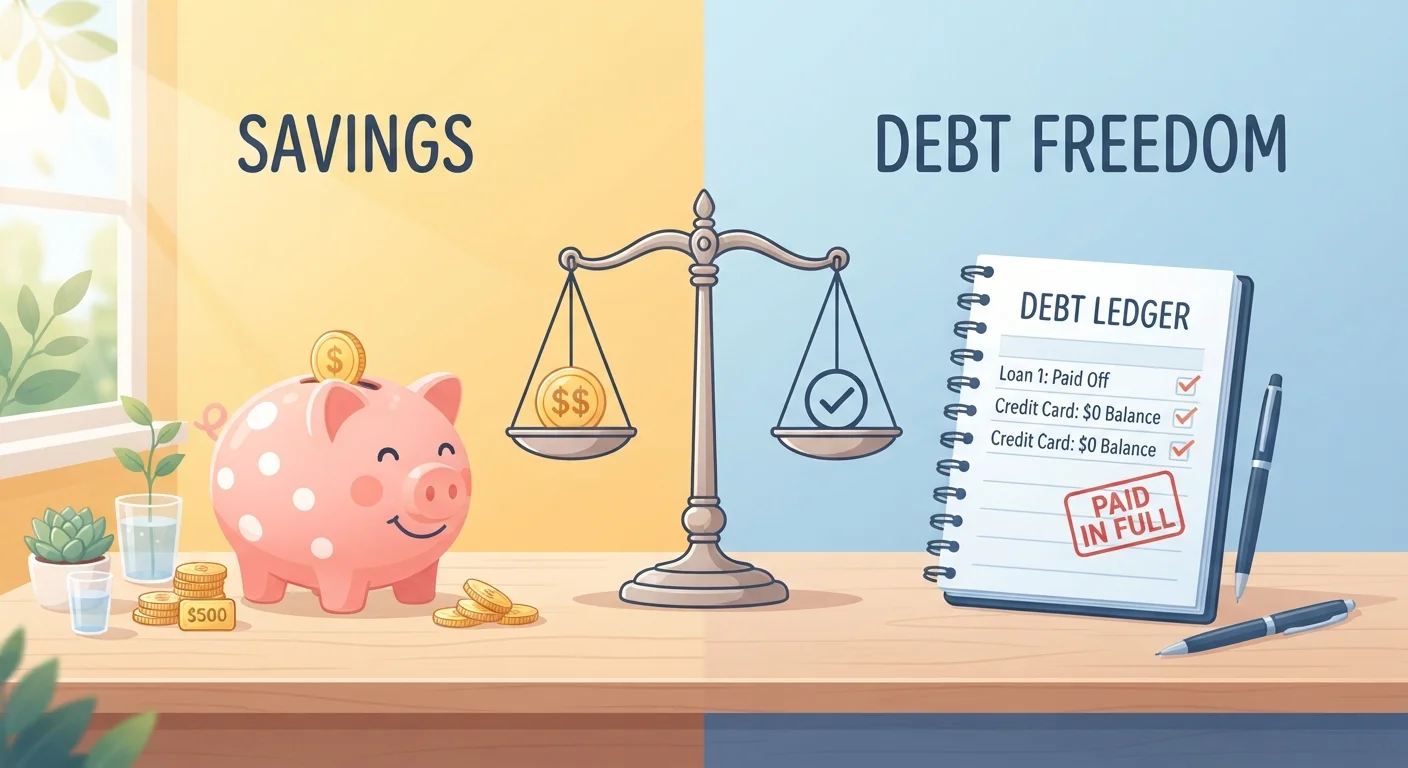
Structuring Savings Goals Alongside a Debt Repayment Plan
Practical principles for setting realistic savings milestones without losing momentum on debt reduction — and how to adjust when plans shift.

Photo: SummarizedReads.net | Just Read It! editorial
—— In This Article
Key Takeaways
- A small emergency fund should come before aggressive debt repayment to prevent new debt from derailing your plan.
- Splitting available cash between savings and debt - even modestly - builds two financial muscles simultaneously.
- Milestone-based savings goals keep motivation intact while debt balances decline over time.
- When income or expenses shift, your plan should flex rather than collapse entirely.
- Automation reduces the mental load of maintaining both a savings habit and a repayment schedule.
Why Sequencing Matters - But Isn't Everything
Most financial frameworks present a clear sequence: eliminate high-interest debt, then save. That logic is sound mathematically - paying 20% interest while earning 4% on savings is a losing trade. But the real world doesn't follow a tidy sequence. Unexpected car repairs, a medical bill, or a slow month at work can undo months of debt payments if there's nothing in reserve.
The practical answer isn't to save instead of paying debt - it's to do both with intention. Doing both at once is often the smarter financial approach, because a zero-savings strategy leaves you one emergency away from more borrowing.
Start by acknowledging that your budget has two real obligations: reducing what you owe and building what you keep. Treating them as rivals - rather than parallel tracks - creates an all-or-nothing mindset that's hard to sustain.
Best Practices for Structuring Your Dual Plan
The following principles give your savings goals structure without letting debt repayment stall. Apply them based on your own income, obligations, and risk tolerance - this is general financial education, not personalized advice. Consider consulting a licensed financial professional for guidance specific to your situation.
Build a starter emergency fund before maximizing debt payments
Without even a modest cash buffer, any unexpected expense forces you back into debt, erasing progress. A small reserve - commonly cited as $500 to $1,000 - provides a circuit breaker that keeps your repayment plan intact. This is a foundational step, not an excuse to delay debt repayment indefinitely.
Define savings goals by purpose and timeline, not just dollar amount
Vague goals like 'save more' have no finish line and no urgency. Naming a goal - a car fund, a moving deposit, a medical deductible reserve - gives it weight and lets you assign a realistic monthly contribution. Milestone-based goals are easier to protect when budgets tighten.
Allocate a fixed percentage split between debt and savings each month
Deciding on a split - say, directing 70% of discretionary cash toward debt and 30% toward savings - removes the monthly negotiation. It keeps both tracks moving and prevents the common trap of 'paying off debt first and then saving,' which often never arrives. The exact ratio should reflect your interest rates and financial goals.
Review and rebalance your split when income or expenses materially change
A plan built on last year's budget may be too aggressive or too passive today. Regular check-ins - at minimum quarterly - ensure your savings contributions and debt payments reflect your current reality. Failing to update the plan often leads to silent drift. The monthly audit checklist is a useful tool for this.
Separate your savings accounts by goal to prevent blending
Keeping all savings in one account makes it easy to rationalize withdrawals for one purpose when money is intended for another. Separate labeled accounts - even if small - create psychological and practical clarity. Many banks allow multiple savings accounts at no additional cost.
Quick Wins You Can Act on Today
If you're not sure where to begin, these immediate actions create traction without requiring a complete overhaul of your finances. Even one step taken today builds the habit.
For a structured monthly review that covers debt balances, savings progress, and upcoming obligations together, see the monthly financial reset checklist.
When Plans Need to Change
Life interrupts even careful plans. A job change, a family expense, or a shift in interest rates can make your original split between savings and debt payments unrealistic. The goal isn't to hold rigidly to a plan - it's to adjust deliberately rather than abandon structure altogether.
Use a Reset Rule, Not an Abandonment Rule
When your plan gets disrupted, resist the urge to scrap it entirely. Instead, create a simple reset rule in advance: 'If I miss a savings contribution, I'll restart next payday at the original amount.' Having a recovery protocol means setbacks stay temporary. A paused plan is far easier to restart than one that was never written down at all.
If you need to temporarily pause savings contributions to cover a gap, set a defined restart date. If you receive a windfall - a tax refund, a bonus, an unexpected gift - decide in advance how you'll divide it between debt and savings rather than letting it disappear into spending. Lifestyle inflation and minimum payment traps are among the habits that quietly erode progress, often during moments when things feel financially stable.
The debt avalanche and debt snowball methods each offer frameworks for prioritizing which debts to tackle first - pairing either approach with a standing savings allocation keeps the full picture in view. And if friction is what slows you down, automating transfers for both saving and debt payments removes the decision fatigue from the equation.
This article provides general financial information and education only. It is not personalized financial, tax, or legal advice. Individual circumstances vary - speak with a qualified financial adviser before making decisions about your own debt repayment or savings strategy.

Finance Editorial Team
Finance Editorial Team is the collective byline for our editorial team and contributor network. Articles published under this byline or an editorial pen name are researched, written, and reviewed according to our editorial standards for clarity, consistency, and independence before publication.
View author profile