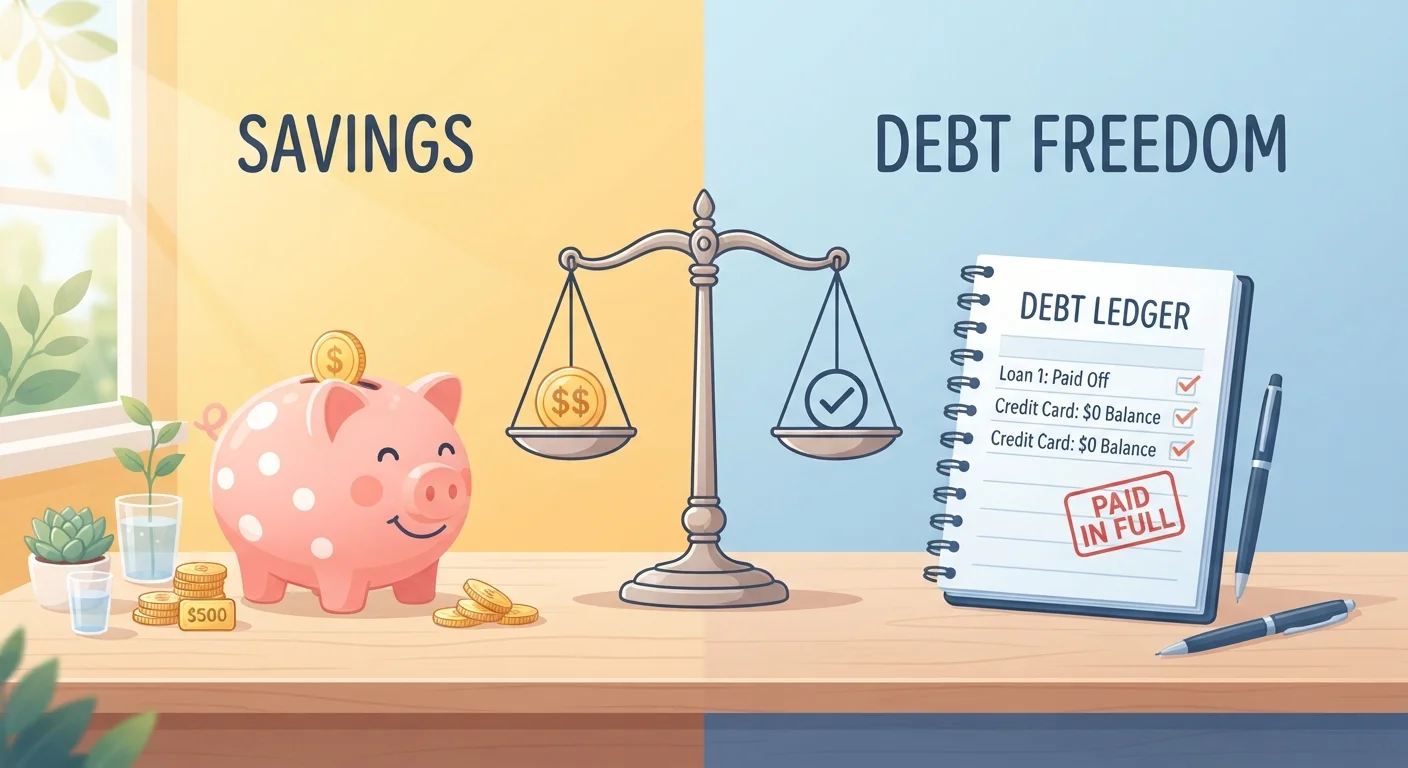
Automating Your Finances: What It Can and Cannot Do for Debt and Savings
Automation removes friction from saving and repaying debt — but it's not a fix for structural budget problems. Here's an honest breakdown.

Photo: SummarizedReads.net | Just Read It! editorial
—— In This Article
Key Takeaways
- Automation removes friction but cannot fix a budget where expenses already exceed income.
- Setting up automatic debt payments helps avoid late fees and protects your credit score.
- Automating savings works best when paired with a realistic monthly spending plan.
- Periodically reviewing automated transfers is essential - set-it-and-forget-it has real limits.
- Even small automated contributions to savings compound meaningfully over time.
Eliminates willpower as a variable
When transfers happen automatically, you don't have to make the decision each month - removing a key point of failure for most people trying to save consistently.
Protects against missed debt payments
Automatic minimum payments mean you won't accidentally skip a due date, avoiding late fees and the credit score damage that comes with delinquency.
Compounds small contributions over time
Even modest automated savings build meaningfully over months and years, particularly in interest-bearing accounts - a benefit that sporadic manual deposits rarely match.
Reduces financial decision fatigue
Having recurring transfers locked in frees up mental bandwidth, so you spend less cognitive energy on routine money management each month.
Creates a built-in savings habit
Automation makes saving the default behavior rather than an afterthought, which behavioral research consistently links to better long-term financial outcomes.
Cannot fix a negative-margin budget
If your income doesn't reliably exceed your expenses, automated transfers will overdraw your account or force you to scramble - automation amplifies budget problems rather than solving them.
Encourages a 'set and forget' mindset
Automated finances still need periodic review. Income changes, rate adjustments on variable-rate debt, and shifting expenses can make old automation settings counterproductive.
May deprioritize high-interest debt payoff
Automating only minimum debt payments while saving can result in significant interest costs over time; without strategic extra payments, high-rate debt lingers and grows more expensive.
Overdraft risk during irregular income months
For freelancers, gig workers, or anyone with variable pay, fixed automated transfers can cause overdrafts in lean months - a fee that directly undermines your savings goal.
What Financial Automation Actually Does
Financial automation means instructing your bank or financial institution to move money on a schedule - without you lifting a finger each time. Common examples include automatic minimum or extra payments toward a credit card or loan, recurring transfers into a savings account, and payroll direct deposit splits that funnel a portion of each paycheck directly into savings.
The core appeal is behavioral. Research in behavioral economics consistently shows that humans are prone to spending money that sits in a checking account. Automation sidesteps that temptation by moving money before it can be spent impulsively. Think of it as paying your future self first, automatically.
If you're new to structuring these habits alongside existing debt, see our introduction to personal finance with debt for a grounded starting point.
The Real Advantages of Automating Debt and Savings
When the conditions are right, automation delivers concrete, measurable benefits.
Eliminates willpower as a variable
When transfers happen automatically, you don't have to make the decision each month - removing a key point of failure for most people trying to save consistently.
Protects against missed debt payments
Automatic minimum payments mean you won't accidentally skip a due date, avoiding late fees and the credit score damage that comes with delinquency.
Compounds small contributions over time
Even modest automated savings build meaningfully over months and years, particularly in interest-bearing accounts - a benefit that sporadic manual deposits rarely match.
Reduces financial decision fatigue
Having recurring transfers locked in frees up mental bandwidth, so you spend less cognitive energy on routine money management each month.
Creates a built-in savings habit
Automation makes saving the default behavior rather than an afterthought, which behavioral research consistently links to better long-term financial outcomes.
~57%
Americans living paycheck to paycheck
According to PYMNTS Intelligence and LendingClub research, a majority of U.S. consumers report spending most or all of their monthly income, underscoring why automation alone can't substitute for a workable budget.
3x
Higher savings rate with automatic enrollment
Studies on automatic enrollment in workplace retirement plans consistently show participation rates roughly three times higher than with voluntary opt-in programs, demonstrating automation's behavioral power.
For people juggling both debt and savings goals, automation can enforce a structure that manual management rarely sustains. Rather than deciding each month what to prioritize, the transfers happen automatically - reducing decision fatigue and the risk of skipping a payment or contribution during a stressful week.
Our article on saving while in debt covers how doing both at once is often the smarter approach - automation is one of the key tools that makes it practical.
Where Automation Falls Short
Automation is an execution tool - it carries out your plan, but it cannot write the plan for you. If your monthly expenses already exceed your income, automating transfers will simply trigger overdrafts or leave critical bills unpaid.
Cannot fix a negative-margin budget
If your income doesn't reliably exceed your expenses, automated transfers will overdraw your account or force you to scramble - automation amplifies budget problems rather than solving them.
Encourages a 'set and forget' mindset
Automated finances still need periodic review. Income changes, rate adjustments on variable-rate debt, and shifting expenses can make old automation settings counterproductive.
May deprioritize high-interest debt payoff
Automating only minimum debt payments while saving can result in significant interest costs over time; without strategic extra payments, high-rate debt lingers and grows more expensive.
Overdraft risk during irregular income months
For freelancers, gig workers, or anyone with variable pay, fixed automated transfers can cause overdrafts in lean months - a fee that directly undermines your savings goal.
Automation Doesn't Replace a Budget
Many people assume that once their transfers are automated, active financial management is no longer necessary. In practice, automation works best as a layer on top of a clear, realistic budget - not as a replacement for one. Your automated amounts should reflect what your budget has already confirmed you can afford, not what you hope to be able to afford. Revisit your setup whenever your income or regular expenses shift noticeably.
Understanding your fixed versus variable expenses is essential before you automate anything. Fixed obligations - rent, loan minimums, utilities - must be accounted for first. Automating savings on top of expenses you can't actually afford isn't discipline; it's a system set up to fail.
How to Set Up Automation That Actually Holds
Effective automation starts with an honest budget, not an optimistic one. Before you schedule any automatic transfer, confirm that your take-home pay comfortably covers essential expenses, debt minimums, and the amount you plan to automate. Even $25 per paycheck into savings is more sustainable - and more effective - than an ambitious figure that causes overdrafts.
A few practical principles to guide the setup:
- Sequence matters: Automate debt minimums first (to protect your credit and avoid fees), then savings, then any extra debt payments with remaining margin.
- Align timing with payday: Schedule transfers for the day after each paycheck arrives, not mid-month, to avoid shortfalls.
- Build in a review date: Set a calendar reminder to revisit automated amounts quarterly or whenever your income or expenses change significantly.
For a structured way to revisit your automation over time, our monthly financial audit checklist provides a practical review framework. You can also explore how to structure savings goals alongside debt repayment for help setting realistic milestones.
This article is for general informational purposes only and does not constitute personalized financial advice. Consult a qualified financial professional for guidance specific to your situation.

Finance Editorial Team
Finance Editorial Team is the collective byline for our editorial team and contributor network. Articles published under this byline or an editorial pen name are researched, written, and reviewed according to our editorial standards for clarity, consistency, and independence before publication.
View author profile