Myths That Keep People from Saving Sooner
From 'I'll start when I earn more' to 'small amounts don't add up' — common beliefs about saving that don't hold up under scrutiny.

Photo: SummarizedReads.net | Just Read It! editorial
—— In This Article
Key Takeaways
- Waiting until you earn more to save typically means you never start at all.
- Even small, regular deposits build compounding momentum that grows significantly over time.
- Carrying debt and saving simultaneously is often a smarter strategy than waiting until debt is gone.
- Automating savings removes the friction that causes most people to delay or skip contributions.
- The cost of starting late almost always outweighs the cost of saving small amounts now.
Why Saving Myths Are So Persistent
Saving money sounds straightforward - spend less than you earn and set the difference aside. Yet many people consistently put it off, not because they lack willpower, but because they've internalized beliefs about saving that simply aren't accurate. These beliefs feel logical on the surface, which is exactly why they're so effective at keeping people stuck.
The good news: most of these myths collapse under basic scrutiny. Understanding what's actually true - and why - can remove the mental barriers that delay saving for years. If you've also questioned whether your spending habits are quietly working against you, these patterns are worth examining alongside the myths below.
Myth
I'll start saving once I earn more money. Right now there's nothing left over.
Fact
Income level is rarely the primary barrier to saving; spending patterns relative to income are.
Research on consumer behavior consistently shows that lifestyle expenses tend to expand to meet available income - a dynamic often called lifestyle inflation. People who wait for a raise to start saving typically find that the raise gets absorbed by new expenses. Starting with even $10 or $20 per paycheck builds the habit and the account simultaneously. Automation - setting up an automatic transfer on payday - removes the decision entirely and makes saving the default, not the exception.
Myth
Small amounts aren't worth bothering with. I'd need to save hundreds a month to make a real difference.
Fact
Compound growth means that small, early contributions can outperform larger, later ones over time.
The mathematical principle of compound interest - earning returns on your returns - means that time in the market (or in a savings account) matters more than the size of individual deposits, especially early on. A consistent $25 per week over two decades grows substantially more than $100 per week started ten years later, even if the total dollars contributed are similar. The earlier you start, the more time your money has to work. Dismissing small amounts as pointless is one of the most expensive financial mistakes a person can make in their 20s and 30s.
Myth
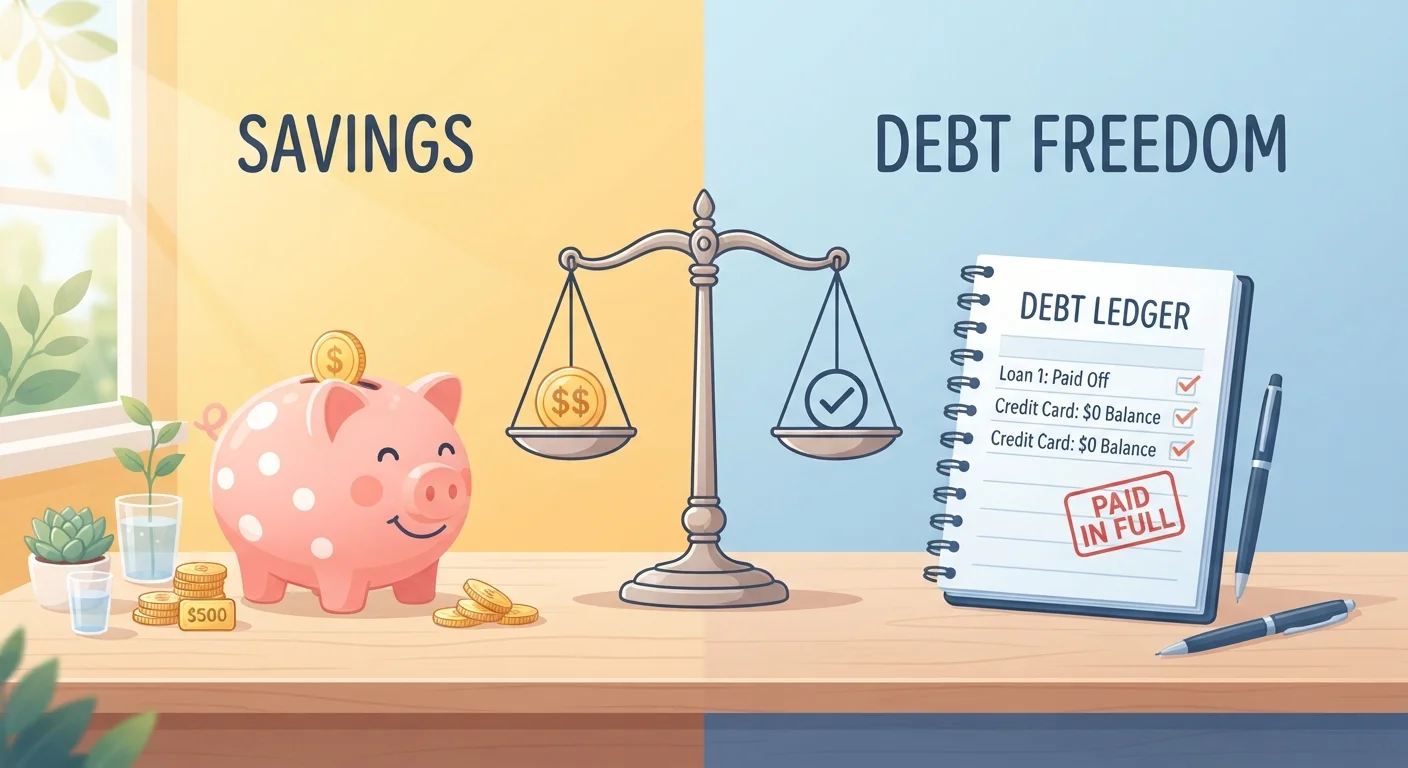
I have to pay off all my debt before I can justify saving anything.
Fact
Saving and debt repayment can - and often should - happen at the same time.
Carrying no savings while aggressively paying off debt creates a fragile financial position. A single unexpected expense forces you to borrow again, often at high interest, wiping out weeks or months of payoff progress. Most financial educators recommend building a small emergency fund - commonly cited as $500 to $1,000 - before channeling every spare dollar toward debt. This isn't about ignoring interest rates; it's about financial resilience. Once that cushion exists, an accelerated debt payoff strategy (such as the debt avalanche method, targeting highest-interest balances first) becomes far more sustainable.
Myth
Saving is only necessary if you're planning for retirement. I'm too young to worry about that.
Fact
Saving serves multiple shorter-term goals - emergencies, large purchases, stability - not just retirement.
Framing saving as a retirement-only activity causes people to treat it as something distant and optional. In reality, savings serve immediate purposes: covering a job loss, handling a medical bill, avoiding high-interest debt for a car repair, or having options when life circumstances change. Even a small liquid savings buffer - money you can access without penalty - provides security that changes how you make decisions day-to-day. Thinking of saving as something only older people need ignores the value it provides right now.
Myth
Budgeting is too restrictive and complicated to stick with. It's easier to just spend carefully.
Fact
A budget doesn't require perfection or sacrifice - it requires awareness of where money is actually going.
Many people avoid budgeting because they imagine it means tracking every coffee purchase in a spreadsheet and eliminating all discretionary spending. That's not what effective budgeting looks like. Simple frameworks like the 50/30/20 rule - allocating roughly 50% of take-home pay to needs, 30% to wants, and 20% to savings and debt repayment - provide structure without rigidity. The goal is clarity, not restriction. If you've been avoiding budgets for similar reasons, common budgeting myths may be worth reading alongside this piece.
The Debt Trap Myth: Pay It All Off First
One of the most financially damaging myths is the belief that you must eliminate all debt before saving a single dollar. The logic seems sound - why earn 4% on savings when you're paying 20% on credit card interest?
In practice, though, this approach leaves people with zero financial cushion. An unexpected car repair or medical bill forces them back into debt, erasing months of payoff progress. Maintaining even a modest emergency fund while paying down debt creates a buffer that prevents this cycle.
57%
Americans with less than $1,000 in savings
Surveys by financial research organizations consistently find a majority of U.S. adults lack a basic emergency fund, often citing the belief that they cannot afford to save.
10x
Potential growth difference from starting early
Compound interest illustrations commonly show that starting saving at 25 versus 35 can result in roughly ten times the account balance by retirement age, even with identical monthly contributions.
The strategy isn't either/or - it's about allocating deliberately. Prioritize high-interest debt aggressively, but don't abandon saving entirely. Our companion piece on saving while carrying debt explains the practical framework for doing both at once.
For a broader foundation, the budgeting basics hub covers how to allocate income across competing financial priorities without guesswork.
This article provides general financial information for educational purposes only and is not personalized financial advice. Consult a licensed financial professional for guidance specific to your circumstances.

Finance Editorial Team
Finance Editorial Team is the collective byline for our editorial team and contributor network. Articles published under this byline or an editorial pen name are researched, written, and reviewed according to our editorial standards for clarity, consistency, and independence before publication.
View author profile