
Certified Pre-Owned Vehicles: What the Designation Actually Guarantees
CPO programmes vary widely by manufacturer. Learn what inspections and coverage are typically included — and what isn't.
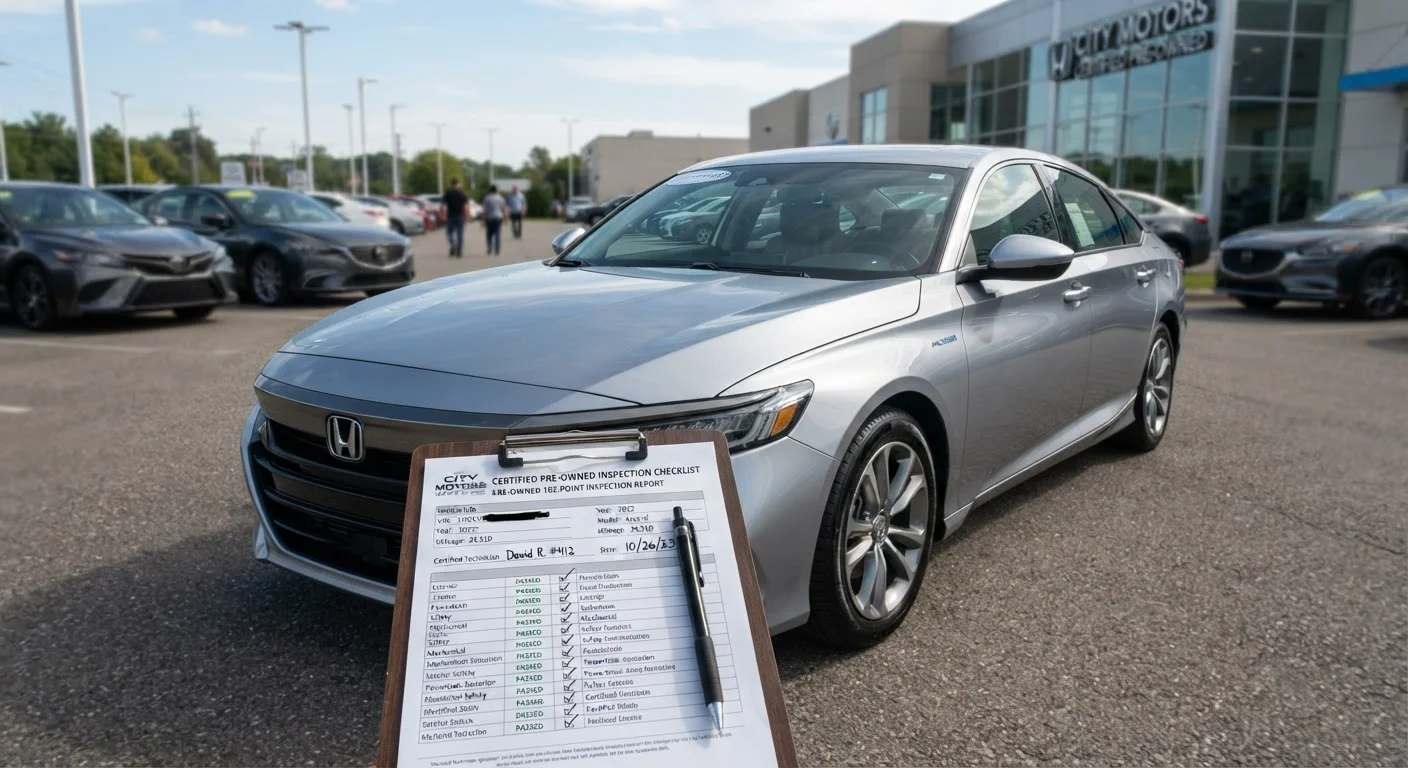
Photo: SummarizedReads.net | Just Read It! editorial
—— In This Article
Key Takeaways
- CPO programmes are not standardised - coverage, inspection depth, and warranty terms vary significantly by manufacturer.
- Manufacturer-backed CPO programmes generally offer stronger warranty backing than dealer-run certifications.
- A CPO label does not eliminate the need for an independent pre-purchase inspection.
- CPO vehicles typically cost more than comparable non-certified used cars - weigh the warranty value carefully.
- Always request the full inspection checklist and warranty documents before signing anything.
What 'Certified' Actually Means
The word certified sounds like a guarantee of quality, but in the used-car market it describes a process, not an outcome. A CPO vehicle has been inspected against a set of criteria defined by the certifying party - which could be the automaker, the dealership, or a third-party administrator - and any items that failed those criteria were repaired or replaced before the vehicle was listed for sale.
The critical point: there is no federal standard governing what a CPO inspection must include. A 172-point inspection at one manufacturer and a 100-point inspection at another may cover completely different systems, with different tolerances for what passes. The label itself tells you a process occurred - not how rigorous it was.
Manufacturer-backed programmes (offered by automakers through their franchised dealers) tend to be more structured and better documented than dealer-run certifications. When a dealer independently certifies a vehicle, the backing behind any warranty claim may come from a third-party service contract company rather than the automaker itself. That distinction matters if the contract provider has financial difficulties or disputes your claim. For a broader look at how warranty language can limit coverage in ways buyers don't expect, see this overview of warranty fine print.
What a Typical CPO Programme Includes
Manufacturer CPO programmes generally share a common structure, even if the details differ:
- Vehicle eligibility limits: Most programmes require the vehicle to be within a certain age (commonly five to six model years) and under a mileage cap, often between 60,000 and 80,000 miles.
- Multi-point inspection: A technician at a franchised dealership evaluates mechanical, electrical, and safety systems against a manufacturer checklist. Items that fall outside spec are repaired before certification.
- Powertrain warranty: Nearly all CPO programmes include some powertrain coverage - engine, transmission, and drivetrain - though the length varies considerably, from one year to as many as seven years from the original purchase date depending on the programme.
- Limited bumper-to-bumper coverage: Some programmes layer a shorter-term comprehensive warranty on top of the powertrain warranty, covering a broader range of systems for a defined period.
- Roadside assistance: Many programmes include towing, lockout service, and trip interruption coverage.
70+
Manufacturer CPO programmes active in the US
Most major automakers with franchised dealer networks operate their own CPO programmes with distinct inspection and warranty standards.
~$1,000-$3,500
Typical CPO price premium over non-certified equivalent
Industry estimates suggest CPO vehicles generally command a premium in this range, though it varies by vehicle age, mileage, and market conditions.
100,000 mi
Common upper mileage limit for powertrain warranty
Many manufacturer CPO powertrain warranties run to 100,000 miles from original sale, though terms differ significantly across programmes.
What's typically not covered: wear items such as brake pads, tires, and wiper blades; cosmetic damage; and modifications made by previous owners. Deductibles, if any, vary by programme and should be confirmed upfront.
The Price Premium and Whether It's Worth It
CPO vehicles generally command a higher price than equivalent non-certified used cars. That premium reflects the warranty coverage and the reconditioning work performed - but it's worth calculating what you're actually paying for.
Consider the remaining warranty term relative to the vehicle's mileage and age. A CPO car near the top of the programme's mileage limit may have only a short window of meaningful warranty coverage left. Conversely, a low-mileage CPO vehicle with years of coverage remaining may represent genuine value, particularly for complex or expensive-to-repair systems like the transmission or turbocharger.
Calculate the Remaining Warranty Value
Before paying a CPO premium, determine how many months and miles of warranty coverage remain based on the vehicle's current odometer reading and the programme's terms. Divide the premium by the coverage remaining to estimate your cost per month of protection - then weigh that against the vehicle's typical repair costs for its age and mileage.
Keep in mind that a CPO vehicle is still a used car with prior ownership history. Comparing it against a new vehicle involves a different set of trade-offs around depreciation, financing rates, and full factory warranty coverage - a comparison covered in detail in our article on new vs. used car trade-offs.
Steps to Verify Before You Buy
The CPO label is a starting point for due diligence, not an endpoint. Before committing to a purchase:
- Request the full inspection checklist. Dealers are typically required to have this on file. Review which items were inspected, which required repairs, and what was noted but not addressed.
- Read the warranty document - not a summary. Confirm what's covered, what's excluded, the deductible amount, where you can have repairs done (dealer-only or any licensed shop), and whether coverage transfers to a subsequent owner.
- Check the vehicle history report. CPO programmes often include a report, but obtain your own copy and cross-reference accident history, ownership count, and title status.
- Get an independent inspection. A franchised dealer's CPO technician works for the seller. An independent mechanic has no financial stake in the sale. As explained in our guide on pre-purchase inspections, a third-party inspection can surface issues a manufacturer checklist won't capture.
Dealer Certification vs. Manufacturer Certification
If a used-car dealership (not a franchised manufacturer dealer) offers a 'certified' vehicle, the backing behind that label is typically a third-party service contract, not the automaker. These contracts can vary widely in terms, claim handling, and financial stability of the administrator. Always confirm in writing who backs the warranty and what the claim process involves before signing.
CPO status does not replace auto insurance - it covers repair costs for mechanical failures, not liability, collision, or comprehensive losses. Review your coverage needs separately; our auto insurance overview explains the key coverage types.
Frequently Asked Questions

Auto Editorial Team
Auto Editorial Team is the collective byline for our editorial team and contributor network. Articles published under this byline or an editorial pen name are researched, written, and reviewed according to our editorial standards for clarity, consistency, and independence before publication.
View author profile