
Reading a Window Sticker: A Field Guide to Every Line Item
Every new car's Monroney label contains detailed pricing and equipment data. Here's how to interpret each section accurately.
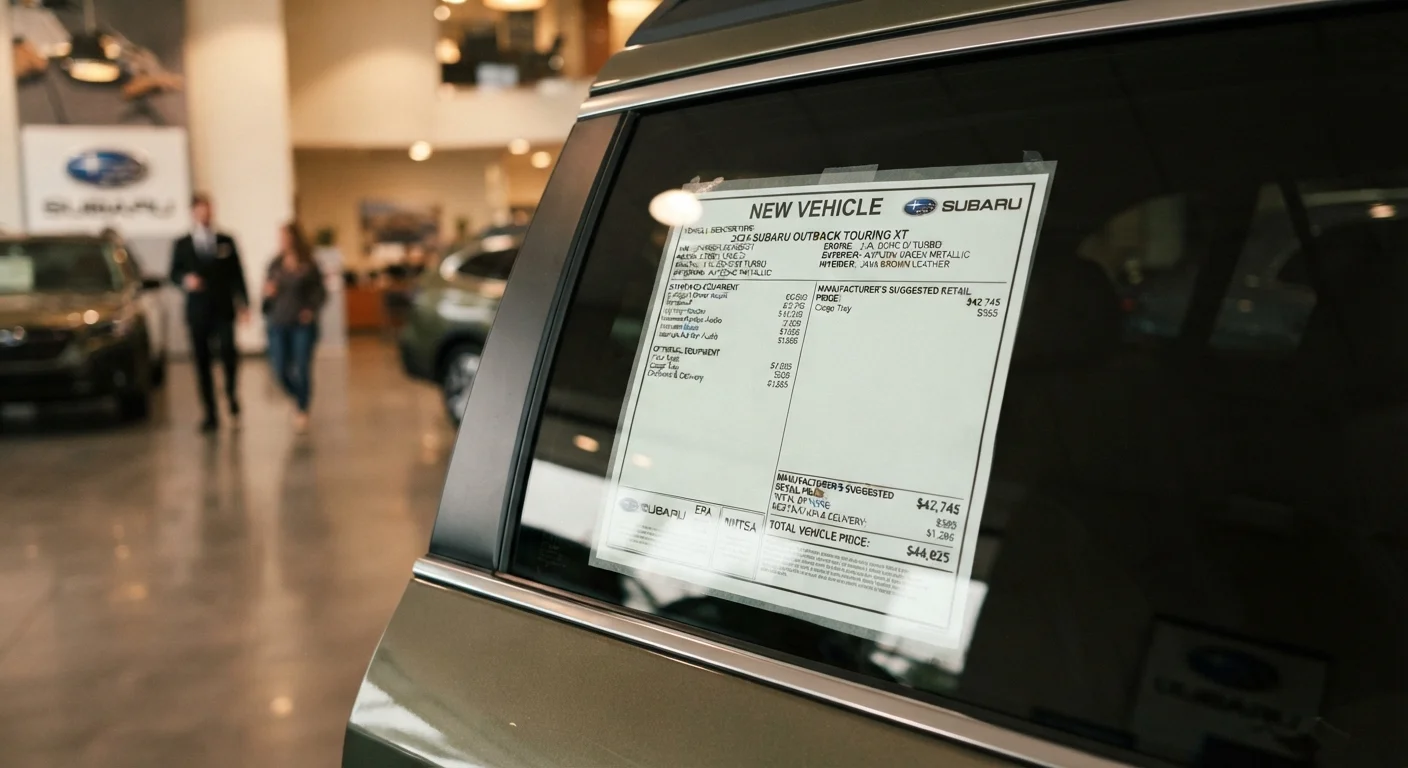
Photo: SummarizedReads.net | Just Read It! editorial
—— In This Article
What Is a Window Sticker (Monroney Label)?
By federal law, every new passenger vehicle sold in the United States must display a Monroney label - commonly called a window sticker - affixed to the car window. Named after the 1958 Automobile Information Disclosure Act authored by Senator Mike Monroney, this label is standardized across all manufacturers and must remain on the vehicle until the buyer removes it.
The label is not a negotiating prop or a dealership-created document. It is a federally mandated disclosure tool, which means the information on it is regulated for accuracy. Understanding it gives you a neutral starting point before any negotiation begins. For a deeper look at how MSRP differs from what you actually pay, see what the sticker price on a car actually means.
| Legal name | Monroney label (Automobile Information Disclosure Act, 1958) |
| Who creates it | The vehicle manufacturer |
| Who can remove it | Only the purchaser - not the dealer (Federal law) |
| Destination charge | Non-negotiable; set by manufacturer |
| Fuel economy data source | U.S. Environmental Protection Agency (EPA) |
| Dealer addendum sticker | Dealer-created, not federally regulated |
Breaking Down Every Section of the Label
A standard Monroney label is divided into several distinct sections. Here's what each one contains and why it matters:
Vehicle Identification
At the top, you'll find the make, model, model year, trim level, and the VIN (Vehicle Identification Number). The VIN is a 17-character code unique to that specific vehicle. Use it to run a vehicle history check - even on new cars - to confirm it hasn't been titled, damaged, or used as a demo unit.
Standard Equipment
This section lists every feature included in the base trim at no extra charge - engine size, transmission type, seating material, infotainment features, and safety systems. Review this carefully before assuming an add-on is necessary; it may already be included.
Optional Packages and Add-Ons
Each optional package or standalone option is listed with its individual price. This is where costs escalate quickly. Packages often bundle features you may not want. Add up only the options you'd actually use to gauge whether the configured vehicle reflects your needs.
Destination and Delivery Charge
This is a non-negotiable fee set by the manufacturer - not the dealer - that covers the cost of transporting the vehicle from the factory to the dealership. It appears as a line item just above the total MSRP and is the same amount for identical models regardless of which dealership sells them.
Fuel Economy and Environmental Data
EPA fuel economy estimates are displayed prominently, showing city, highway, and combined MPG (or MPGe for electric and plug-in hybrid vehicles). The label also shows an estimated annual fuel cost based on a standard number of miles and an assumed fuel price. Treat this as a comparison tool, not a precise forecast - your real-world mileage will vary based on driving habits and conditions.
Total MSRP
The Manufacturer's Suggested Retail Price is the sum of the base price, all selected options, and the destination charge. It is a suggested price - in normal market conditions it is a starting point for negotiation, not a fixed selling price. Before you sign, review what to check before signing at a dealership to avoid surprises in the finance office.
Monroney Label
The federally required window sticker affixed to every new vehicle for sale in the U.S. It discloses the vehicle's standard equipment, optional packages, fuel economy, and MSRP.
MSRP
Manufacturer's Suggested Retail Price - the total price the manufacturer recommends, including base price, options, and destination charge. It is a starting figure, not a fixed sale price.
VIN
Vehicle Identification Number - a unique 17-character code assigned to each vehicle, used to identify its history, specifications, and authenticity.
Destination Charge
A standardized, non-negotiable fee set by the manufacturer covering the cost of shipping the vehicle from the assembly plant to the selling dealership.
Dealer Addendum
A secondary sticker placed by the dealership, separate from the Monroney label, that lists dealer-installed products or price markups. These are not federally regulated and are generally negotiable.
EPA Fuel Economy Estimate
Government-standardized estimates of a vehicle's miles per gallon under city and highway conditions. Real-world results vary based on driving behavior, load, and conditions.
What the Window Sticker Doesn't Show
The Monroney label is comprehensive but not complete. It does not disclose dealer markup (also called dealer-installed accessories or market adjustment), documentation fees, taxes, title and registration costs, or any financing terms. These items are added separately, often in the finance and insurance office after you've agreed on a vehicle price.
Watch for a secondary sticker - sometimes called a dealer addendum - placed next to or over the Monroney label. This is a dealer-created document, not a federal disclosure, and may list items like paint protection, nitrogen-filled tires, or VIN etching at inflated prices. You are not legally required to purchase any dealer-added products, and these items are generally negotiable or removable from the transaction.
This article is for general informational purposes only and does not constitute financial, legal, or purchasing advice. Verify all figures directly with the manufacturer and dealership, and consult a qualified adviser for decisions specific to your situation.

Auto Editorial Team
Auto Editorial Team is the collective byline for our editorial team and contributor network. Articles published under this byline or an editorial pen name are researched, written, and reviewed according to our editorial standards for clarity, consistency, and independence before publication.
View author profile