
What the Sticker Price on a Car Actually Means
MSRP, dealer markup, and invoice price are not the same thing. Learn what each figure represents before you negotiate.
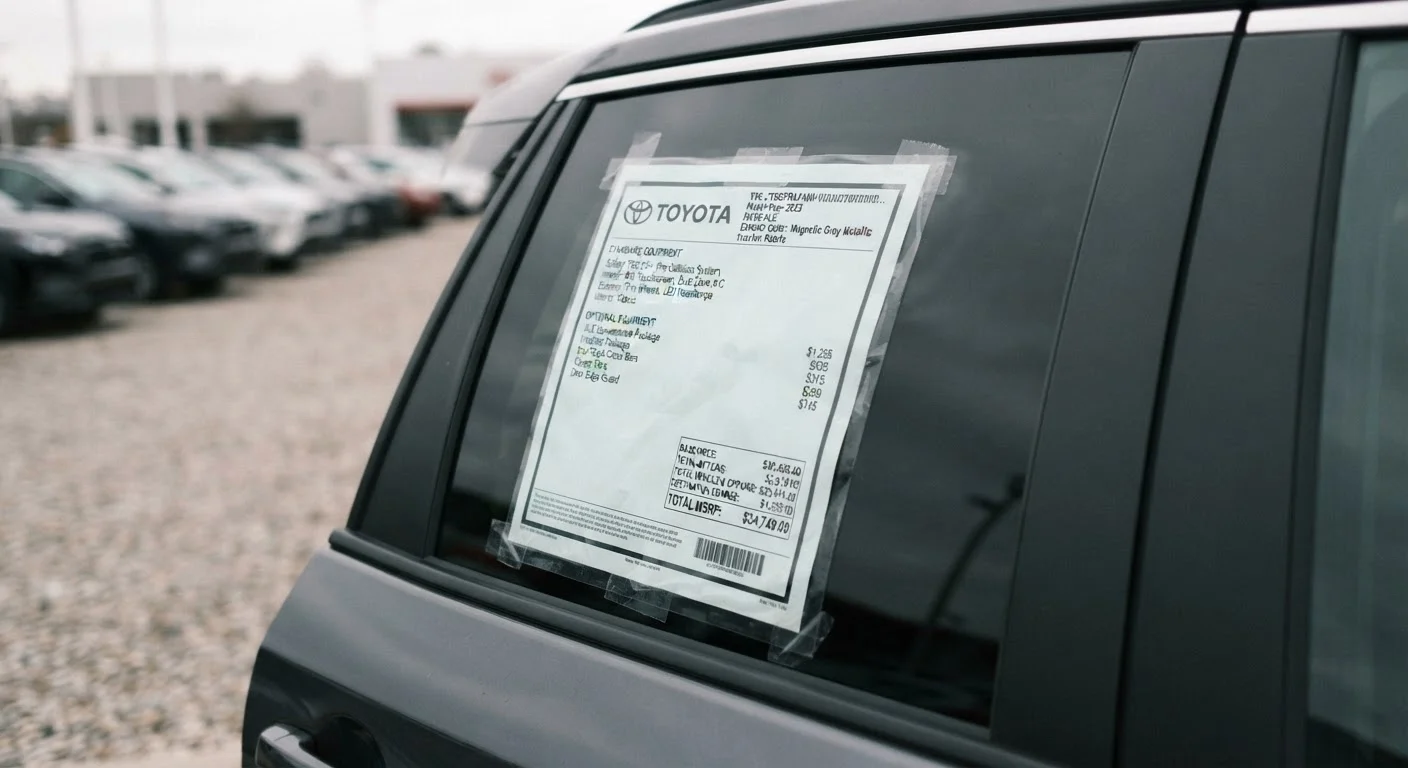
Photo: SummarizedReads.net | Just Read It! editorial
—— In This Article
Key Takeaways
- MSRP is a manufacturer's suggestion - dealers are not legally required to sell at that price.
- Invoice price is what the dealer paid the manufacturer, and it differs meaningfully from MSRP.
- Dealer markups above MSRP are legal and common when vehicle supply is tight.
- Your out-of-pocket cost also includes taxes, fees, and optional add-ons beyond any sticker figure.
- Knowing all three numbers - MSRP, invoice, and out-the-door price - puts you in a stronger position.
Three Numbers, Three Different Meanings
Walk onto any new-car lot and you'll encounter at least three distinct price figures - often without anyone explaining what separates them. Understanding each one is the first step toward a clearer negotiation.
- MSRP (sticker price): The manufacturer's suggested retail price. It covers the base vehicle, any factory-installed options, and the destination charge - the cost to ship the car from the factory to the dealership.
- Invoice price: What the dealer paid the manufacturer. This figure is lower than MSRP and is publicly available through automotive research tools. It's a rough proxy for dealer cost, though not the whole picture.
- Out-the-door (OTD) price: The total you pay to leave with the car. It adds state sales tax, title and registration fees, and any documentation fees the dealer charges for paperwork.
These three numbers can differ by thousands of dollars on a single vehicle. Conflating them - or only focusing on the monthly payment - is how buyers end up paying more than they planned. For a closer look at every line on the window label, see our field guide to the Monroney label.
~2-3%
Typical dealer holdback as a percentage of MSRP
Holdback percentages vary by manufacturer but generally fall in this range, meaning dealer cost is often below the published invoice price.
$1,000-$2,000+
Average doc fees in high-fee states
Documentation fees are unregulated in many US states, causing wide variation; some states cap them while others do not.
~6%
Average gap between MSRP and invoice price
The spread varies by vehicle segment, with trucks and luxury vehicles often carrying wider margins than economy cars.
What the Sticker Includes - and What It Leaves Out
The Monroney label lists the base vehicle price, factory options, and the destination charge. What it does not include is equally important:
- Dealer-installed accessories: Items like floor mats, paint sealant, or window tinting added by the dealership after the car arrives. These appear on a separate addendum sticker and often carry significant markups.
- Market adjustments: An additional dealer markup (ADM) applied above MSRP. These are common on high-demand models and appear on a second label alongside the Monroney.
- Taxes and government fees: Sales tax, title, and registration are set by your state and locality - none of these appear on the factory sticker.
- Documentation fees: Dealers charge a "doc fee" for processing paperwork. Amounts vary widely by state and dealership.
The gap between the sticker and your OTD price is where many buyers are surprised. Extended warranties and rolled-in fees can inflate that gap further if you're not watching for them.
Always Request the Out-the-Door Price First
Before discussing monthly payments or trade-in value, ask the dealer to provide the full out-the-door price in writing. This single number - covering vehicle price, taxes, title, registration, and fees - is the only figure that tells you what you'll actually spend. Breaking negotiations into smaller pieces makes it easier for total cost to creep upward without you noticing.
Invoice Price: What It Really Tells You
The invoice price sounds like a firm floor - if the dealer paid X, they can't sell below it, right? In practice, it's more nuanced. Manufacturers provide dealers with holdbacks: a percentage of MSRP (often 2-3%) that is paid back to the dealer after the sale. Factory-to-dealer incentives, regional advertising allowances, and volume bonuses further reduce the dealer's actual cost below the invoice figure.
This means a dealer can, in some circumstances, sell a vehicle at or slightly below invoice and still turn a profit. Knowing this changes how you interpret the negotiation. Invoice price is a useful data point, but it's the starting point for research - not the number you should cite as an absolute floor.
“The invoice price is not the dealer's true cost. Holdbacks, incentives, and manufacturer support payments mean the dealer's real cost is often lower than what that document shows.”
— Consumer automotive education researchers, Published guidance on new-vehicle pricing transparency
For context on how financing interacts with the purchase price, understanding APR and loan term is equally important - a low sticker price paired with a high-interest loan can cost you more over time.
Using These Numbers Before You Negotiate
Arriving at a dealership knowing only the MSRP puts you at a disadvantage. A more prepared approach looks like this:
- Research the invoice price using publicly available automotive data tools before you visit.
- Identify whether the model you want carries any manufacturer-to-consumer rebates or incentives - these come off the price independently of negotiation.
- Ask the dealer for the out-the-door price in writing, broken down by line item.
- Treat any addendum sticker items (dealer-installed accessories, market adjustments) as individually negotiable or removable line items, not fixed charges.
None of this guarantees a specific outcome - market conditions, vehicle availability, and individual dealer policies all vary. But walking in with all three numbers in mind gives you a grounded basis for any conversation. When you're ready to take the next step, practical negotiating approaches for the showroom can help you apply this knowledge in real time.
Frequently Asked Questions

Auto Editorial Team
Auto Editorial Team is the collective byline for our editorial team and contributor network. Articles published under this byline or an editorial pen name are researched, written, and reviewed according to our editorial standards for clarity, consistency, and independence before publication.
View author profile