
Budgeting Myths That Keep People From Starting
Thinks budgeting means cutting everything fun? You're not alone — but you may be wrong. We separate persistent myths from how budgeting actually works.
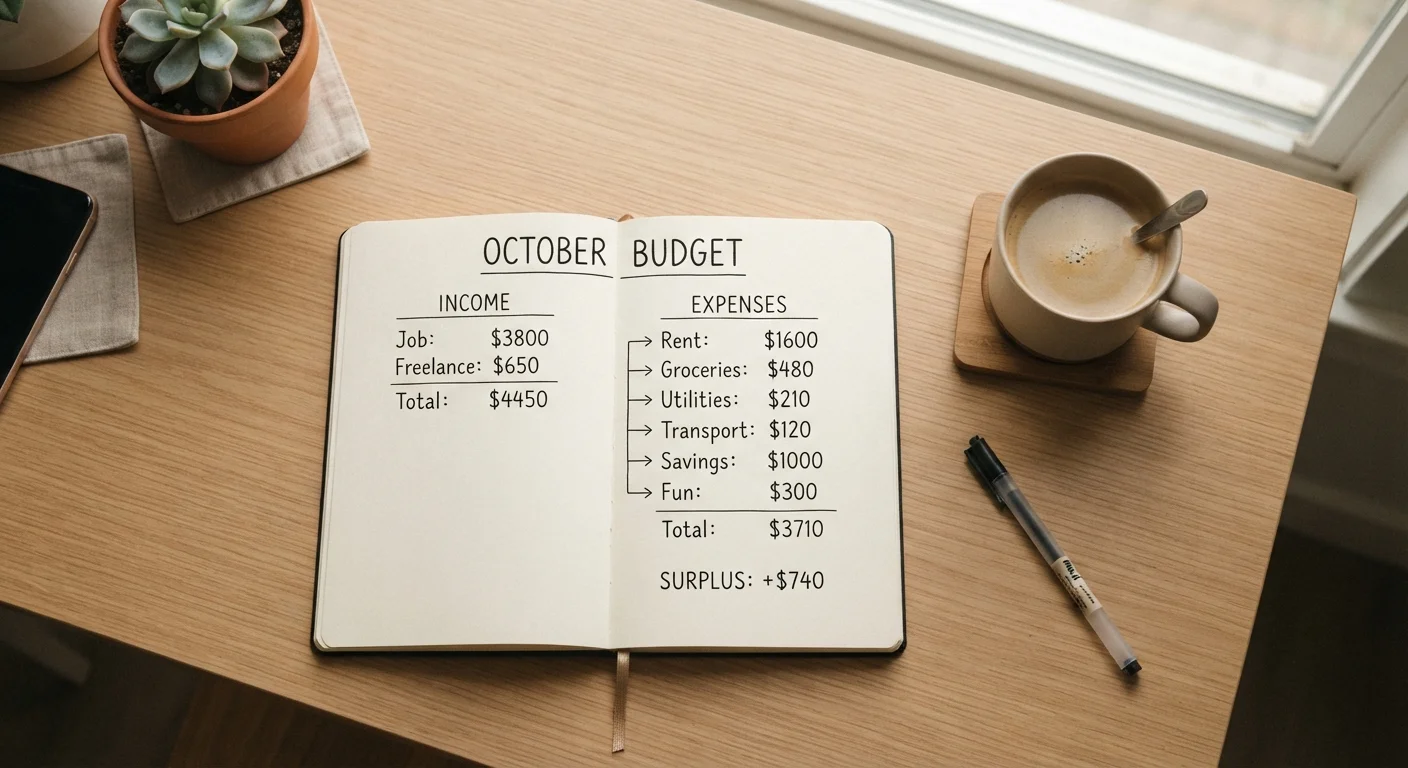
Photo: SummarizedReads.net | Just Read It! editorial
—— In This Article
Key Takeaways
- Budgeting is not about restriction - it's about intentional direction of money you already have.
- You don't need a perfect income or zero debt to start a budget today.
- Simple frameworks like 50/30/20 work for irregular incomes, not just salaried workers.
- Budgets are meant to be revised; one bad month doesn't mean failure.
- Tracking spending for even two weeks can reveal patterns most people never notice.
Why Budgeting Myths Are So Sticky
Budgeting has a reputation problem. Ask most people why they don't have one and you'll hear variations of the same answers: it's too complicated, it only works if you earn enough, or it means giving up everything enjoyable. These aren't random excuses - they're deeply embedded myths that circulate through everyday conversations and persist because they contain just enough surface logic to feel true.
The cost of believing them is real. People delay starting a budget, miss years of financial clarity, and then assume the problem is their income rather than their approach. This article addresses the most common misconceptions head-on - because the version of budgeting most people are rejecting isn't what budgeting actually is.
For a broader foundation, see the complete overview of personal budgeting that walks through frameworks, habits, and long-term strategies in one place.
Myth
Budgeting means cutting out everything you enjoy - no dining out, no streaming, no fun.
Fact
A budget allocates money to what you value, including leisure. Cutting enjoyment entirely is one approach, not the definition of budgeting.
The 50/30/20 rule - a widely recognized framework that divides after-tax income into roughly 50% for needs, 30% for wants, and 20% for savings or debt repayment - explicitly carves out room for discretionary spending. The goal of a budget is awareness and direction, not deprivation. When people build in zero room for enjoyment, they predictably abandon the budget within weeks. A plan that reflects actual priorities, including a dinner out or a concert ticket, is far more sustainable than one that treats all spending as the enemy.
Myth
I don't earn enough to budget - budgeting is for people with money left over.
Fact
Budgeting is most useful when money is tight because it helps you make deliberate trade-offs rather than reactive ones.
The assumption that budgeting requires a surplus has it backwards. A budget is simply a plan for the money that comes in - whatever that amount is. Low-income households that track spending often discover categories where dollars are quietly leaking without intention: subscriptions that went unnoticed, convenience spending driven by stress, or duplicate charges. Directing limited income consciously doesn't require more income - it requires more visibility. Zero-based budgeting, where every dollar of income is assigned a job including savings and essential bills, was specifically designed for constrained situations.
Myth
Budgeting doesn't work if your income is irregular or unpredictable.
Fact
Several budgeting frameworks are built specifically for variable income; the standard approach simply needs a small adjustment.
Freelancers, gig workers, and commission-based earners often dismiss budgeting because their income fluctuates monthly. The practical workaround is straightforward: budget from your lowest average monthly income rather than your best month. Cover fixed essentials first, then assign flexible categories based on what's actually arrived. In strong months, direct the surplus toward an income buffer - a savings reserve that covers expenses during lean months. The pay-yourself-first approach can be especially effective here, treating the buffer contribution as a non-negotiable line item.
Myth
Once you set a budget, you can't change it - deviating means you failed.
Fact
Budgets are living documents. Adjusting categories when circumstances change is normal budget maintenance, not failure.
A budget created in January may not account for a rent increase in March, a medical bill in June, or a holiday expense in November. Treating the original numbers as fixed rules rather than starting estimates is one of the most common reasons people abandon their budgets entirely after one difficult month. The productive habit is a brief monthly review - comparing what was planned to what actually happened, then adjusting forward. This iterative process is how experienced budgeters actually operate. One overspent category is information, not a verdict on your financial character.
Myth
You need a complex spreadsheet or expensive app to budget properly.
Fact
A piece of paper, a free app, or even a mental tally can function as a budget - simplicity often improves consistency.
The budgeting industry has a vested interest in making the process feel technical, but the core mechanics are arithmetic that anyone learned in middle school. Plenty of people maintain effective budgets with a notes app, a simple bank account review each week, or a notebook. The tool matters far less than the habit of checking in regularly with where money is going. If a complex system creates friction that leads to avoidance, it's counterproductive. Start with the simplest format you'll actually use, and layer in more detail only if that simplicity stops working.
What Actually Gets Budgets Started - and Keeps Them Going
The single biggest predictor of budgeting success isn't income level or financial sophistication - it's simply starting, even imperfectly. Research consistently shows that people who track their spending in any format gain meaningful awareness of their habits within weeks. That awareness is the real product of budgeting; the spreadsheet or app is just the tool.
32%
Americans with a detailed written budget
Gallup polling has consistently found that fewer than one in three Americans maintain a detailed household budget, despite widespread agreement that budgeting is important.
2 weeks
Time to spot meaningful spending patterns
Financial educators broadly note that tracking expenses for as little as two weeks typically reveals habitual spending patterns most people weren't previously aware of.
If you've tried budgeting before and it fell apart, the problem likely wasn't your math - it was an unsustainable structure. Why budgets fail in month two covers the predictable patterns that derail spending plans and how to catch them early. And if you're managing money with a partner, budgeting as a household offers practical approaches for aligning on shared priorities without friction.
A Budget Is Not a Promise to Be Perfect
One of the most damaging misconceptions is treating a budget as a moral commitment rather than a planning tool. Overspending in a category doesn't mean you've failed - it means you have new data. The appropriate response is to adjust the plan, not abandon it. Financial progress is built through consistent small corrections, not through flawless execution.
The myths keeping you from starting a budget are not facts - they're friction. Recognizing them for what they are is the first step toward building a financial plan that actually reflects your life. For similar misconceptions in the savings space, myths that keep people from saving sooner is a useful companion read.
This article is for general informational and educational purposes only and does not constitute personalized financial advice. Consult a qualified financial professional for guidance specific to your situation.

Finance Editorial Team
Finance Editorial Team is the collective byline for our editorial team and contributor network. Articles published under this byline or an editorial pen name are researched, written, and reviewed according to our editorial standards for clarity, consistency, and independence before publication.
View author profile