
Envelope Budgeting vs. Digital Spending Trackers
Cash envelopes or app-based tracking — each method has real trade-offs. See how they compare so you can decide which fits how you actually spend.
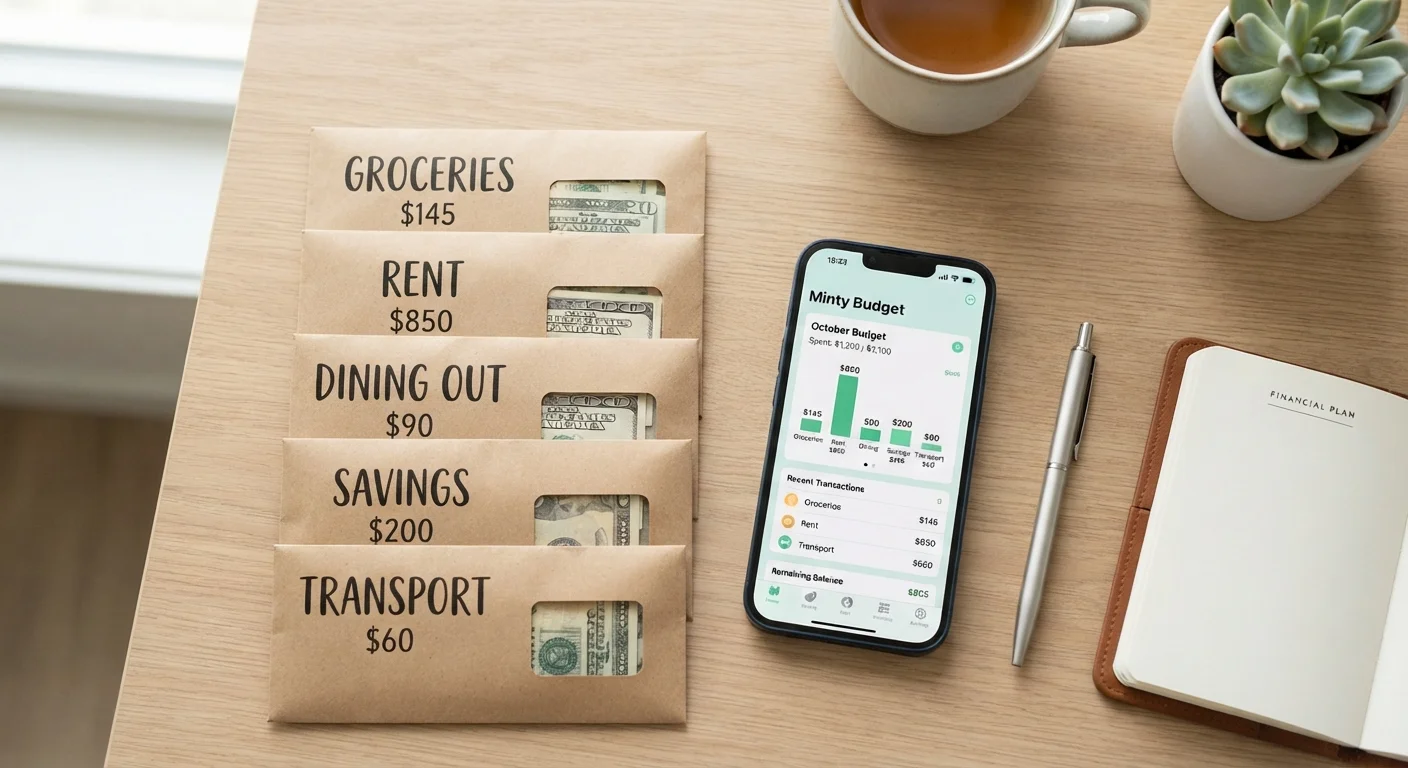
Photo: SummarizedReads.net | Just Read It! editorial
—— In This Article
Key Takeaways
- Envelope budgeting uses physical cash to enforce hard spending limits per category.
- Digital trackers automate transaction logging but require consistent review habits to be effective.
- Cash envelopes reduce impulse spending for many people; digital tools offer better long-term data.
- Neither method works without a realistic budget - the system is only as good as the numbers behind it.
- Hybrid approaches, such as using envelopes for high-risk categories and an app for everything else, are common and practical.
How Each Method Actually Works
Envelope budgeting is straightforward: at the start of each pay period, you withdraw cash and divide it among labeled envelopes - one for groceries, one for dining out, one for gas, and so on. When an envelope is empty, spending in that category stops. There's no overdraft buffer, no credit cushion, and no ambiguity. The constraint is physical and immediate.
Digital spending trackers operate on the opposite principle - they follow your money after the fact. Many apps connect directly to your bank accounts and cards, pulling in transactions and sorting them into categories automatically. You review your spending periodically and compare it against targets you've set. The best tools flag when you're approaching a category limit, offer visualizations of your habits, and store historical data you can use when revisiting your budget categories.
The core difference is timing: envelopes prevent overspending before it happens; trackers reveal it after. That distinction matters more than it might seem.
Side-by-Side Comparison
The table below covers the dimensions most consumers care about when choosing between the two approaches.
| Criterion | Envelope Budgeting | Digital Spending Trackers |
|---|---|---|
| Setup effort | Low - envelopes and cash only | Moderate - account linking, categorization |
| Works with cards/online payments | No - cash only | Yes - syncs automatically |
| Overspending prevention | Hard stop when envelope is empty | Alerts only; no hard limit |
| Historical data | None unless tracked manually | Months or years of categorized records |
| Privacy risk | None - no accounts linked | Moderate - depends on app policy |
| Behavioral impact | High - cash feels more real | Moderate - relies on review habits |
| Suitable for irregular income | Yes - reset each pay period | Yes - flexible category targets |
Worth noting: digital trackers vary considerably in how they handle privacy. Some apps analyze your transaction data; always read the privacy policy before linking financial accounts. If that's a concern, envelope budgeting sidesteps it entirely.
The Psychology Behind Each Approach
Research in behavioral economics consistently finds that people spend less when paying with cash compared to cards - a phenomenon sometimes called the "pain of paying." Physical money feels more real. Handing over a $20 bill registers differently than tapping a phone. For anyone whose spending tends to drift in discretionary categories, that friction is a feature, not a flaw.
~18%
Reduction in spending when using cash vs. cards
Multiple studies in behavioral economics, including work referenced by the Journal of Consumer Research, suggest cash users tend to spend noticeably less than card users in discretionary categories.
~1 in 3
Americans who track spending consistently
Surveys by the National Foundation for Credit Counseling have found that a minority of U.S. adults actively monitor their spending on a regular basis.
Digital trackers don't create that friction - but they do create awareness, which has its own value. Seeing a clear chart showing $380 spent on takeout in a single month can be a genuine wake-up call. The key is actually looking. Trackers that are set up and then ignored provide almost no benefit. A regular review habit - weekly at minimum - is what makes the data actionable.
If you're unsure which approach fits your personality, a spending audit is a useful first step. Reviewing two or three months of actual transactions tells you where your problem areas are and which method is better suited to address them.
Trade-Offs Worth Knowing Before You Decide
Envelope budgeting has real limitations. Carrying cash is less convenient, and some purchases - recurring subscriptions, online orders, utility auto-pays - simply can't be paid with physical money. You also lose the paper trail: there's no automatic record of what you spent and when. If your wallet is lost or stolen, that cash is gone.
Digital trackers have their own failure modes. Automatic categorization isn't always accurate; a hardware store purchase might get filed under "home improvement" one month and "general merchandise" the next, distorting your data. Apps also require a level of consistent engagement that busy people often let slip. And linking accounts to third-party apps carries some security risk, however small.
Neither system addresses the underlying challenge: you need a realistic spending plan to begin with. Both methods are tools for executing a budget, not substitutes for one. If you haven't settled on a framework yet, it's worth reviewing the broader pay-yourself-first vs. traditional budgeting debate before committing to either tracking method.
Hybrid Approaches Are Common
Many budgeters use envelopes only for their highest-risk spending categories - typically dining, entertainment, and personal spending - while relying on a digital tracker for fixed costs like rent, utilities, and subscriptions. This hybrid approach captures the behavioral benefit of cash where it matters most without making the whole system impractical. There's no rule that says you must pick just one method.
This article is for general informational purposes only and does not constitute personalized financial advice. Consult a qualified financial professional for guidance specific to your situation.

Finance Editorial Team
Finance Editorial Team is the collective byline for our editorial team and contributor network. Articles published under this byline or an editorial pen name are researched, written, and reviewed according to our editorial standards for clarity, consistency, and independence before publication.
View author profile