
Why Credit Utilisation Has an Outsized Effect on Your Score
Credit utilisation is one of the most influential scoring factors yet one of the most misunderstood. Here's how it works and what the numbers mean.
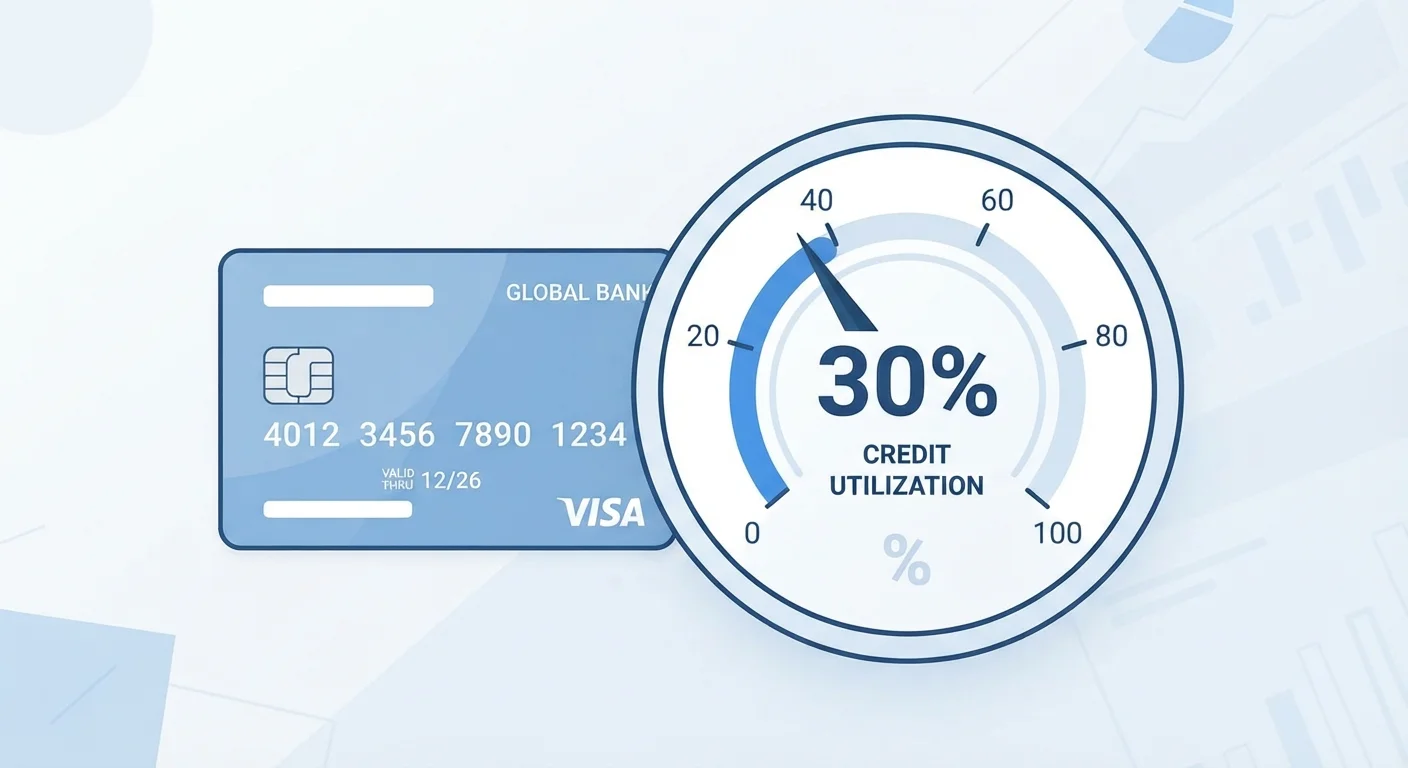
Photo: SummarizedReads.net | Just Read It! editorial
—— In This Article
Key Takeaways
- Credit utilisation typically makes up around 30% of a FICO score - second only to payment history.
- Keeping utilisation below 30% per card and overall is a widely cited guideline; lower is generally better.
- Utilisation is recalculated each month when card issuers report your balances to credit bureaus.
- Paying down balances - not just making minimums - is the most direct way to lower utilisation quickly.
- Utilisation only applies to revolving credit like credit cards, not installment loans like auto or student loans.
Why Utilisation Carries So Much Weight
Of all the factors that go into a credit score, credit utilisation is the one consumers most often underestimate - and mismanage. It accounts for roughly 30% of a FICO score, making it the second most influential factor after payment history. Yet unlike a missed payment (which is a clear event), utilisation is a fluid, month-to-month ratio that can shift significantly based on ordinary spending habits.
Lenders care about utilisation because it reflects how dependent you are on credit at any given moment. A person consistently carrying high balances relative to their limits looks riskier on paper than someone with the same income who keeps balances low. The score doesn't know about your income - it only sees the ratio. For a broader look at how scoring models interpret these signals, see Credit Explained: A Complete Guide to Scores, Reports, and Cards.
~30%
FICO score weight for credit utilisation
According to FICO's published scoring factor breakdown, amounts owed - of which utilisation is the primary component - account for approximately 30% of a base FICO score.
<10%
Utilisation rate seen among high scorers
Data from credit reporting agencies consistently shows that consumers with scores above 800 tend to use a very small fraction of their available revolving credit.
1-2 cycles
Time to see score impact from paydown
Because utilisation is recalculated each billing cycle, paying down balances can produce visible score changes within one to two months of the next reporting date.
How the Ratio Is Actually Calculated
Utilisation is calculated two ways simultaneously: per card and in aggregate. Per-card utilisation compares each individual card's balance to its own limit. Aggregate utilisation adds up all your revolving balances and divides by all your revolving limits combined.
Both numbers matter. A card charged to 90% of its limit can drag your score down even if your overall ratio looks fine. This is why spreading spending across multiple cards - rather than concentrating it on one - can help keep individual ratios manageable.
Credit bureaus receive balance data when issuers report, typically once per billing cycle around the statement closing date. That snapshot becomes the number used in your score until the next report arrives. This is worth knowing because your score reflects a moment in time, not your payment behavior - paying before the statement closes, rather than before the due date, can result in a lower reported balance.
Time Your Payments Strategically
Your credit score uses the balance reported by your card issuer - typically your statement closing balance - not the balance on your payment due date. If you want a lower utilisation to show up in your score, aim to pay down your card before the statement closes, not just before the payment is due. Check your account details or contact your issuer to confirm your statement closing date.
What the Numbers Actually Mean in Practice
The 30% threshold is widely cited as a guideline, not a hard cutoff. Scoring models don't apply a cliff at 30% where your score suddenly drops. Rather, utilisation works on a continuum - the lower, the better, with meaningful improvements often seen when people drop from above 50% into the 20-30% range, and again when they move below 10%.
It's also worth noting what utilisation does not cover: installment loans - mortgages, auto loans, student loans - are not included in the revolving utilisation calculation. Only credit cards and lines of credit (revolving accounts) factor in. This distinction matters when people wonder why paying down a car loan doesn't move their score in the same way paying down a credit card does.
This article is for general informational purposes only and does not constitute personalized financial or credit advice. Consult a licensed financial professional for guidance specific to your situation.
Practical Ways to Manage Your Utilisation
The most direct approach is straightforward: pay down balances. But there are several tactical moves worth understanding.
- Pay before the statement closing date, not just before the due date, so your reported balance is lower.
- Make multiple smaller payments throughout the month if you carry ongoing spending on a single card.
- Request a credit limit increase on existing accounts - if your spending stays flat, a higher limit reduces your ratio automatically. Ask your issuer whether this triggers a hard inquiry first.
- Avoid closing old cards you no longer use, since their limits contribute to your total available credit. See habits that quietly damage your score for more on this pattern.
None of these strategies require perfect financial circumstances - they're structural adjustments that work regardless of income level. And because utilisation updates monthly, the effects of a deliberate paydown can show up faster than almost any other credit improvement you can make. For more on common misconceptions about how scores respond to these actions, see credit score myths explained.
Frequently Asked Questions

Finance Editorial Team
Finance Editorial Team is the collective byline for our editorial team and contributor network. Articles published under this byline or an editorial pen name are researched, written, and reviewed according to our editorial standards for clarity, consistency, and independence before publication.
View author profile