
Movement Snacks: Staying Active When You Sit at a Desk All Day
Short bursts of movement throughout the workday can offset prolonged sitting. Here are practical, low-barrier ways to keep your body moving at work.
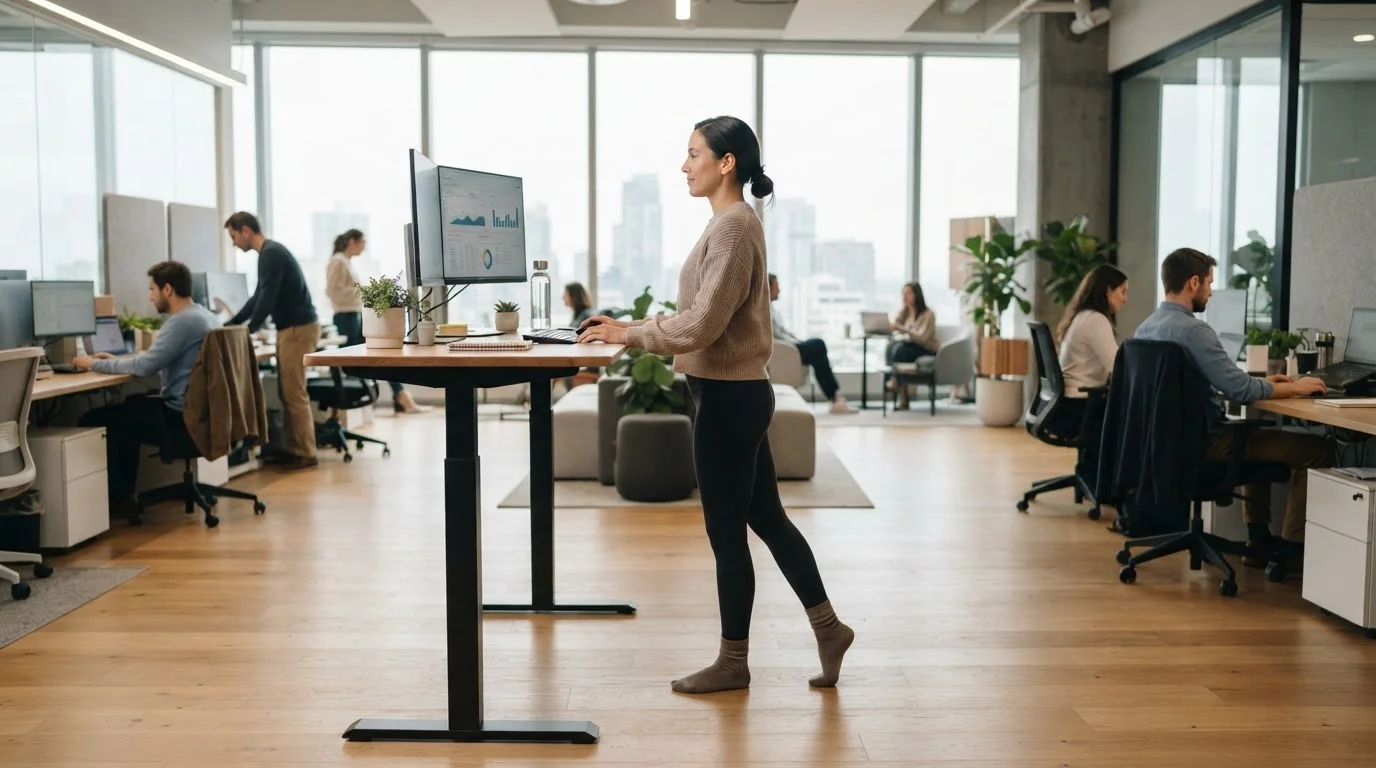
Photo: SummarizedReads.net | Just Read It! editorial
—— In This Article
Key Takeaways
- Brief, frequent movement breaks - called 'movement snacks' - can counter the health effects of prolonged sitting.
- Most movement snacks require no equipment, gym membership, or significant time away from your desk.
- Research suggests breaking up sedentary time every 30 to 60 minutes supports circulation, energy, and focus.
- Consistency with small movements matters more than occasional long workouts for desk workers.
- Pairing movement cues with existing habits, like standing during calls, makes them easier to sustain.
Why Sitting All Day Is Worth Addressing
Extended sitting has been linked to a range of health concerns - from reduced circulation and back discomfort to lower energy and diminished focus. Public health research consistently highlights that total sedentary time matters, not just whether someone exercises before or after work. A dedicated gym session is valuable, but it does not fully cancel out eight-plus hours of uninterrupted sitting.
That's where movement snacks come in. The concept is simple: instead of saving all movement for a single block of time, you scatter short bursts of physical activity throughout the day. Each break might last only one to five minutes, but their cumulative effect on circulation, alertness, and musculoskeletal health can be meaningful. For anyone working within a tight budget or schedule, movement snacks are particularly appealing - they cost nothing and require no equipment. For additional ideas on staying active without financial barriers, see fitness on a tight budget.
Set a movement reminder right now
Before reading further, set a recurring alarm on your phone or computer for every 45 to 60 minutes labelled 'move.' Research on behaviour change consistently shows that implementation intentions - deciding in advance exactly when and how you'll act - dramatically increase follow-through. The reminder takes thirty seconds to set and removes the need to remember later.
8 Practical Movement Snacks for Desk Workers
Stand up every 30 to 60 minutes
Setting a recurring reminder to stand briefly is one of the simplest interventions supported by sedentary behaviour research. Even standing for one to two minutes interrupts the physiological effects of prolonged sitting, including the slowdown in lower-limb circulation that occurs when muscles remain inactive for extended periods. A phone alarm, a browser extension, or a sticky note can all serve as effective cues.
Standing for just one to two minutes every hour can interrupt the circulatory slowdown caused by prolonged sitting.
Walk during phone and video calls
If a call doesn't require you to share your screen or type heavily, standing up and pacing is an easy win. Walking calls add steps to your day without any dedicated time and often improve verbal fluency and creativity - movement has been associated with increased divergent thinking in several small studies. Keep a habit of putting on headphones and stepping away from your chair as soon as a call begins.
Walking during calls adds meaningful daily steps without taking any extra time from your schedule.
Do calf raises while waiting
Calf raises - rising onto the balls of your feet and lowering back down - can be done discreetly while waiting for a document to print, a file to upload, or water to boil during a lunch break. The calf muscle plays an important role in pumping blood back toward the heart, and activating it regularly during the day supports circulation. Aim for ten to fifteen repetitions at a time.
Calf raises activate a key muscle that helps pump blood back toward the heart during sedentary periods.
Try a two-minute desk stretch sequence
A short sequence targeting the neck, chest, hip flexors, and wrists can address the most common tension patterns that develop from desk posture. Slow neck rolls, a seated chest opener (interlacing hands behind your back and gently lifting), a standing hip flexor stretch, and gentle wrist circles take under two minutes combined. For a deeper look at how to structure your stretching effectively, see our guide on static and dynamic stretching.
A two-minute desk stretch targeting the neck, chest, hip flexors, and wrists addresses the most common tension patterns.
Take the long route intentionally
Choosing the furthest bathroom, using a staircase instead of an elevator, or parking further from a building entrance are low-effort ways to build more movement into transitions that already exist in your day. These micro-decisions require no additional time block in your schedule and accumulate meaningfully over weeks and months. Small, consistent choices tend to be more sustainable than ambitious plans that are hard to maintain.
Consistently choosing the longer route or the staircase turns existing transitions into built-in movement opportunities.
Use a wall for bodyweight squats
A wall squat - sliding your back down a wall until thighs are roughly parallel to the floor and holding - engages the quadriceps, glutes, and core without any equipment. Hold for twenty to thirty seconds, rest, and repeat. This movement counters the hip flexor tightening that prolonged sitting promotes and can be done in any break room or private office space. It requires nothing beyond a flat wall and comfortable footwear.
Wall squats require only a flat surface and effectively counteract the hip flexor tightening caused by prolonged sitting.
Practice seated core activation
Core engagement doesn't require getting on the floor. While seated, drawing the navel gently toward the spine and holding the contraction for several seconds at a time activates deep stabilising muscles. This can be done during meetings or while reading without being visually apparent. Consistent low-level core activation may help reduce the lower back discomfort that commonly accompanies extended sitting.
Subtle seated core contractions can be performed during meetings and may help reduce chronic lower back discomfort.
Step outside for a five-minute walk at lunch
Even a short outdoor walk during a lunch break combines light aerobic movement with natural light exposure, both of which support afternoon alertness. Research on post-meal light activity suggests it may support blood glucose regulation after eating, though individual responses vary. A five-minute walk around the block requires no planning, no gear, and no cost - making it one of the most accessible movement snacks available to desk workers.
A five-minute post-lunch outdoor walk combines light movement and natural light, supporting afternoon energy and alertness.
Movement snacks complement, not replace, structured exercise
Current physical activity guidelines from major public health bodies generally recommend at least 150 minutes of moderate-intensity aerobic activity per week for most adults, along with muscle-strengthening activities on two or more days. Movement snacks support these goals and help reduce sedentary time, but they are not a substitute for structured exercise. Think of them as an addition to your routine, not a replacement for it. Always consult a qualified healthcare professional if you have questions about exercise appropriate for your health status.
Making Movement Snacks Stick
The biggest obstacle to movement snacks isn't physical - it's forgetting to do them. Anchoring movement to existing habits is one of the most reliable strategies: stand up every time you take a phone call, do a few shoulder rolls every time you send a large email batch, or take the longer route to the restroom. These habit stacks remove the need to rely on willpower alone.
Movement also supports mental well-being beyond the physical benefits. Regular breaks can reduce mental fatigue and help reset focus, which complements other evidence-informed wellness practices covered in our guide to everyday mental wellness habits. If you want to build a more structured approach to flexibility alongside your desk breaks, understanding static and dynamic stretching is a useful next step.
This article is for general informational purposes only and does not constitute medical advice. If you have an existing health condition or experience pain during exercise, consult a qualified healthcare professional before starting any new movement routine.

Health Editorial Team
Health Editorial Team is the collective byline for our editorial team and contributor network. Articles published under this byline or an editorial pen name are researched, written, and reviewed according to our editorial standards for clarity, consistency, and independence before publication.
View author profile