
Building a Wind-Down Routine That Actually Helps You Sleep
A practical guide to designing an evening routine that signals your nervous system it's time to rest — grounded in sleep science basics.
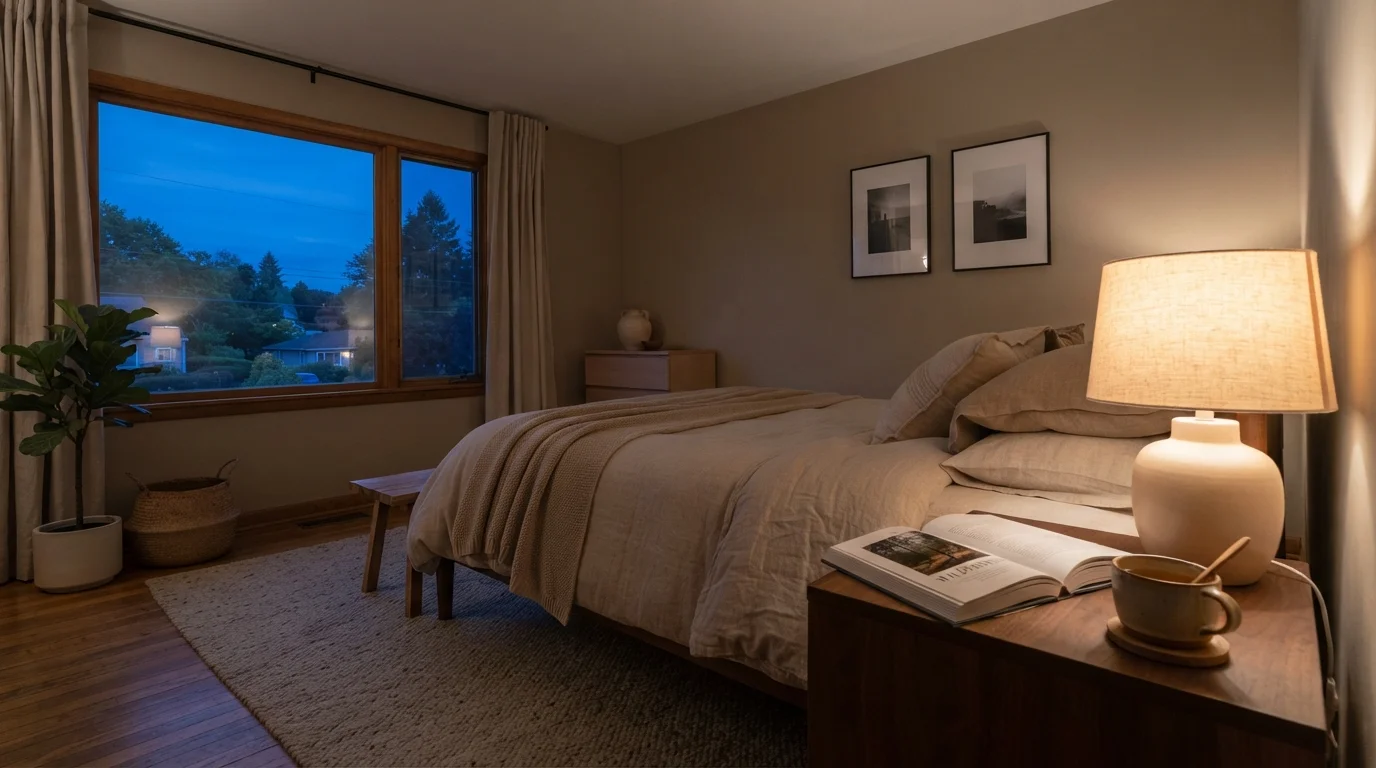
Photo: SummarizedReads.net | Just Read It! editorial
—— In This Article
Key Takeaways
- Your nervous system needs a gradual transition signal before sleep - not an abrupt stop to activity.
- Dimming light and reducing stimulation are among the most evidence-supported wind-down strategies.
- Consistency matters more than perfection; a simple, repeatable routine beats an elaborate one you abandon.
- Screens and emotionally activating content close to bedtime can delay the body's natural sleep-onset process.
- Wind-down routines work best when paired with a stable sleep and wake time each day.
Why Your Brain Needs a Transition, Not a Switch
Sleep doesn't work like a power button. The physiological shift from wakefulness to sleep is a gradual process involving changes in body temperature, hormone release, heart rate, and neural activity. When people lie down exhausted but still wired, it's often because their nervous system hasn't received enough transition signals - it's been running at full output until the moment the lights went off.
A wind-down routine works by giving your body a sequence of reliable cues that sleep is approaching. Over time, those cues become conditioned signals - similar to how a familiar scent or sound can trigger a memory automatically. The routine doesn't force sleep; it creates the right internal conditions for it. This is why not every popular bedtime habit actually helps you rest - some feel soothing without meaningfully reducing physiological arousal.
This Is General Information, Not Medical Advice
The guidance in this article is educational and intended for generally healthy adults. If you experience persistent difficulty sleeping, chronic insomnia, or suspect an underlying sleep disorder, please consult a qualified healthcare professional. Do not stop or start any treatment based on this content alone.
If you're also thinking about how your evening habits sit alongside the rest of your day, a simple weekly mental health check-in can help you spot patterns in mood, sleep, and stress before they quietly accumulate.
What You'll Need Before You Start
No specialized equipment is required for an effective wind-down routine. The essentials are modest and mostly behavioral rather than material.
What you will need
Dim or warm-toned lighting
Reducing blue-spectrum light in the evening supports the body's natural melatonin production.
Physical book or printed material
Offers a screen-free way to transition mentally from the day's demands without stimulating blue light.
Journal or notebook
Writing down worries or tomorrow's to-do list can reduce pre-sleep cognitive arousal.
Comfortable, loose clothing
Changing into sleep-associated clothing serves as a behavioral cue that reinforces the transition toward rest.
Keep Your Routine Budget-Friendly
An effective wind-down routine costs very little. Dimming existing lights, reading a physical book, gentle stretching on a yoga mat, or listening to quiet music are all free or nearly free options that align well with the underlying sleep science. Expensive supplements or devices are not required.
Your Step-by-Step Wind-Down Routine
The following steps are designed to be completed in sequence during the 30-60 minutes before your target sleep time. You don't need to execute every step perfectly every night - consistency across most nights matters far more than flawless execution on any single one.
Set a consistent wind-down start time
Choose a time roughly 30-60 minutes before your target sleep time and treat it as a soft boundary. This isn't when you must be asleep - it's when you begin transitioning. Research in behavioral sleep medicine highlights that consistency in timing strengthens the body's circadian cues over days and weeks. Even on weekends, keeping this window relatively stable makes the routine more effective.
Dim your environment
Lower overhead lighting and switch to lamps or warm-toned bulbs. Light intensity and spectrum are powerful signals to the brain's suprachiasmatic nucleus - the cluster of neurons that governs your circadian rhythm. Bright, cool-spectrum light suppresses melatonin secretion, which is the hormone that rises naturally in the evening to promote sleepiness. You don't need blackout conditions yet, but reducing overall brightness matters.
Create a screen boundary
Set aside phones, tablets, and televisions for at least the final 30 minutes before sleep. The issue isn't only the light - emotionally activating content (news, social media, fast-paced video) keeps the sympathetic nervous system engaged. If cutting screens entirely feels difficult at first, start with 15 minutes and gradually extend the buffer. See which bedtime habits genuinely support rest for a deeper look at what the evidence actually shows.
Do a brief cognitive offload
Spend 5-10 minutes writing down any unfinished thoughts, worries, or tomorrow's tasks in a notebook. A body of research - including work building on psychologist Borkovec's studies on sleep and worry - suggests that externalizing rumination reduces pre-sleep cognitive arousal. You're not solving problems; you're parking them somewhere outside your mind so your brain isn't cycling through them as you try to sleep.
Choose a calming anchor activity
Pick one consistent, low-stimulation activity you genuinely enjoy: reading fiction, gentle stretching, slow breathing exercises, or listening to calm music or a low-key podcast. The activity itself matters less than its predictability - your brain begins associating that specific behavior with sleep onset over time. This is a simple application of classical conditioning, the same principle behind stimulus control therapy used in behavioral sleep medicine.
Transition to your sleep environment
Change into comfortable sleep clothing and move to your bedroom with intention. Keep the room cool if possible - core body temperature naturally drops as part of healthy sleep onset, and a cooler room supports that process. Avoid doing non-sleep activities (working, scrolling, eating) in bed. Maintaining the association between your bed and sleep is a foundational principle in sleep hygiene guidance. For a broader look at sleep hygiene versus more clinical approaches, see how sleep hygiene compares to sleep restriction therapy.
Avoid These Common Wind-Down Mistakes
Alcohol is often mistaken for a sleep aid - while it may cause drowsiness, research consistently shows it disrupts sleep architecture, particularly REM sleep. Similarly, vigorous exercise within 60-90 minutes of bed may delay sleep onset for some people, though individual responses vary. When in doubt, err on the side of calmer, lower-stimulation activities as bedtime approaches.
For context on how an evening routine compares to starting your day well, see building a morning routine that doesn't demand an extra hour. The two routines reinforce each other when both anchor to stable times.
Making the Routine Stick Over Time
The most common reason wind-down routines fail isn't lack of willpower - it's over-engineering. A three-step routine you follow five nights a week will outperform a ten-step routine you abandon after two weeks. Start with the two or three steps that feel most manageable and add others gradually.
Track how your sleep feels week to week using something simple, like a brief note each morning. A weekly self-care audit can help you notice when sleep quality is slipping and connect it to changes in your routine. Small adjustments - shifting your wind-down start time earlier, swapping one activity for another - are easier to make when you're paying attention regularly.
This article is for general informational and educational purposes only and does not constitute medical advice. If you have concerns about your sleep or suspect a sleep disorder, please speak with a qualified healthcare professional.

Health Editorial Team
Health Editorial Team is the collective byline for our editorial team and contributor network. Articles published under this byline or an editorial pen name are researched, written, and reviewed according to our editorial standards for clarity, consistency, and independence before publication.
View author profile