
Why Your Kitchen Organization Keeps Unravelling After Two Weeks
A neatly arranged kitchen that descends into chaos is often a system problem, not a discipline problem. Here are the common culprits to watch for.
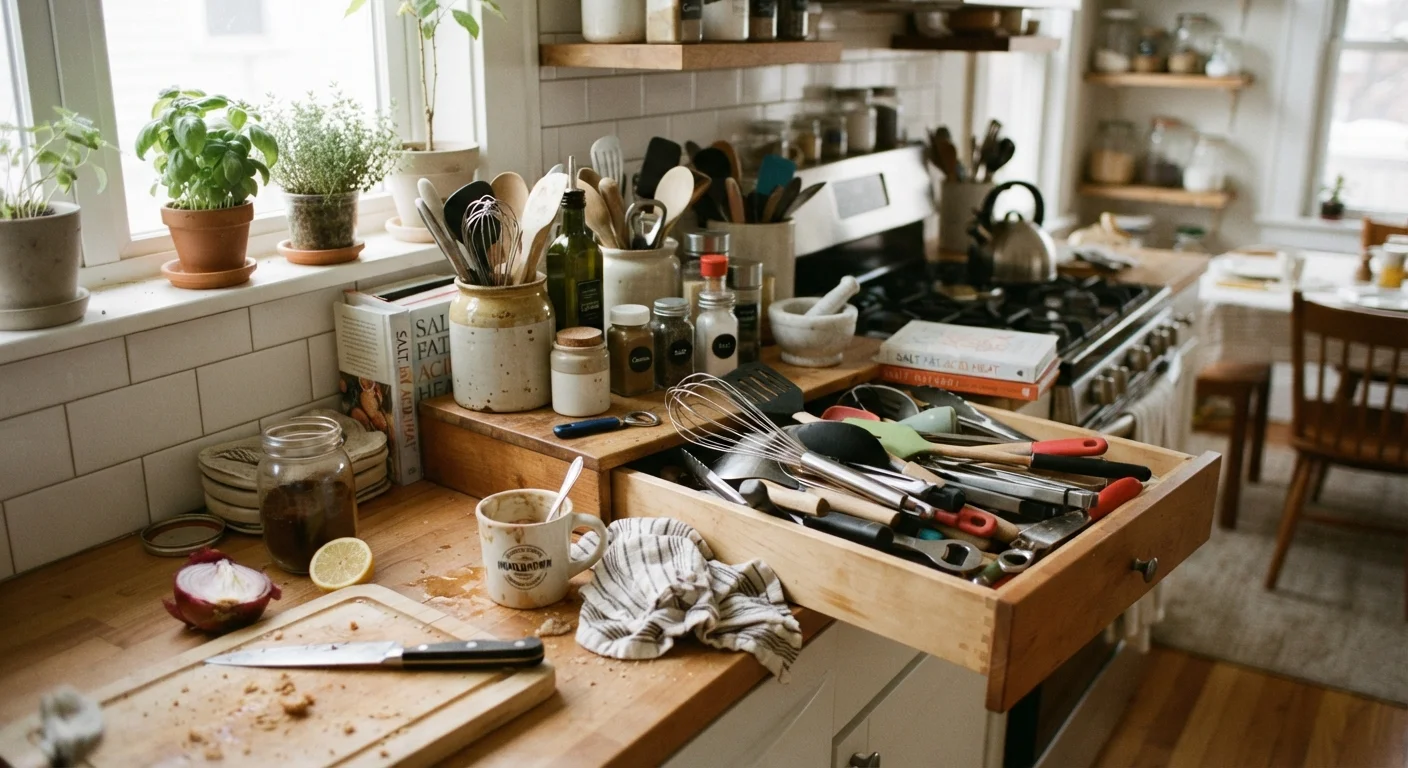
Photo: SummarizedReads.net | Just Read It! editorial
—— In This Article
Key Takeaways
- Most kitchen organization fails because the system doesn't match how people actually cook and live.
- Aesthetic-first organizing often sacrifices the friction-free access that sustains daily habits.
- Fixing specific structural mistakes is more effective than simply reorganizing from scratch again.
- Involving everyone in the household increases the odds that a system sticks long-term.
- Small, targeted adjustments outperform periodic full overhauls for lasting kitchen order.
Why Good Intentions Aren't Enough
Most people who reorganize their kitchen do so with genuine commitment. They clear the counters, group items logically, maybe buy a few organizers - and for a week or two, the kitchen hums along beautifully. Then, gradually, it doesn't. Dishes accumulate in the wrong spots, the pantry grows chaotic again, and the counter disappears under a layer of miscellaneous items.
This cycle is common enough to have a name in home organization circles: system collapse. And it almost always points to a structural flaw in the setup, not a character flaw in the person maintaining it. Understanding what actually causes the breakdown is the first step to building something that lasts.
It's a System Problem, Not a You Problem
If your kitchen has reverted to chaos multiple times despite genuine effort, the problem almost certainly lies in how the system was designed - not in your discipline or motivation. A well-designed kitchen system should require minimal willpower to maintain. When a setup demands constant conscious effort, it will eventually fail under the pressure of normal life.
The Most Common Mistakes That Cause Kitchen Systems to Fail
The following mistakes appear repeatedly in kitchens that look organized on day one but fall apart by day fourteen. Work through them honestly - even one or two culprits can destabilize an otherwise solid setup.
Organizing for how you want to use the kitchen rather than how you actually use it.
Why it happens: Reorganizing is often inspired by aspirational cooking habits - baking from scratch, elaborate meal prep - rather than the realistic daily routine of weeknight dinners and quick breakfasts.
Prioritizing visual aesthetics over functional accessibility.
Why it happens: Matching containers, decanted pantry items, and color-coded shelves look satisfying in photos and at setup - but they often add steps between you and the items you need most.
Creating a system without input from everyone who uses the kitchen.
Why it happens: One person typically leads a reorganization project and sets up a layout that makes intuitive sense to them alone. Other household members then can't find things and leave items in wrong places.
Assigning too many items to prime real estate and not enough to overflow zones.
Why it happens: When every cabinet and drawer is filled to capacity, there is nowhere logical for new or displaced items to land - so they pile up on counters.
Skipping a regular maintenance habit to catch drift before it compounds.
Why it happens: People assume a good one-time setup will hold itself indefinitely. In practice, small items migrate, supplies accumulate, and the system silently degrades over days and weeks.
Reorganizing everything at once rather than fixing the specific failure points.
Why it happens: A chaotic kitchen triggers an urge to start completely over, which is exhausting and rarely addresses the root causes of the original breakdown.
For those starting from a blank slate, home organization for renters and first-time homeowners covers how to build these principles in from the beginning rather than retrofitting them later.
How to Know When to Adjust Versus When to Reset
Not every struggling kitchen needs a complete overhaul. A helpful diagnostic: walk through the space and note which specific areas fail first and most often. If the same two or three zones consistently collapse before anything else does, those are your system's weakest links - address them surgically rather than redoing everything.
If the entire kitchen tends to degrade evenly and quickly, that usually signals a more foundational mismatch between the layout and the household's actual habits. In that case, a broader reset may be warranted, ideally approached with the observations-first method described above.
Either way, scheduling a periodic check-in prevents gradual drift from becoming a full collapse. A seasonal audit of your home organization every few months gives you a structured opportunity to catch what has shifted and make adjustments before the system breaks down entirely.
82%
Adults who report kitchen clutter causes daily stress
According to a survey by the American Cleaning Institute, the majority of U.S. adults say a disorganized kitchen negatively affects their mood and productivity on a daily basis.
2-3 weeks
Typical lifespan of an unsupported organizing system
Home organization researchers and professional organizers commonly observe that systems without built-in maintenance habits tend to show significant degradation within two to three weeks of setup.

Home Editorial Team
Home Editorial Team is the collective byline for our editorial team and contributor network. Articles published under this byline or an editorial pen name are researched, written, and reviewed according to our editorial standards for clarity, consistency, and independence before publication.
View author profile