
Your Junk Drawer Doesn't Have to Be a Black Hole
The junk drawer is a fixture in most homes. Here's a step-by-step approach to sorting, containing, and maintaining it without buying much at all.
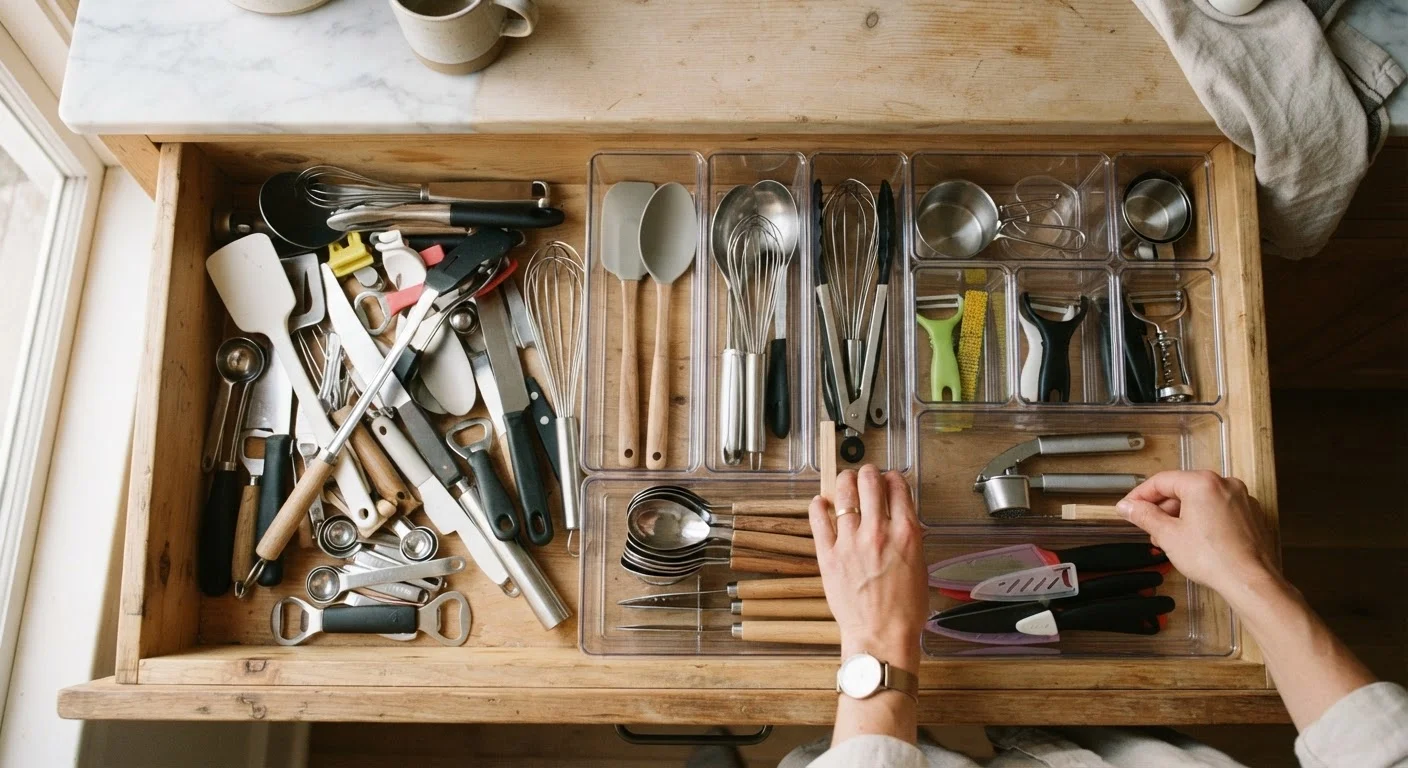
Photo: SummarizedReads.net | Just Read It! editorial
Key Takeaways
- Empty the drawer completely before making any decisions about what stays.
- Most junk drawers hold a mix of truly useful items and things that belong somewhere else.
- Dividers made from repurposed boxes or small containers work just as well as store-bought organizers.
- A clear category system prevents the drawer from reverting to chaos within weeks.
- Regular two-minute check-ins are all the maintenance most junk drawers need.
Why Junk Drawers Spiral Out of Control
Almost every home has one. The junk drawer is the domestic equivalent of a miscellaneous folder - a place where things land when their actual destination isn't immediately clear. The trouble is that without any structure, "miscellaneous" expands to fill whatever space is available.
The drawer tends to fail for two predictable reasons: there's no system for deciding what belongs there, and there's no habit for keeping it in check. Items accumulate until the drawer is too full to close easily, and then - because opening it is a small frustration - people stop dealing with it altogether. Common decluttering misconceptions often lead homeowners to think the whole house needs overhauling before a small space like this is worth tackling. In reality, a single drawer is one of the fastest wins available.
The good news: the fix doesn't require new furniture, a label maker, or a weekend. It requires about 30 minutes, a clear sorting method, and a few small containers - most of which you probably already own.
What you will need
What to Do After the Drawer Is Organized
The most organized drawer will revert to chaos if there's no follow-through. A couple of low-effort habits make a significant difference.
Don't Skip the Full Empty-Out
Organizing around existing clutter is one of the most common reasons a cleaned drawer falls apart quickly. Removing everything first forces you to make deliberate choices rather than just shuffling items around. It also lets you wipe out crumbs, dust, and forgotten sticky residue before putting anything back.
Do a two-minute reset weekly. Before or after another routine task - like taking out the trash or wiping down the counter - glance at the drawer and return anything that's drifted out of its zone. Catching drift early prevents the need for another full sort-out.
Apply a one-in-one-out rule. When something new needs to live in the drawer, decide what it's replacing or whether it truly fits the drawer's purpose. Habits like one-in-one-out are simple to remember and surprisingly effective at preventing slow accumulation.
Batteries and Small Items Need Special Attention
Loose batteries can short-circuit if their terminals touch metal objects - including other batteries - which can generate heat. Store batteries upright in a small container or keep them in their original packaging. Dispose of dead batteries at a designated recycling location rather than tossing them loose in the drawer.
Revisit the categories every few months. Household needs shift. A category that made sense six months ago might no longer serve you. A quick reassessment keeps the system aligned with how your household actually functions.
If your home has more widespread clutter challenges, this drawer is a good proof-of-concept. The same sort-and-contain logic scales to other small spaces. Small targeted changes like this one tend to build momentum for larger organizational projects. And if paper is part of what keeps landing in the drawer, addressing paper clutter at the source is a natural next step.
Trash bag or recycling bin
Collect items to discard immediately during the sort-out.
Small containers or shallow boxes
Create dividers to separate categories inside the drawer.
Sticky labels or masking tape
Label each container so household members know where things go.
Damp cloth or paper towel
Wipe the empty drawer clean before reorganizing.

Home Editorial Team
Home Editorial Team is the collective byline for our editorial team and contributor network. Articles published under this byline or an editorial pen name are researched, written, and reviewed according to our editorial standards for clarity, consistency, and independence before publication.
View author profile