
Paper Clutter: Where It Comes From and How to Stop It Accumulating
Post, school letters, receipts, manuals — paper piles up fast. A practical look at how to triage, file, and reduce incoming paper in your home.
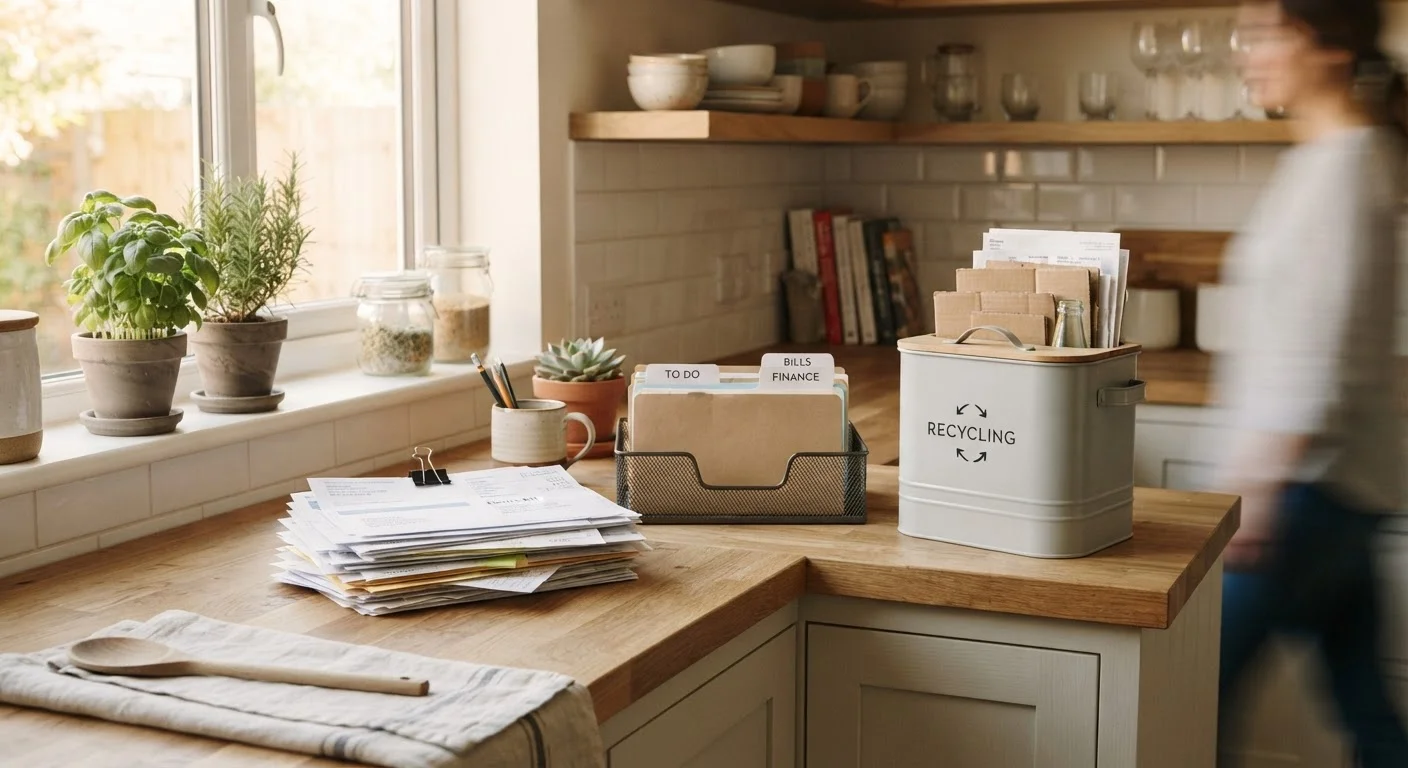
Photo: SummarizedReads.net | Just Read It! editorial
—— In This Article
Key Takeaways
- Most paper clutter accumulates because there is no consistent system for handling incoming documents.
- A three-category sort - act, file, recycle - handles the majority of paper that enters your home.
- Reducing paper at the source, such as switching to e-statements, is more effective than organizing alone.
- A simple filing structure with broad categories is easier to maintain than a highly detailed one.
- Regular short maintenance sessions prevent backlogs from rebuilding.
Why Paper Keeps Winning
Paper accumulates for a straightforward reason: it arrives constantly and most of it doesn't come with an obvious next step attached. A bill, a school permission slip, a product manual, a coupon booklet - each one is different, and the mental effort of deciding what to do with it in the moment is just enough friction to make 'set it down for now' the default choice. Multiply that by every household member and every delivery over a week, and a pile is almost inevitable.
The other factor is that paper feels consequential. Unlike an empty water bottle, it's hard to discard without reading it first. That caution is reasonable - missed notices and discarded warranty paperwork are real problems. But that same caution, applied indiscriminately, means every piece gets deferred rather than dealt with.
If your home has broader clutter patterns beyond paper, common decluttering misconceptions may also be worth examining - some popular approaches can inadvertently make paper harder to manage. And if you're setting up organization systems for the first time, this introduction to home organization for renters and first-time homeowners covers foundational principles that apply well beyond paper.
What You'll Need Before You Start
The good news: tackling paper clutter requires very little in the way of supplies. Most households already have what they need, or can find it at a dollar store.
What you will need
Desktop filing tray or inbox tray
Holds incoming papers in one designated spot so they don't spread across surfaces.
Hanging file folders and a filing box or drawer
Creates a physical home for documents that need to be kept long-term.
Cross-cut shredder
Safely destroys documents containing personal or financial information before disposal.
Recycling bin (dedicated, near mail entry point)
Allows immediate disposal of junk mail and unwanted papers at the point of entry.
Sticky notes or a small notepad
Flag action items on papers before they go into the inbox tray.
Document scanner or scanning app
Digitizes documents you need to reference but don't need in paper form.
If a dedicated filing drawer isn't available, a portable file box works equally well and can be stored in a closet. The system matters more than the container.
The Step-by-Step Process
Follow these steps in order the first time through. Once the backlog is cleared, the maintenance steps become much quicker. For related tactics that help with other small, problematic storage spots in your home, see our guide on taming the junk drawer - many of the same sorting principles apply.
Gather every piece of paper in your home into one place
Collect paper from every surface, drawer, bag, and shelf - countertops, the kitchen table, windowsills, the junk drawer, bedside tables. Pile it all in one location. This step can feel confronting, but seeing the full volume at once is important: it establishes a baseline and prevents you from leaving forgotten piles that will undermine your new system later.
Sort every piece into one of three categories
Work through the pile and place each item into one of three groups:
- Act: Requires a response, payment, or decision (bills, invitations, permission slips, forms).
- File: No action needed but worth keeping (insurance documents, lease agreements, vaccination records, tax paperwork).
- Recycle or shred: Anything else - expired coupons, old catalogs, duplicate statements you already have digitally, and junk mail.
If you are unsure whether to keep something, ask: Would I need to prove this exists, or reference it within the next two years? If the answer is no, it is safe to discard in most cases. Resist the urge to create a 'maybe' pile - it becomes a second clutter stack.
Process your 'Act' pile immediately or schedule it
For each action item, either handle it on the spot (pay the bill online, RSVP, sign the form) or write the required action and deadline on a sticky note attached to the document, then place it in your designated inbox tray. The inbox tray is a temporary holding zone - not a permanent home. Schedule a weekly 15-minute session to clear it.
Build a simple filing system for documents you're keeping
Use broad category labels rather than hyper-specific ones. A manageable starting structure might include: Finance (bank statements, tax returns), Insurance (home, health, auto policies), Medical (records, EOBs), Home (lease, mortgage, warranties, utility contacts), and Personal (IDs, legal documents). Label a hanging folder for each category and place them in a file box or drawer. The goal is that any paper has an obvious home and can be retrieved in under a minute.
Reduce paper coming into your home at the source
Organizing existing paper is only part of the solution. Reducing the volume arriving in the first place has a compounding effect. Practical steps include: switching bills and bank statements to paperless delivery, opting out of catalog and direct mail lists through your mail provider's opt-out options, and asking your child's school or community groups to send communications by email. Each source you eliminate is paper you never need to sort.
Set up a maintenance habit to prevent future build-up
Paper clutter almost always returns without a regular habit anchoring the system. A reliable approach: open and sort mail every day at the same point (before dinner, for example), and spend 10-15 minutes weekly clearing the inbox tray and filing anything in the 'keep' category. Monthly, check the inbox for anything aging past 30 days - a lingering item usually signals a decision you've been avoiding. Simple daily habits like these are what separate a one-time tidy from a lasting system.
Make the Recycling Bin Impossible to Ignore
Place a recycling bin and a small shredder within arm's reach of wherever you open mail - often the kitchen counter or a front entry table. When disposal requires no extra steps, you are far more likely to do it immediately rather than setting paper aside 'for later.'
Shred Before You Recycle Sensitive Documents
Any paper showing your full name, address, account numbers, Social Security number, or date of birth should be shredded before disposal, not just recycled. Identity theft frequently begins with discarded mail. A basic cross-cut shredder handles this reliably, or look for community shredding events in your area.
Don't Discard Documents You May Still Need
Before purging old files, confirm retention guidelines for your situation. Tax records, for example, are generally recommended to keep for several years, and certain legal or medical documents should be held indefinitely. When in doubt, consult a qualified accountant or attorney rather than assuming a document is safe to discard.
Keeping the System Going
The hardest part of any paper system is not building it - it's maintaining it when life gets busy. The steps above are designed to be low-effort once the initial backlog is cleared. The inbox tray does the heavy lifting by giving incoming paper one consistent landing spot; the weekly session prevents that tray from becoming a new pile.
If you find the system slipping, small targeted changes - like repositioning your recycling bin or moving the shredder to where you open mail - can reset the habit without starting over. The goal isn't a pristine system that requires discipline to maintain; it's a forgiving one that is easy enough to use consistently.

Home Editorial Team
Home Editorial Team is the collective byline for our editorial team and contributor network. Articles published under this byline or an editorial pen name are researched, written, and reviewed according to our editorial standards for clarity, consistency, and independence before publication.
View author profile