
Discount Traps That Cost More Than They Save
Bulk minimums, forced upsells, inflated 'original' prices — a look at the deal structures that can quietly work against shoppers.
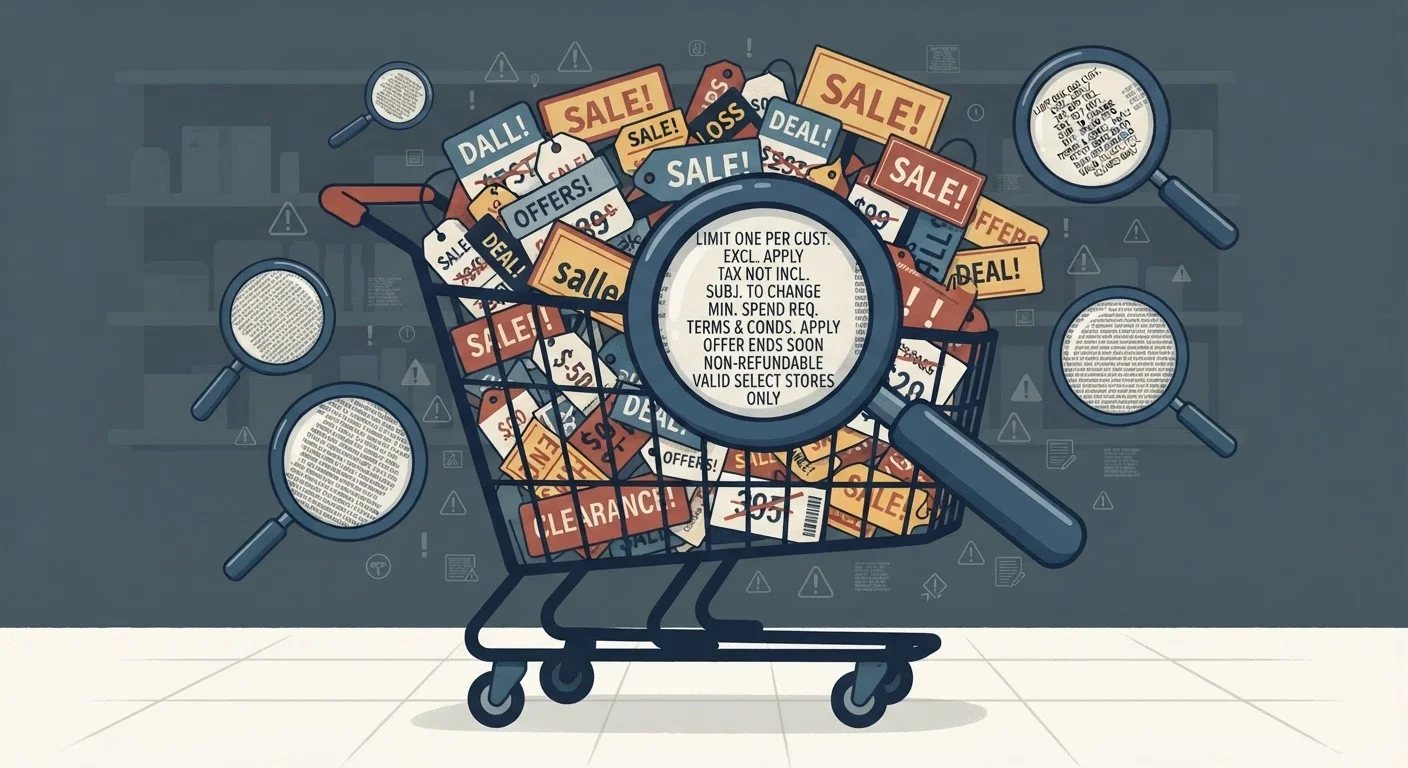
Photo: SummarizedReads.net | Just Read It! editorial
—— In This Article
Key Takeaways
- Inflated 'original' prices can make a discount look larger than it really is.
- Bulk minimums often push shoppers to spend more than they intended or need.
- Forced upsells and add-ons during checkout can erase savings from the headline discount.
- Free shipping thresholds routinely trigger unnecessary purchases to reach the minimum.
- Subscription sign-ups framed as discounts can cost more over time than one-time purchases.
- Comparing unit prices — not sticker prices — is the most reliable way to verify a deal.
When the Deal Is the Trap
Discounts are designed to feel like wins. But certain deal structures are engineered to exploit that feeling — nudging shoppers into spending more, buying more, or committing to more than they planned. None of this requires deception in a legal sense; it works precisely because it looks like a saving.
This isn't about outright scams. For those, see our guide on warning signs that an online deal may be fraudulent. This article is about the subtler structures — the ones that pass as legitimate promotions but quietly work against your budget. Understanding what to look for is the first step to avoiding them.
These Tactics Are Widespread, Not Rare
The patterns described in this article appear across retail categories — grocery, apparel, electronics, and online marketplaces. They repeat because they work consistently across consumer contexts. Awareness doesn't make you immune, but it does shift the default from automatic to deliberate.
The traps below appear across retail categories — grocery, apparel, electronics, and online marketplaces. The same mechanics repeat because they work consistently across contexts.
Artificially Inflated 'Original' Prices
A 40% discount only means something if the starting price was real. Retailers sometimes set a high reference price — sometimes called a compare at or was price — that an item was rarely or never sold at consistently. The Federal Trade Commission has guidance noting that reference prices should reflect prices at which the item was actually offered to the public for a meaningful period; inflated anchors that don't meet this standard are deceptive. But enforcement is uneven, and the practice is widespread.
The practical defence: check historical price data using browser extensions or price-tracking tools before assuming a reference price is genuine. Our article on sale pricing myths covers how these anchors distort perception.
A discount is only real if the starting price was genuine — always verify the reference price.
Bulk Minimums That Exceed What You Actually Need
'Buy 3, get 20% off' sounds straightforward. But if you only need one, you're spending roughly 2.4 times what you planned in order to capture a discount. The per-unit math improves, but your total outlay rises — and if the product expires, spoils, or goes unused, the 'saving' evaporates entirely.
Bulk minimums make the most sense when the item is non-perishable, you have reliable storage space, and your usage rate is high enough to consume the quantity before it degrades or becomes obsolete. Otherwise, buying only what you need at full price often costs less overall.
Buying more than you need to unlock a discount usually costs more in total, not less.
Free Shipping Thresholds That Trigger Filler Purchases
Free shipping above a dollar threshold — say, $35 or $50 — is one of the most effective upsell mechanisms in e-commerce. Shoppers who are $8 short of the threshold frequently add an item they wouldn't otherwise buy, spending $12 to avoid a $6 shipping fee. The math doesn't work in their favour.
The alternative: either accept the shipping fee if the item you actually want costs less in total, or use site-wide free shipping days and membership offers strategically rather than filling a cart to hit an arbitrary number. See when online shopping actually saves money for channel-by-channel context.
Adding unwanted items to hit a free shipping minimum usually costs more than paying for shipping.
Subscription Sign-Ups Disguised as Discounts
'Save 15% — subscribe and save' is a common offer in personal care, supplements, and household goods. The per-shipment price is lower, but the commitment means regular charges whether or not your usage aligns with the delivery schedule. Missed cancellations, forgotten trial-to-paid conversions, and accumulating stock you don't use can easily outpace the initial saving.
Before subscribing, compare the total cost over six months against buying individually when you actually need the item. Our article on when subscriptions actually save money versus one-time purchases gives a structured breakdown of when each model genuinely works in your favour.
Subscription discounts can cost more in total if cancellation is delayed or usage doesn't match delivery frequency.
Checkout Upsells That Quietly Erode Savings
Once a discount has been applied and the savings feel locked in, checkout pages frequently introduce add-ons: extended warranties, priority shipping upgrades, gift wrapping, protection plans, or bundled accessories. These are priced at a point designed to feel minor relative to the cart total — but they each add to actual spend.
The same pattern appears in vehicle purchases, as detailed in our piece on why buyers often pay more than they planned. In retail, the defence is the same: evaluate each add-on against its standalone cost and your actual need, not against the headline price you're already feeling good about.
Checkout add-ons are priced to feel small relative to cart totals — evaluate each one independently.
Decoy Pricing That Makes the Middle Option Look Like a Bargain
When a product comes in three sizes or tiers — small, medium, large — and the large is priced only marginally above the medium, the large is being set up as the 'obvious' choice. This is a documented pricing tactic known as the decoy effect. The medium exists partly to make the large look like exceptional value, even if you only needed the small.
The fix is simple: calculate the unit price for each option and ignore the relative gap between tiers. Our article on anchoring and decoy pricing tactics explains the underlying cognitive bias in detail.
Decoy pricing makes larger options look like bargains — unit price math cuts through the illusion.
How to Push Back
Recognising these patterns gives you a practical edge. Before acting on any discount, ask two questions: What is the actual per-unit or per-use cost? and Would I buy this at full price? If the answer to the second question is no, the discount is doing the persuading — not your need for the item.
For a broader framework on separating genuine deals from marketing illusions, our piece on what makes a discount actually worth taking lays out the key signals clearly. And if you want to build habits that hold up over time, deal-hunting habits seasoned budget shoppers rely on is a practical companion read.
Use Unit Price as Your Default Check
The unit price — not the sticker price — is the most reliable number to compare across sizes and bundle options. Many grocery and big-box retailers are required to display it on shelf tags; use it every time. When shopping online, do the division yourself: total price divided by quantity, weight, or servings.
The unit price — not the sticker price is the most reliable number to compare across sizes and bundle options. Many grocery and big-box retailers are required to display it on shelf tags; use it every time.

Shopping Editorial Team
Shopping Editorial Team is the collective byline for our editorial team and contributor network. Articles published under this byline or an editorial pen name are researched, written, and reviewed according to our editorial standards for clarity, consistency, and independence before publication.
View author profile