
Generic vs. Name-Brand Products: Where the Difference Is Real and Where It Isn't
Some store-brand products match their branded counterparts; others fall short. Here's how to tell the difference before you buy.
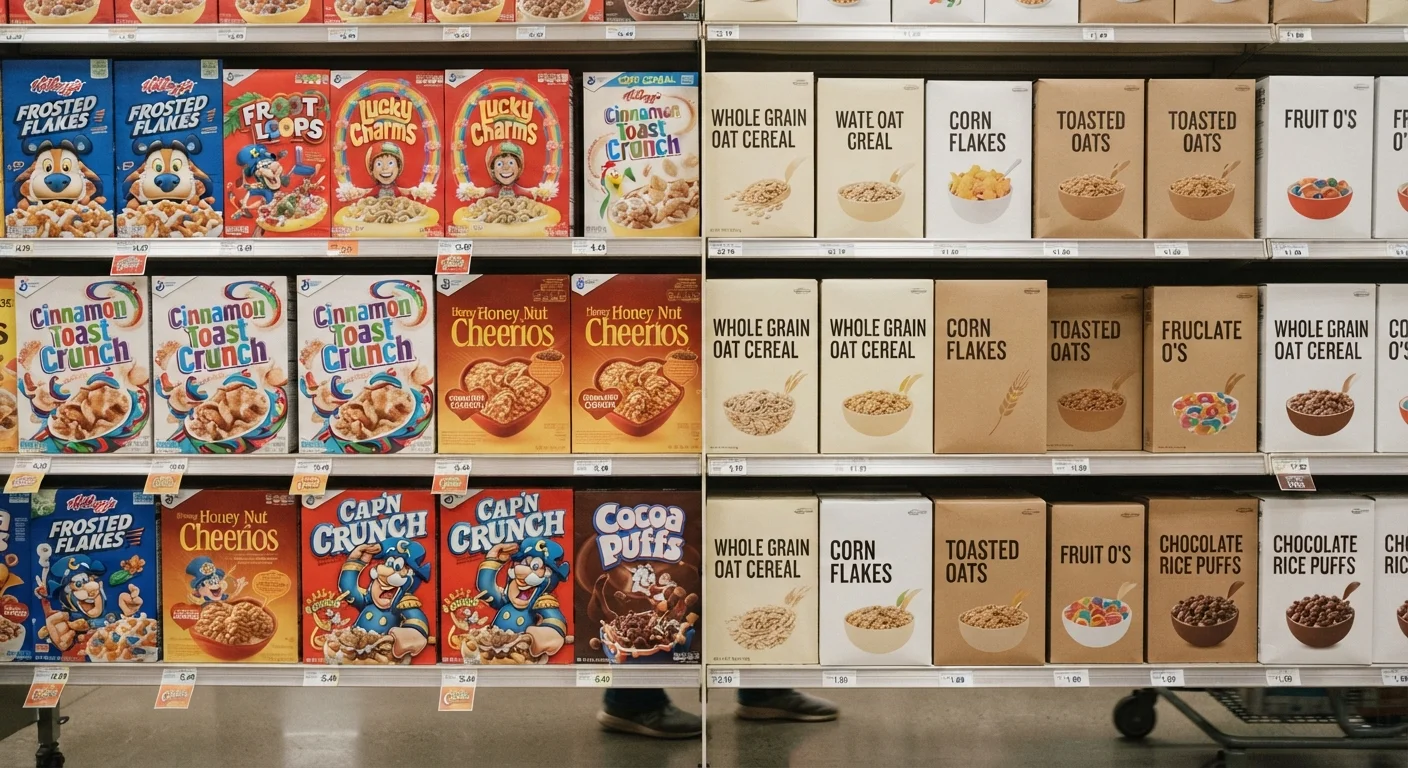
Photo: SummarizedReads.net | Just Read It! editorial
—— In This Article
Key Takeaways
- Generic OTC medications with the same active ingredient and dosage as name brands are federally regulated to meet identical standards.
- Processed foods with simple ingredient lists tend to be nearly interchangeable between generic and branded versions.
- Some categories — adhesives, batteries, and certain cleaning products — show measurable performance differences worth the price gap.
- Packaging, marketing spend, and brand equity drive much of the price difference, not manufacturing quality.
- Reading ingredient lists and checking regulatory approval status are the most reliable comparison tools available to shoppers.
Why the Price Gap Exists
Name-brand products carry costs that have nothing to do with what's inside the package. National advertising campaigns, retail slotting fees, celebrity endorsements, and decades of brand-building all get folded into the price you pay at the register. Store brands, by contrast, skip most of that overhead — they're manufactured (often by the same facilities that make name brands) and sold under a retailer's own label at a lower margin.
That structure means the price difference between a generic and a branded product is rarely a reliable signal of quality. Understanding where that gap comes from helps you decide whether it's worth paying. For a deeper look at how pricing psychology affects comparison decisions, see how anchoring and decoy pricing distort product comparisons.
| Category | Generic | Name-Brand | |
|---|---|---|---|
| OTC Medications | FDA-regulated equivalence on active ingredient | Same active ingredient; higher price reflects marketing | |
| Pantry Staples (flour, sugar, salt) | Commodity product; effectively identical | Same source; brand premium with no quality benefit | |
| Alkaline Batteries | Adequate for low-drain devices | Measurably longer in high-drain devices | |
| Adhesives & Sealants | Variable; fewer documented specs | Documented performance specs; more accountability | |
| Sunscreen | Match SPF and active ingredient first | Regulated SPF claims; wider formulation data available | |
| Cleaning Commodities (vinegar, peroxide) | Concentration-standardized; equivalent | Same concentration; price gap is pure branding |
Where Generic Is Effectively the Same
Over-the-counter medications are the clearest example of category-wide equivalence. The FDA requires generic OTC drugs to contain the same active ingredient at the same dosage as the branded version. A store-brand ibuprofen at 200mg per tablet is, by regulatory definition, delivering the same active compound as the name brand. Inactive ingredients — binders, coatings, dyes — can vary, which matters for people with specific allergies, but the therapeutic component is standardized.
Pantry staples with short ingredient lists — all-purpose flour, white sugar, table salt, baking soda — are commodity goods. There is no proprietary formula. The store brand and the name brand are drawing from the same agricultural supply chain and meeting the same food-safety standards. Spending more here buys you a recognizable logo, not a different product.
Cleaning basics like white vinegar, hydrogen peroxide, and isopropyl alcohol are sold by concentration, which is standardized and labeled. A 70% isopropyl solution is a 70% isopropyl solution regardless of the brand on the bottle.
Check the Inactive Ingredients Too
For OTC medications, the active ingredient is standardized — but inactive ingredients like dyes, fillers, and coatings can differ between generic and branded versions. If you have a known sensitivity to a dye or allergen, read the full label on the generic before switching, rather than assuming complete equivalence. Your pharmacist can help you identify relevant differences.
Where the Difference Is Measurable
Alkaline batteries have been the subject of independent testing for years, and name-brand options from established manufacturers have historically shown longer run times in high-drain devices like digital cameras and game controllers. The gap narrows in low-drain applications like TV remotes, where generic performance is typically adequate. If longevity in a critical device matters, this is a category worth scrutinizing.
Adhesives and sealants vary meaningfully by formulation. Bonding strength, cure time, flexibility, and resistance to moisture are properties that differ between products — and branded manufacturers with documented performance specifications give you more accountability if a product fails. For DIY projects where bond failure has real consequences, the spec sheet matters more than the price tag.
Certain personal care products — especially moisturizers, sunscreens, and hair treatments — can differ in formulation complexity. Sunscreen is regulated by the FDA, so SPF claims must be verified, but delivery systems and skin feel vary. For sunscreen specifically, confirm the active ingredient and SPF match before switching; for cosmetic texture preferences, personal testing is the only reliable method.
For more on what hidden variables can shift a product comparison, see the overlooked factors that change comparison outcomes.
~80%
Store-brand market share growth in recent years
The Private Label Manufacturers Association has reported that store brands account for roughly 1 in 5 items sold in U.S. grocery stores, with share growing steadily since the 2008 recession.
20–25%
Typical price discount of generic vs. name brand
Consumer research consistently finds store-brand grocery items priced roughly 20–25% lower on average than their branded equivalents, though the gap varies widely by category.
A Practical Framework for Deciding
Rather than applying a blanket rule — always generic or always name brand — a category-by-category approach is more reliable. Here's a practical decision path:
- Check for regulatory equivalence. If a federal agency (FDA, EPA, USDA) mandates that generic and branded versions meet identical standards for the relevant active ingredient or specification, start with the generic.
- Compare ingredient or specification lists directly. For food, place the two labels side by side. For tools or electronics, compare the stated specs. If they match, the price difference is likely packaging and marketing.
- Look for independent testing data. Consumer-testing organizations publish category-specific results that can identify real performance gaps. These findings are more useful than brand reputation alone.
- Factor in consequence of failure. For a bag of flour, a subpar result costs you an afternoon. For a smoke detector, a structural adhesive, or a medication for a chronic condition, the stakes are higher and extra verification is warranted.
Online reviews can supplement this process, but they require careful reading. See how to spot genuine product reviews before weighing review sentiment too heavily. And if you're comparing across both online and in-store channels, knowing which channel saves more by category can further sharpen your decision.
This article is for general informational purposes only. For health-related product decisions, consult a qualified healthcare professional.

Shopping Editorial Team
Shopping Editorial Team is the collective byline for our editorial team and contributor network. Articles published under this byline or an editorial pen name are researched, written, and reviewed according to our editorial standards for clarity, consistency, and independence before publication.
View author profile