
Currency Exchange Myths Budget Travelers Still Believe
From airport kiosks to dynamic currency conversion, several common beliefs about exchanging money abroad cost travelers more than they realise.
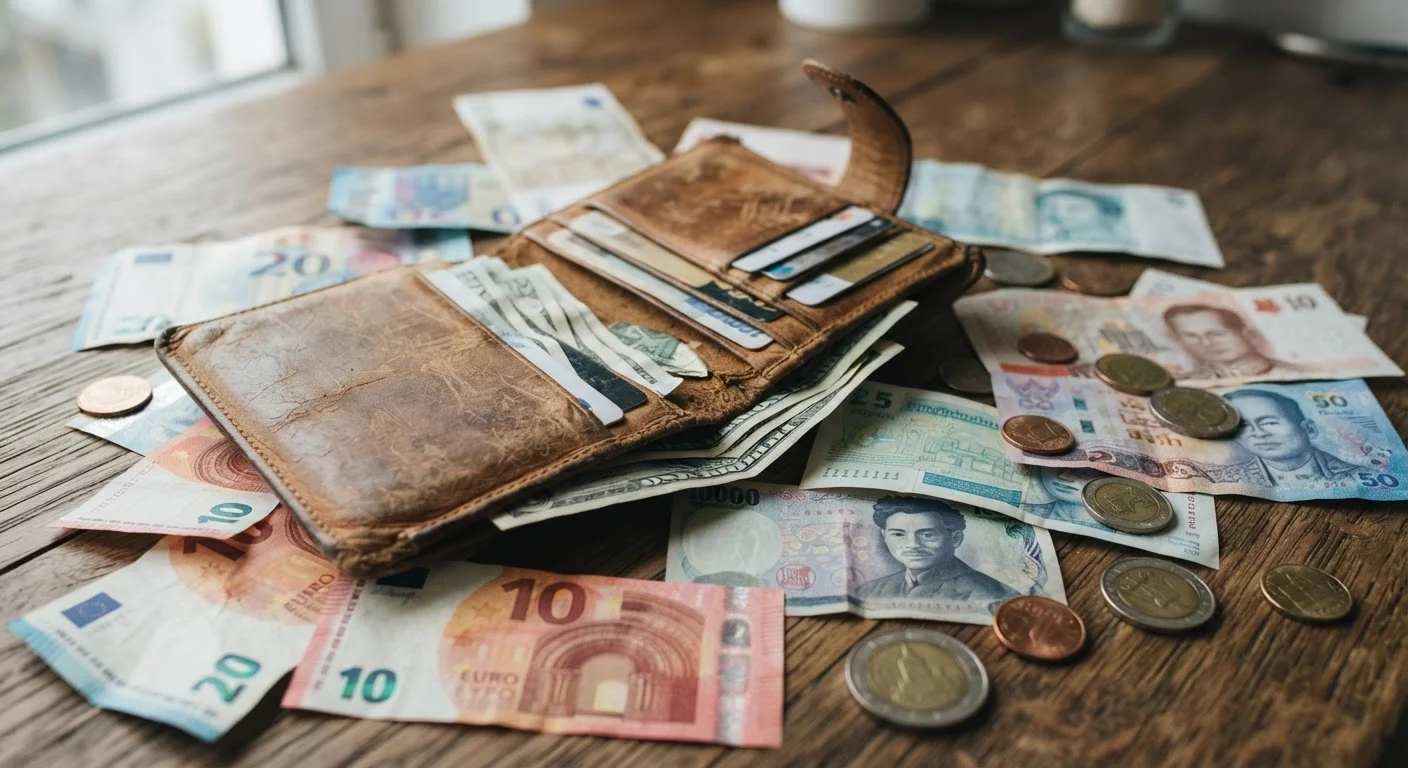
Photo: SummarizedReads.net | Just Read It! editorial
—— In This Article
Key Takeaways
- Airport currency kiosks typically offer some of the worst exchange rates available to travelers.
- Dynamic currency conversion at a payment terminal almost always costs you more — decline it.
- Local ATMs abroad often provide competitive rates, but foreign transaction fees can erode savings.
- Exchanging all your cash before departure isn't always necessary or cost-effective.
- Credit cards with no foreign transaction fees are frequently a strong option for overseas spending.
Why Currency Myths Are Expensive
Currency exchange is one of the easiest places to quietly lose money while traveling. Unlike a bad restaurant meal, a poor exchange rate doesn't feel painful in the moment — you just get fewer local bills than you should. That invisibility is exactly why myths about where and how to exchange money persist among otherwise savvy travelers.
The gap between a fair mid-market rate and what a bad exchange outlet offers can easily run 5–10%, sometimes more. On a $2,000 trip budget, that's a real amount of money that could cover a day's accommodation or several meals. Building an accurate travel budget means accounting for what currency exchange actually costs you — not just airfare and hotels.
Myth
Airport currency exchange booths are convenient and safe, so they're worth using.
Fact
Airport exchange kiosks are convenient, but they routinely offer some of the least favorable rates of any exchange option.
Airport operators know that travelers arriving with no local currency feel pressure to exchange immediately. That captive demand lets kiosks charge wide spreads between the rate they buy and sell currency. Some also advertise "zero commission" while building their profit into a rate that may be 10–15% worse than the mid-market rate. If you land without local currency, withdrawing a small amount from an airport ATM using your debit card is generally a better starting point — just confirm your bank's international ATM fee policy beforehand.
Myth
Always say yes when a merchant or ATM offers to charge you in US dollars — it's simpler.
Fact
Choosing to pay in US dollars abroad — called dynamic currency conversion — almost always means a worse rate for you, not the merchant.
Dynamic currency conversion (DCC) lets the merchant's payment system, rather than your card network, set the exchange rate. That rate is typically unfavorable, and the merchant or their processor pockets the difference. When a terminal or ATM asks whether you want to pay in your home currency or the local currency, always choose local currency. Your card network's rate will virtually always be more competitive than the DCC rate offered at the point of sale.
Myth
You'll get a better deal exchanging all your money at home before departure.
Fact
Pre-trip exchanges at US bank branches or exchange services are often no better — and sometimes worse — than options abroad.
Some travelers assume that exchanging cash at their own bank before leaving gives them a fair rate and saves hassle. In reality, US banks that offer currency exchange typically apply a retail markup over the interbank rate. For many major travel currencies, withdrawing from a reputable local ATM at your destination provides a rate closer to the interbank benchmark. The exception: if you're traveling somewhere with limited ATM infrastructure or where carrying some local currency before arrival is genuinely necessary for safety or logistics, exchanging a small, realistic amount in advance makes sense.
Myth
Using a credit card abroad always comes with hefty fees, so cash is king.
Fact
Many credit cards charge no foreign transaction fees, making them competitive or superior to cash for overseas spending.
Foreign transaction fees — typically 1–3% per purchase — are a real cost, but they aren't universal. Numerous cards, including many travel and general-purpose cards, waive them entirely. Before concluding that cash is cheaper, check your existing card's terms. When you pay with a no-foreign-transaction-fee card, your card network applies a rate that closely tracks the mid-market rate, which often beats the rate you'd get exchanging physical cash. Cash still has a role — small vendors, markets, and rural areas may not accept cards — but the "cash is always cheaper" assumption is outdated for most urban destinations.
Myth
The exchange rate you see on Google is the rate you can get anywhere.
Fact
The Google rate reflects the interbank (mid-market) rate — a wholesale rate that retail travelers almost never receive directly.
The mid-market rate is the midpoint between buy and sell rates in the global currency market. It's a useful benchmark, but banks, exchange bureaus, and card networks all add a margin on top of it. The goal for travelers isn't to match this rate exactly — it's to minimize how far below it your actual rate falls. Comparing what you receive to the mid-market rate is a practical way to evaluate any exchange option before committing.
How to Protect Your Money When Traveling
Understanding what not to do is half the battle. A few practical habits cover most travelers in most situations.
Never Exchange at Hotel Front Desks
Hotel currency exchange is nearly always among the worst rates available — comparable to or worse than airport kiosks. It's convenient, but that convenience comes at a significant cost. Even if you're in a hurry, walking to a nearby bank ATM is almost always worth the extra few minutes.
- Research fees before you leave. Check whether your bank charges foreign ATM fees and what your credit card's foreign transaction policy is. Some accounts refund ATM fees internationally — it's worth knowing in advance.
- Withdraw modest amounts at local ATMs. In most countries, ATMs connected to major networks dispense local currency at rates close to the interbank rate. Use the ATM's local currency option, never the converted amount in dollars.
- Keep a no-foreign-transaction-fee card as backup. Many travel-oriented cards waive these fees. This isn't a product recommendation — check your existing cards first before assuming you need a new one.
- Avoid currency exchange counters in airports, hotels, and tourist areas. These locations rely on foot traffic and urgency, not competitive rates.
Currency decisions fit into broader financial planning habits. The same critical thinking that applies to everyday budgeting myths applies here: question assumptions, compare real numbers, and don't let convenience override cost. Other common planning mistakes are covered in our roundup of travel myths that lead planners astray.
Up to 15%
Markup at some airport currency kiosks
Consumer finance researchers and travel organizations have documented spreads between airport exchange rates and mid-market rates of up to 15% at some major international airports.
1–3%
Typical foreign transaction fee on cards
Most credit cards that do charge a foreign transaction fee apply between 1% and 3% per transaction, according to general card industry disclosures — but many travel cards waive this fee entirely.
This article is for general informational purposes only. Exchange rates, fees, and card terms vary by provider and change frequently. Always verify current rates and policies directly with your bank, card issuer, or official sources before traveling.

Travel Editorial Team
Travel Editorial Team is the collective byline for our editorial team and contributor network. Articles published under this byline or an editorial pen name are researched, written, and reviewed according to our editorial standards for clarity, consistency, and independence before publication.
View author profile