
Why Travelers Underestimate Jet Lag — and How the Body Actually Responds
Jet lag is more than tiredness. Understand what's happening in your body across time zones and what general strategies may support adjustment.
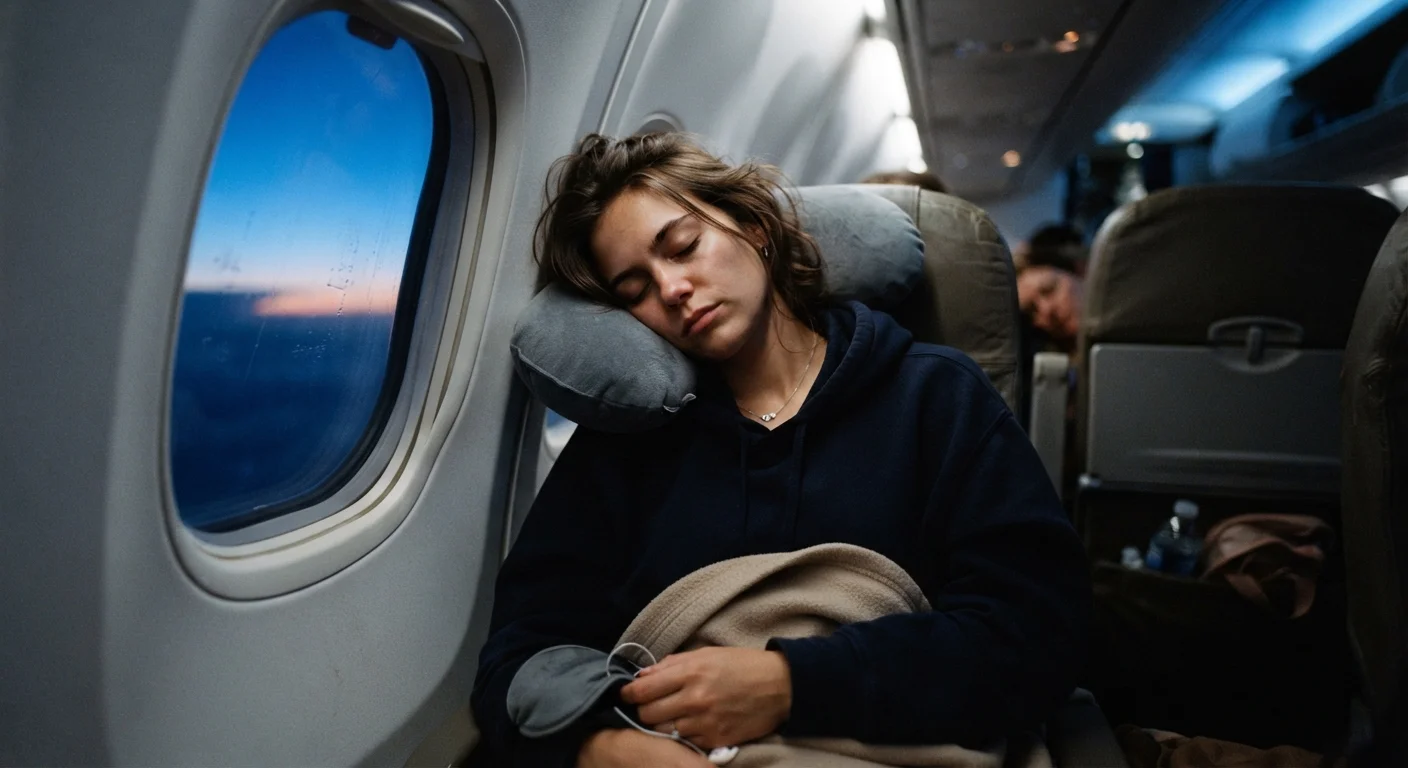
Photo: SummarizedReads.net | Just Read It! editorial
—— In This Article
Key Takeaways
- Jet lag is a physiological condition caused by circadian rhythm disruption, not just tiredness.
- The body's internal clock can take roughly one day per time zone to fully readjust.
- Eastward travel tends to cause more severe jet lag than westward travel for most people.
- Light exposure is one of the most powerful tools for resetting your circadian rhythm.
- Alcohol and sedatives on flights can worsen recovery rather than help it.
What Jet Lag Actually Is
Most travelers treat jet lag as a minor inconvenience — a yawn on the first morning, a slightly foggy afternoon. The reality is more complex. Jet lag is a temporary circadian rhythm disorder recognized by sleep researchers and clinicians. It occurs when your body's internal clock — governed largely by a cluster of neurons in the brain called the suprachiasmatic nucleus — falls out of sync with the local day-night cycle at your destination.
This internal clock regulates far more than sleep. It coordinates hormone release, digestion, body temperature, immune function, and cognitive performance. When you land in Tokyo after departing New York, those systems are still running on Eastern Time. The result isn't just tiredness; it can include disrupted digestion, reduced concentration, mood shifts, and impaired short-term memory.
Understanding the mechanism matters because it shapes every practical decision you make around travel recovery. See our step-by-step trip planning guide for how to build recovery time into your itinerary from the start.
Myth
Jet lag is just being tired from a long trip — a good night's sleep will fix it.
Fact
Jet lag is a physiological disruption to your circadian system, not ordinary fatigue. One night of sleep rarely resolves it.
Travel fatigue and jet lag are related but distinct. Fatigue comes from physical exertion, poor in-flight sleep, and dehydration — and does improve after rest. Jet lag, however, reflects a systemic misalignment between your internal biological clock and the local environment. Even after a full night of sleep, your hormones, digestion, and body temperature regulation may still be operating on your departure time zone for several days.
Myth
Flying west is just as hard on your body as flying east.
Fact
Eastward travel tends to cause more severe jet lag for most people because it requires advancing the internal clock, which is harder than delaying it.
The human circadian clock naturally runs slightly longer than 24 hours, which means it's more adaptable to a longer day (westward travel) than a shorter one. When you fly east, you're asking your body to fall asleep and wake earlier than it's primed to — a physiologically more difficult adjustment. This is why many travelers report milder symptoms returning westward on the same route.
Myth
Drinking alcohol on the plane helps you sleep and reduces jet lag.
Fact
Alcohol disrupts sleep architecture, worsens dehydration, and can make jet lag recovery slower, not faster.
While alcohol can induce drowsiness, it suppresses REM sleep — the restorative sleep stage most critical to cognitive recovery. Cabin air is already low in humidity, and alcohol accelerates fluid loss, compounding the dehydration that worsens jet lag symptoms. Research on sleep and alcohol consistently shows that alcohol-induced sleep is of lower quality than natural sleep, even when duration is similar.
Myth
Staying up until local bedtime immediately fixes your internal clock.
Fact
Forcing wakefulness alone isn't sufficient — light exposure, meal timing, and physical activity all contribute to circadian resetting.
Pushing through to local bedtime is a reasonable starting strategy, but your circadian clock doesn't reset through willpower alone. Light is the primary environmental signal your brain uses to calibrate time of day. Without intentional light management — seeking sunlight at the right local hours and avoiding bright screens at others — resetting takes longer regardless of when you fall asleep. Meal timing and moderate exercise also send synchronizing signals to peripheral body clocks in organs like the liver and gut.
Myth
Young, healthy travelers don't really get jet lag.
Fact
Age and fitness level influence resilience but don't eliminate jet lag — anyone crossing multiple time zones experiences circadian disruption.
Younger travelers may recover somewhat faster due to greater sleep flexibility, but the underlying biology of circadian disruption applies universally. Frequent fliers and athletes who cross time zones regularly report persistent symptoms. There's also evidence that older adults experience more pronounced disruption due to age-related changes in circadian rhythm strength and sleep architecture. Good general health helps — but it doesn't make your body immune to time zone physics.
What the Research Suggests About Recovery
A widely cited rule of thumb in sleep medicine is that the body takes approximately one day per time zone crossed to fully resynchronize — though individual variation is significant. Factors including age, overall sleep health, travel direction, and pre-trip sleep debt all influence how hard jet lag hits and how quickly it resolves.
~1 day
Recovery time per time zone crossed
Sleep researchers commonly cite this as a general estimate, though individual recovery varies based on age, sleep health, and travel direction.
6+ zones
Time zones where jet lag becomes clinically significant
Disruption across fewer zones is real but mild; crossing six or more zones is where most travelers report meaningful cognitive and physical impairment.
Light is the most potent external signal your circadian clock uses to calibrate itself. Strategically seeking or avoiding bright light at specific times — depending on travel direction — can accelerate adjustment. Morning light after eastward travel and evening light after westward travel are generally recommended, though exact timing depends on how many zones you've crossed. Consult a sleep specialist or travel medicine provider for guidance tailored to your situation.
Melatonin, a hormone naturally produced at night, has been studied as a jet lag aid. General research suggests low doses taken at an appropriate local bedtime may support adjustment, but dosing, timing, and individual response vary considerably. Always consult a healthcare professional before using any supplement.
For travelers dealing with the broader physical toll of long flights, our article on managing long-haul flight discomforts covers related in-flight challenges in detail.
Don't Rely on Sleep Aids Without Guidance
Over-the-counter sleep aids and sedatives are sometimes used by travelers to force sleep on flights or at the destination. However, these can interfere with natural circadian adjustment, leave you groggy at critical times, and carry risks for some individuals. If you're considering any sleep aid — including supplements like melatonin — discuss timing and dosage with a healthcare provider before your trip.
This article provides general health information for educational purposes and is not a substitute for professional medical advice. Consult a qualified healthcare provider about any personal health concerns related to travel.

Travel Editorial Team
Travel Editorial Team is the collective byline for our editorial team and contributor network. Articles published under this byline or an editorial pen name are researched, written, and reviewed according to our editorial standards for clarity, consistency, and independence before publication.
View author profile