
The Hidden Discomforts of Long-Haul Flights and How to Manage Them
From cabin pressure to deep vein thrombosis risk, long flights carry overlooked physical challenges. Learn general strategies to stay comfortable in the air.
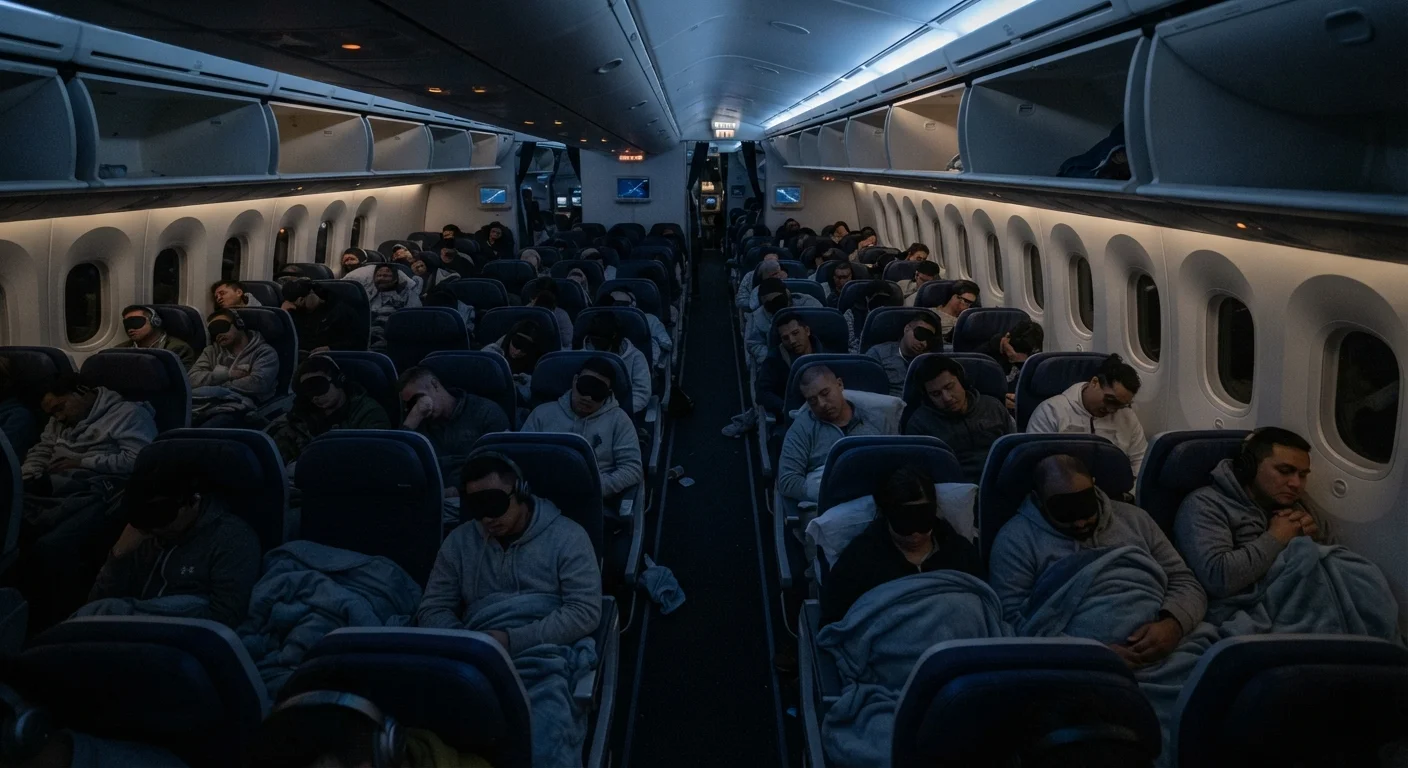
Photo: SummarizedReads.net | Just Read It! editorial
—— In This Article
Key Takeaways
- Cabin air is significantly drier than ground-level air, accelerating dehydration faster than many travelers expect.
- Sitting still for hours raises circulation concerns — moving regularly is one of the most practical countermeasures.
- Pressure changes, noise, and disrupted sleep patterns each create their own physical strain over a long flight.
- Simple preparation before boarding — reviewed in a pre-trip checklist — can reduce discomfort significantly.
- Travelers with chronic health conditions should consult a qualified healthcare provider before any long-haul trip.
What Your Body Actually Goes Through at 35,000 Feet
Most travelers expect some stiffness after a long flight. Fewer anticipate the range of overlapping physical stressors that accumulate over 8, 12, or 16 hours in a pressurized cabin. Cabin altitude is typically maintained at an equivalent of 6,000–8,000 feet above sea level, which means lower oxygen levels, reduced humidity (often below 20%), and sustained pressure on the ears and sinuses. Layer on noise levels averaging 85 decibels, disrupted sleep cycles, and limited movement, and the body is managing quite a lot — mostly without signaling distress until after landing.
Understanding what's actually happening lets you take targeted steps rather than guessing. Before any long-haul trip, it's worth reviewing the pre-trip safety and comfort checklist to make sure health prep is covered before you reach the gate. The list below covers the most common — and most overlooked — in-flight discomforts and how to approach each one.
Dehydration from Low Cabin Humidity
Aircraft cabins maintain humidity levels well below what most people experience indoors — sometimes as low as 10–15%. At that level, moisture evaporates from your skin, eyes, and airways more rapidly than you'd notice on the ground. Mild dehydration can arrive quietly, showing up as a headache, fatigue, or dry sinuses well before thirst kicks in.
Drinking water consistently throughout the flight — rather than waiting until you feel thirsty — is the most straightforward response. Limiting alcohol and caffeine helps, as both accelerate fluid loss. Lip balm, a small saline nasal spray, and preservative-free eye drops are worth keeping in your carry-on for the same reason.
Cabin humidity can drop below 15% — drink water before thirst signals dehydration.
Circulation Issues and DVT Risk
Deep vein thrombosis (DVT) — the formation of a blood clot in a deep vein, usually in the leg — is a recognized risk on long flights, particularly for those sitting still for many consecutive hours. The risk is generally low for healthy individuals but increases with flight duration, pre-existing conditions, recent surgery, or a personal or family history of clotting disorders.
Standing and walking the aisle every 1–2 hours is the most effective general countermeasure. Ankle circles, calf raises from your seat, and avoiding crossed legs also help keep blood moving. Compression socks are widely recommended for long-haul travelers and are available without a prescription — though travelers with circulation-related health conditions should discuss appropriate options with a healthcare provider before flying.
Walking the aisle every one to two hours is one of the simplest ways to support circulation.
Ear and Sinus Pressure
As cabin pressure changes during ascent and descent, the Eustachian tube — which connects the middle ear to the throat — must equalize pressure. When it doesn't equalize quickly, the result is the familiar sensation of plugged or painful ears. Travelers with active sinus congestion or a cold are particularly vulnerable because inflammation makes equalization harder.
Swallowing, yawning, and chewing gum encourage the Eustachian tube to open. The Valsalva maneuver (gently exhaling with mouth closed and nose pinched) is another commonly used technique. Staying awake during descent allows you to actively manage pressure, rather than sleeping through it — when swallowing reflexes slow significantly.
Staying awake during descent lets you actively manage ear pressure through swallowing and yawning.
Sleep Disruption and Fatigue
Sleeping on planes sounds straightforward but is consistently undermined by ambient noise, inconsistent light exposure, uncomfortable seating angles, and the natural irregularity of trying to sleep outside normal hours. Even passengers who do sleep often get fragmented rest that doesn't fully restore alertness.
A neck pillow that supports the head in an upright position, a sleep mask to block light, and earplugs or noise-canceling headphones address the most common mechanical barriers. Timing any attempt at sleep to align with your destination's nighttime — rather than departure-city time — can support faster adjustment after landing. For a deeper look at what happens to the body across time zones, see why jet lag is more than tiredness.
Aligning in-flight sleep with your destination's nighttime supports faster adjustment after landing.
Skin Irritation and Swelling
Low humidity and prolonged sitting create a double effect on skin: dryness from cabin air combined with fluid pooling in the lower legs and feet due to reduced movement and gravity. Many long-haul travelers notice that shoes fit tighter by the end of the flight — this swelling is common and usually temporary, but can be uncomfortable.
Moisturizer applied before and during the flight helps with skin dryness. For swelling, the same movement habits that support circulation — walking, ankle exercises, compression socks — are the relevant response. Wearing loose, breathable footwear that allows for some swelling makes the flight noticeably more comfortable, particularly on routes over 10 hours.
Loose footwear and regular movement reduce foot swelling that commonly develops on flights over ten hours.
Noise Fatigue and Mental Overload
Sustained noise at typical cabin levels — averaging around 85 decibels during cruise — causes cumulative fatigue that most passengers don't consciously register until they land feeling drained. Added to screen time, announcements, and the cognitive load of navigating an unfamiliar environment, the mental toll of a long flight is often underestimated.
Earplugs reduce ambient noise significantly and cost almost nothing. Noise-canceling headphones are more effective but also bulkier — worth the trade-off for very long routes. Scheduling deliberate quiet periods — time without screens or audio — gives the nervous system some recovery space during the flight. Travelers prone to anxiety in transit may find additional strategies in practical approaches for managing travel anxiety.
Sustained cabin noise averages around 85 decibels — earplugs offer simple, low-cost relief.
Building a Personal Strategy Before and During Your Flight
No single tactic eliminates all long-haul discomfort, but addressing each stressor with a specific habit makes a real difference in how you land. If your trip crosses multiple time zones, note that the discomforts above are often compounded by jet lag — which involves more than simple tiredness. The body's response to time zone shifts is worth understanding separately.
Travelers managing chronic conditions, taking regular medications, or traveling while pregnant should discuss long-haul flight risks with a qualified healthcare provider before departure. Our overview of what to raise with a doctor before you travel outlines the key topics worth covering. The goal isn't to make every flight comfortable — it's to arrive informed, prepared, and in reasonable shape to enjoy where you're going.
Pack a Small In-Flight Comfort Kit
A few compact items make a measurable difference on long routes: earplugs or headphones, a sleep mask, lip balm, a travel-size moisturizer, saline nasal spray, and compression socks. Keep them in your personal item rather than checked luggage so they're accessible from your seat. See the carry-on vs. checked luggage comparison if you're still deciding how to pack for your trip.
This article provides general travel health information and is not a substitute for personalized medical advice. Consult a qualified healthcare professional before traveling if you have existing health conditions or concerns.

Travel Editorial Team
Travel Editorial Team is the collective byline for our editorial team and contributor network. Articles published under this byline or an editorial pen name are researched, written, and reviewed according to our editorial standards for clarity, consistency, and independence before publication.
View author profile