
Everything That Goes Into Planning a Trip: The Full Picture
An end-to-end resource covering destination research, budgeting, bookings, documents, packing, and contingency planning in one place.
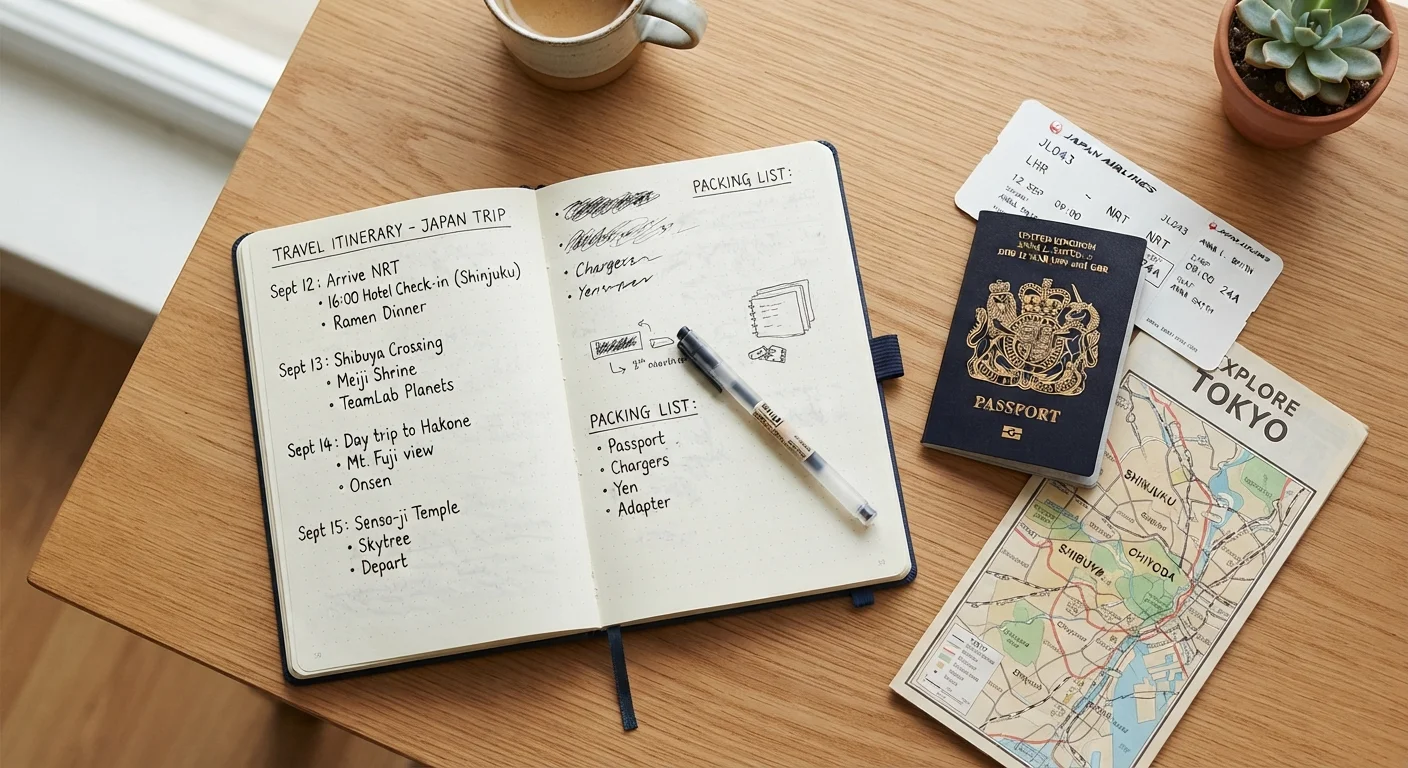
Photo: SummarizedReads.net | Just Read It! editorial
—— In This Article
Key Takeaways
- Destination research shapes every downstream decision, from budget to packing list.
- Book flights and accommodation before activities — availability drives the sequence.
- Verify visa, passport validity, and any health entry requirements well in advance.
- A written contingency plan reduces stress and out-of-pocket costs if things go wrong.
- Travel insurance is a standard part of a complete trip plan, not an optional add-on.
Start With Destination Research
Every well-planned trip begins with honest destination research — not just deciding where you want to go, but understanding what that destination actually requires of you. Start by looking at the time of year you intend to travel. Weather patterns, peak tourism seasons, and local holidays all affect cost, crowds, and what activities are available. A beach destination in its rainy season may be significantly cheaper but could also mean limited access or safety concerns.
Research local transportation options, typical daily costs, and any cultural norms or laws you'll need to respect. Government travel advisory sites, such as the U.S. State Department's travel portal, provide reliable safety and entry information. Cross-reference with recent traveler forums or community boards for on-the-ground perspective. For newcomers building their first itinerary, our complete walkthrough for first-timers covers this foundation in plain detail.
Check travel advisories for your destination at least twice — once when you start planning and again two weeks before departure. Conditions can shift quickly and affect both safety and entry requirements.
Advisory levels can change between initial research and travel dates, and airlines or travel insurance policies may be affected by current advisory status.
When researching accommodation, filter by neighborhood before filtering by price. Staying in a central, walkable area often saves more on daily transit than a cheaper room on the outskirts does on nightly rate.
Daily transportation costs in unfamiliar cities add up quickly and are easy to underestimate during the booking phase.
Build a Realistic Trip Budget
Budgeting accurately means accounting for every cost category — not just flights and hotels. A complete travel budget typically includes transportation to and from home airports, flights or other intercity transit, accommodation, daily meals, activities and entrance fees, travel insurance, and a buffer for unexpected expenses.
Many travelers underestimate day-to-day spending. Research average meal costs, transit fares, and typical activity prices for your destination before committing to a number. Build your budget from the bottom up: estimate daily spend first, multiply by trip length, then add fixed costs like flights. For a deeper look at where costs stack up across every phase of travel, see our resource on where costs compound from departure to return.
~30%
Budget overage reported by travelers
A commonly cited finding in travel spending surveys suggests roughly a third of travelers exceed their original trip budget, largely due to underestimating daily expenses.
6 months
Minimum passport validity required
Many countries enforce a six-months-beyond-travel-date passport validity rule — a requirement that catches unprepared travelers off guard at departure.
Handle Bookings in the Right Order
The sequence of your bookings matters. Flights determine your travel dates, which determines accommodation availability, which then shapes your activity schedule. Booking out of order — locking in experiences before you have confirmed transportation — is one of the most common planning mistakes.
General sequencing: confirm your dates and destination, then book flights, then secure accommodation. Once those anchors are in place, research and reserve high-demand activities (guided tours, popular parks, ticketed attractions) that may sell out. Dining reservations, if relevant, typically come last. For a time-stamped breakdown of when to do each task, our trip-planning timeline maps out the 3-month, 3-week, and 3-day windows clearly.
Book Refundable Rates Where Possible
When locking in accommodation early, look for refundable rate options even if they cost slightly more upfront. Plans change — flights get rescheduled, dates shift — and a refundable booking gives you flexibility without penalty. Always read the cancellation terms before confirming any reservation.
Documents, Visas, and Health Requirements
This is the category most likely to derail a trip if ignored until the last minute. Check your passport expiration date — many countries require at least six months of validity beyond your travel dates. Visa requirements vary by nationality and destination; verify through official government or embassy sources, not travel blogs, since policies change.
Health entry requirements — including vaccination documentation or proof of travel insurance — should also be confirmed with official sources before booking anything. Some destinations require specific vaccinations or health declarations. Consult a healthcare provider well in advance if vaccinations are needed, as some require multiple doses over several weeks. Always verify current requirements directly with the destination country's official entry guidelines and your airline.
Verify Entry Requirements With Official Sources Only
Visa rules, health documentation requirements, and entry conditions change without broad public notice. Relying on travel blogs or third-party booking sites for this information is a significant risk. Always confirm entry requirements through the official government website of your destination country and cross-check with your own government's travel advisory portal before booking anything.
Pack Smart, Not Heavy
Packing is the step most travelers treat as an afterthought, yet it directly affects mobility, airline fees, and daily comfort. Start with a destination-specific packing list that accounts for your actual itinerary — not a generic list. The activities you have planned, the climate, the trip length, and baggage rules for your specific airline and fare class all shape what you should bring.
Lay everything out before it goes into a bag and then remove roughly a quarter of it. Most experienced travelers report that they consistently overpack on early trips. Checked baggage fees can add meaningful cost, particularly on budget carriers. Confirm your airline's exact allowances before packing — these vary by route, carrier, and fare class. A complete pre-departure review, including packing confirmation, is covered in our pre-trip checklist.
Airline Baggage Policies Vary Widely
Baggage allowances differ significantly across carriers, routes, and fare classes — even on the same airline. A carry-on included with one fare may be an add-on charge on another. Always confirm allowances directly on the airline's website using your specific booking class before you pack, not from general travel articles that may reflect outdated policies.
Build In Contingency Planning
No trip plan is complete without a contingency layer. At minimum, this means: travel insurance that covers trip cancellation, medical emergencies, and lost baggage; digital and physical copies of all key documents stored separately from originals; and a clear plan for reaching your accommodation and emergency contacts if you arrive with no data or battery.
Research the nearest embassy or consulate for your destination country. Know the local emergency services number — it is not always 911. Keep a small amount of local currency accessible for situations where card payments aren't accepted. For broader safety and comfort considerations when on the road, our Travel Safety & Comfort hub and Budget Travel Tips hub offer practical ongoing guidance. Contingency planning isn't pessimism — it's what separates a manageable disruption from a ruined trip.
Don't Rely on a Single Copy of Key Documents
Keeping your passport, visa approvals, travel insurance policy, and booking confirmations in only one place — whether physical or digital — is a common and costly mistake. Store encrypted digital copies in cloud storage and carry a physical backup set separate from your originals. If your bag is lost or stolen, this separation becomes critical.

Travel Editorial Team
Travel Editorial Team is the collective byline for our editorial team and contributor network. Articles published under this byline or an editorial pen name are researched, written, and reviewed according to our editorial standards for clarity, consistency, and independence before publication.
View author profile