
Why Your Itinerary Falls Apart (And How to Build One That Holds)
Over-packing days, ignoring transit time, skipping buffer slots—discover the planning errors that derail trips and how to sidestep them.
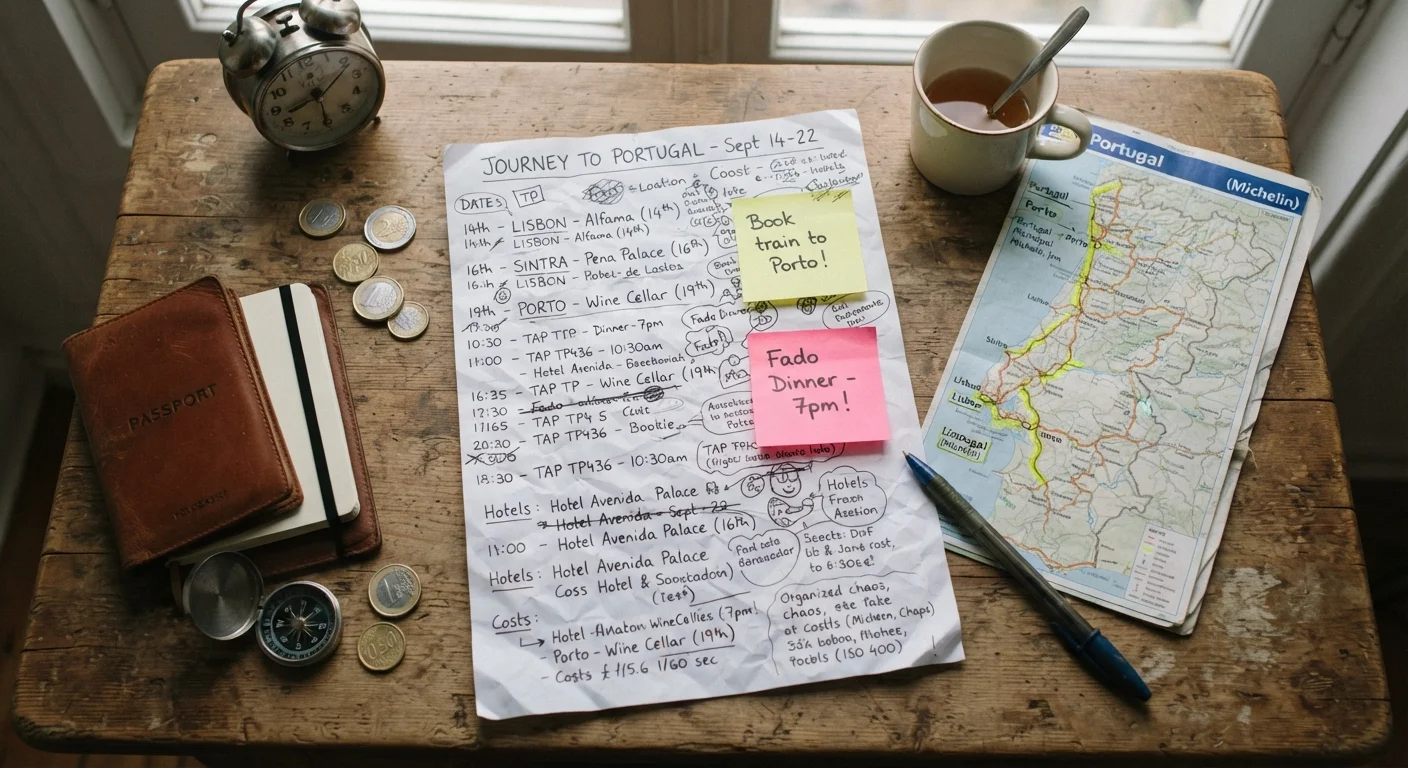
Photo: SummarizedReads.net | Just Read It! editorial
—— In This Article
Key Takeaways
- Over-scheduling is the single most common reason itineraries collapse on the road.
- Transit time and buffer slots are not optional — they are structural load-bearing elements of any plan.
- A flexible itinerary framework outperforms rigid minute-by-minute scheduling for most travelers.
- Skipping pre-trip confirmation of bookings and entry requirements creates avoidable last-minute crises.
- Building in one unscheduled half-day per three days of travel significantly reduces stress.
The Planning Trap Most Travelers Fall Into
There's a specific kind of optimism that strikes during itinerary planning: you open a map, start dropping pins, and suddenly every hour of every day is accounted for. It feels productive. It rarely survives contact with an actual trip.
Most itinerary failures don't stem from bad destinations or bad luck — they come from a handful of structural planning errors that are entirely avoidable once you know what to look for. Whether you're organizing your first solo trip or your tenth family vacation, these mistakes show up consistently. See our complete walkthrough for first-time trip planners if you're building a plan from the ground up.
Scheduling too many activities per day, leaving no margin for delays or fatigue.
Why it happens: Planning happens at a desk, where travel feels fast and frictionless. The gap between a pin on a map and actually getting there, waiting in line, and recovering afterward is easy to underestimate.
Ignoring transit time between locations, treating every stop as a quick hop.
Why it happens: Mapping apps show drive times under ideal conditions. Travelers often forget to account for parking, rideshare wait times, luggage, check-in lines, or simply walking between points.
Failing to confirm bookings, entry requirements, or opening hours before departure.
Why it happens: Once something is booked, it's easy to assume it's handled. Hours change, reservations get lost, and entry rules for museums, national parks, or even countries can shift.
Building an itinerary that ignores jet lag or travel-day exhaustion on arrival.
Why it happens: Travelers often book packed first-day activities to maximize a short trip, not accounting for how drained they'll feel after a long flight or overnight journey.
Treating every day as equally energetic rather than planning for natural energy dips.
Why it happens: Itineraries are often built in a single planning session when enthusiasm is high. The reality of mid-trip fatigue — especially on longer trips — is easy to overlook.
Skipping a contingency plan for common disruptions like weather, closures, or illness.
Why it happens: Planning for things going wrong feels pessimistic, so most travelers skip it entirely and deal with problems as they arise — often at the worst possible moment.
How to Build an Itinerary That Actually Holds
Avoiding the mistakes above is half the battle. The other half is building a deliberate structure from the start.
1 in 3
Travelers who report trip stress from over-scheduling
Surveys by travel research organizations consistently find that tight scheduling is among the top self-reported causes of vacation dissatisfaction.
40–50%
Extra time commonly needed beyond map estimates
Travel planners and destination management professionals frequently cite this buffer as standard practice when building realistic daily schedules.
Start by anchoring your days around a single main activity — one attraction, one experience, one neighborhood — and treat everything else as optional additions. This prevents the cascade effect where a delayed museum visit throws off lunch, which delays a tour, which causes you to skip dinner reservations.
Next, map transit times honestly. If Google Maps says 25 minutes between two sites, plan for 40. Public transit runs late, rideshares surge, and you will need a bathroom. For longer trips, the trip-planning timeline framework can help you sequence research and booking decisions without scrambling at the last minute.
Finally, treat your itinerary as a living document rather than a contract. Leave one half-day per three travel days completely unscheduled. That space is where the best moments often happen — and where your plan survives when something goes sideways. For a broader look at how rigid versus open-ended planning compares in practice, the fixed vs. flexible itinerary guide is worth reading before you finalize your approach.
Don't Rely on Third-Party Sources for Entry Rules
Visa requirements, vaccination rules, and border conditions change without notice and vary by nationality. Always verify current requirements directly through the official government websites of your destination country and your own country's foreign travel advisory service before booking or departing. Third-party travel sites may be outdated or incomplete.
Before any trip, run through the pre-trip checklist for budget-conscious travelers to catch overlooked costs and missing documents while there's still time to address them.

Travel Editorial Team
Travel Editorial Team is the collective byline for our editorial team and contributor network. Articles published under this byline or an editorial pen name are researched, written, and reviewed according to our editorial standards for clarity, consistency, and independence before publication.
View author profile