
Car Maintenance Myths That Are Costing Drivers Money
From the every-3,000-mile oil change to warming up your engine in winter—some popular car care advice is outdated or simply wrong. Here's the truth.
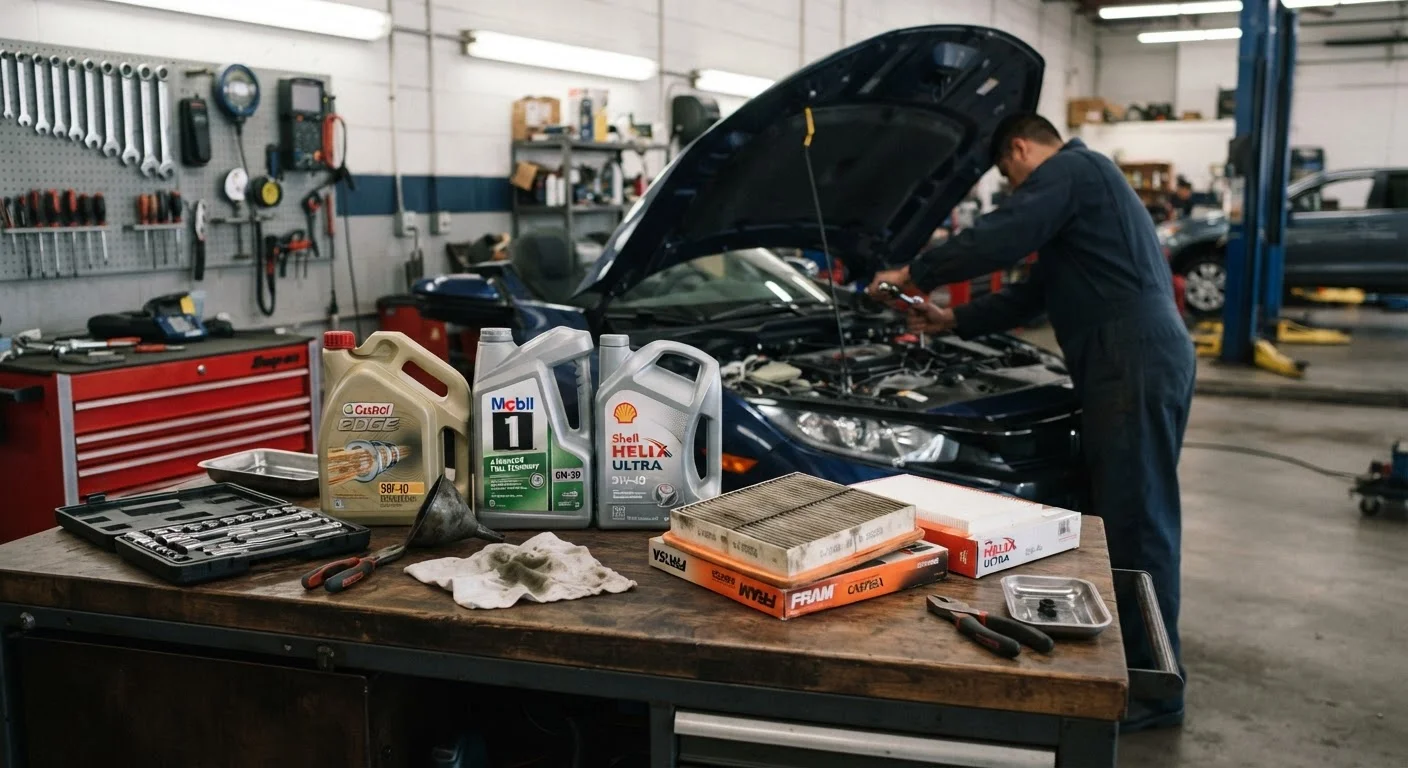
Photo: SummarizedReads.net | Just Read It! editorial
—— In This Article
Key Takeaways
- The every-3,000-mile oil change rule is outdated; most modern vehicles can go significantly longer.
- Warming up your engine by idling in winter is unnecessary and wastes fuel.
- Premium fuel does not benefit engines not specifically designed to require it.
- Tire pressure should be set to your vehicle's spec, not the number on the tire sidewall.
- Maintenance schedules in your owner's manual are more reliable than generic shop recommendations.
Why Outdated Advice Costs Real Money
Car maintenance myths don't spread out of malice-they spread because they once contained a kernel of truth, or because they benefit someone further down the transaction chain. The problem is that many drivers are still following advice calibrated for vehicles built decades ago, or accepting service shop recommendations that go beyond what their actual vehicle needs.
The result is money left on the table. Understanding where the common rules-of-thumb break down puts you in a stronger position to make informed decisions-and to have a more confident conversation with a mechanic when service is genuinely needed. For a broader foundation, our guide to basic maintenance for first-time car owners covers the essentials without the noise.
Myth
You need to change your oil every 3,000 miles, no exceptions.
Fact
Most modern vehicles with conventional oil are designed for 5,000-7,500 mile intervals; those using full synthetic oil often go 10,000-15,000 miles between changes.
This advice made sense for older engine designs and lower-quality oils. Today's engines are manufactured to tighter tolerances, and modern lubricants-especially full synthetics-are formulated to last far longer without breaking down. Following a 3,000-mile rule on a modern engine typically means you're paying for oil changes you don't need. Check your owner's manual for the interval that applies to your vehicle, or see our look at extended oil change intervals for a balanced breakdown.
Myth
You should let your engine idle for several minutes to warm up on cold mornings.
Fact
Modern fuel-injected engines warm up faster and more efficiently by being driven gently, not by sitting idle.
The extended idle warm-up habit carried over from the era of carbureted engines, which genuinely needed time to stabilize fuel delivery in the cold. Fuel injection changed that equation entirely. Prolonged idling in cold weather wastes fuel, produces unnecessary exhaust emissions, and-because the engine takes longer to reach operating temperature at idle-can actually increase short-term wear. A brief 30-second idle before driving gently is sufficient for most modern vehicles.
Myth
Premium fuel improves performance and fuel economy in any car.
Fact
Premium fuel only benefits engines engineered to require or recommend it; using it in a standard engine produces no measurable gain.
Premium gasoline has a higher octane rating, which resists engine knock under high compression. If your vehicle's engine is not designed for high compression, that extra octane provides nothing useful-you're simply paying more per gallon. Your owner's manual will state whether premium is required (meaning the engine can be damaged without it) or merely recommended (often meaning it may improve performance marginally under hard use). For engines that specify regular fuel, premium is money spent with no return.
Myth
Inflate your tires to the pressure printed on the tire sidewall.
Fact
The number on the sidewall is the tire's maximum rated pressure-not the recommended operating pressure for your vehicle.
Inflating to the sidewall maximum can result in a harsher ride, reduced contact patch, uneven wear, and decreased traction. The correct pressure for your vehicle is printed on a sticker inside the driver's door jamb or in the owner's manual. It accounts for your car's weight distribution and suspension design-not just the tire's capability. Check pressures monthly and after significant temperature changes, since tire pressure drops roughly 1 PSI for every 10°F decrease in ambient temperature.
Myth
If a fluid looks clean, you don't need to change it.
Fact
Brake fluid, coolant, and transmission fluid degrade chemically even when they still appear clear or translucent.
Visual inspection is an unreliable proxy for fluid condition. Brake fluid, for example, absorbs moisture over time, which lowers its boiling point and can compromise braking performance-regardless of color. Coolant loses its corrosion-inhibiting additives on a schedule tied to mileage and time. Following manufacturer-recommended change intervals for all fluids is more reliable than judging by appearance. For a practical overview of what each fluid does and how to check it, see our guide on the six fluids your car relies on.
Myth
Small issues like a loose belt or minor oil seep can wait indefinitely.
Fact
Minor problems have a documented tendency to cascade into significantly more expensive failures if left unaddressed.
A small oil seep may be cheap to fix when caught early; left unattended, it can lead to low oil pressure and engine damage. A worn serpentine belt that fails can disable power steering, the alternator, and cooling simultaneously-leaving you stranded and facing a much larger repair bill. Addressing small issues promptly is one of the most cost-effective maintenance habits a driver can build. Our article on how neglected repairs escalate into large bills explains the pattern in detail.
What to Follow Instead
Replacing myths with better habits doesn't mean guessing-it means knowing where to look. Your vehicle's owner's manual is the single most underused resource most drivers own. It contains manufacturer-specified intervals for every fluid, filter, and inspection item, calibrated to your engine and drivetrain.
Your Owner's Manual Overrules Generic Advice
Manufacturer maintenance schedules are engineered for your specific engine, fluids, and driving conditions. Following generic interval recommendations instead can lead to unnecessary spending or, worse, skipped service your car actually needs. When in doubt, the owner's manual is the authoritative source.
Beyond the manual, a practical maintenance framework can help you stay consistent without over-servicing. And if you're deciding which jobs to handle yourself versus when to involve a professional, our breakdown of DIY car maintenance versus taking it to a mechanic offers honest guidance on where the line sits.
Don't Skip Maintenance Based on Myths Alone
Debunking myths doesn't mean skipping service. Some intervals that feel conservative do protect against real wear under severe conditions-heavy towing, stop-and-go traffic, or extreme temperatures. Always weigh your actual driving habits against manufacturer guidance, and consult a qualified mechanic when you're unsure.
Myths about cars don't stop at the garage door, either. If you're also evaluating coverage decisions, our article on widely believed auto insurance myths applies the same fact-checking approach to what drivers commonly misunderstand about their policies.
~$200+
Wasted annually on unnecessary 3,000-mile oil changes
Drivers following the outdated 3,000-mile rule on modern vehicles may pay for two or more extra oil changes per year compared to manufacturer-recommended intervals.
1 PSI
Pressure drop per 10°F temperature decrease
The U.S. Department of Energy notes that tires can lose roughly 1 PSI for every 10-degree Fahrenheit drop in outside temperature, making seasonal checks important.
Up to 12%
Fuel economy improvement from properly inflated tires
The U.S. Department of Energy estimates that keeping tires properly inflated can improve gas mileage by up to 3%, with compounding savings over time.

Auto Editorial Team
Auto Editorial Team is the collective byline for our editorial team and contributor network. Articles published under this byline or an editorial pen name are researched, written, and reviewed according to our editorial standards for clarity, consistency, and independence before publication.
View author profile