
Patch Testing New Skincare Products: A Simple Step That Prevents Reactions
Patch testing takes minutes but can prevent days of irritation. Learn the correct method for testing new skincare before applying it to your full face.
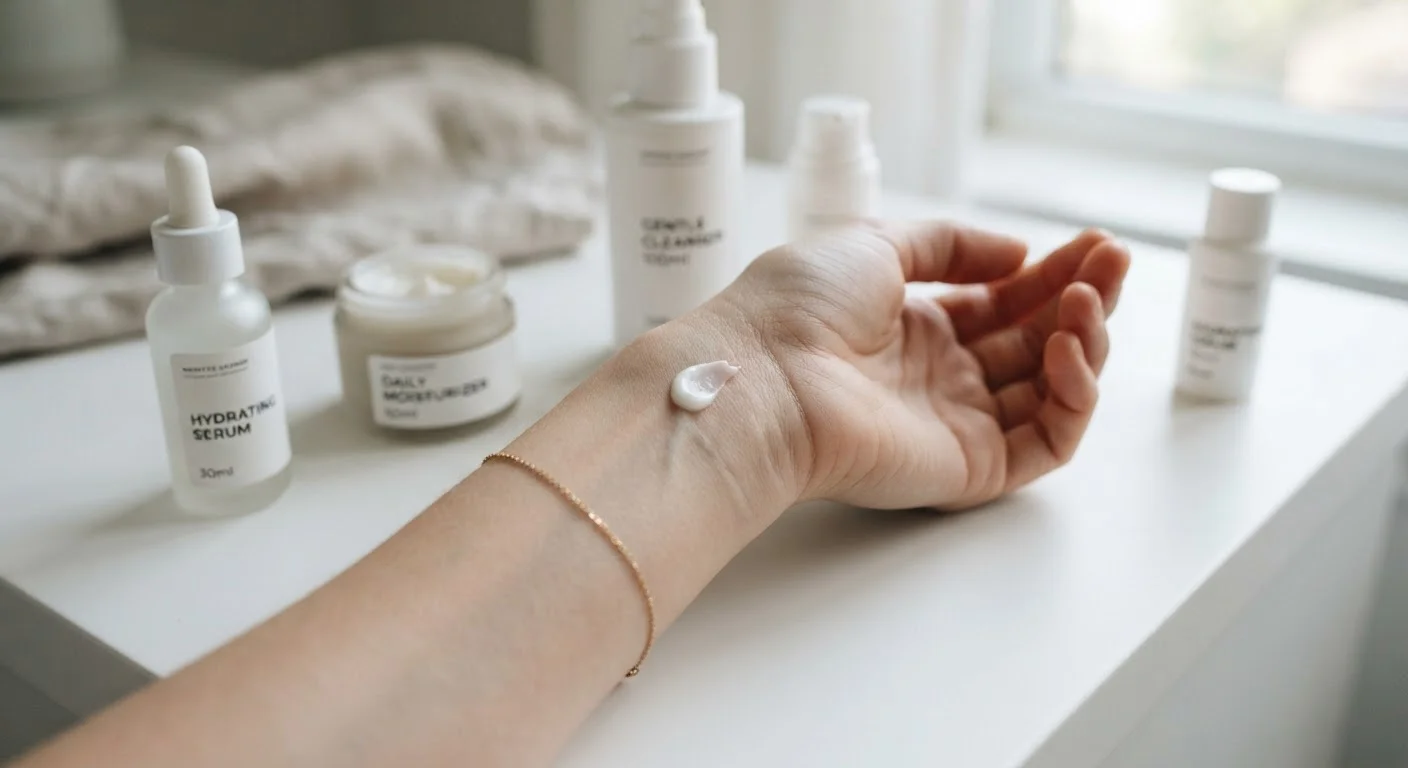
Photo: SummarizedReads.net | Just Read It! editorial
—— In This Article
Key Takeaways
- Patch testing reveals how your skin reacts to a new product before applying it to your full face.
- The inner arm or behind the ear are the most reliable test sites for most people.
- A 24-48 hour observation window catches most contact reactions before they spread.
- Products with active ingredients like acids or retinoids benefit most from careful patch testing.
- Redness, itching, or swelling during testing is a signal to discontinue use of that product.
Why Patch Testing Is Worth the Wait
Most skincare reactions are not true allergies - they are contact irritant reactions, meaning the skin's surface has been disrupted by an ingredient it doesn't tolerate well. Common culprits include fragrances, preservatives, certain alcohols, and high-concentration actives. Even products labeled "gentle" or "hypoallergenic" can trigger a reaction in some skin types, because those terms are not regulated by any federal standard in the U.S.
Skipping a patch test and going straight to full-face application means that if your skin does react, you're dealing with irritation across a much larger surface area - and potentially interfering with your existing routine while your skin recovers. A thoughtful patch test takes minutes and costs nothing. It's one of the simplest habits in long-term skin health that gets consistently overlooked.
Patch testing is particularly important when adding products with active ingredients. If you're building a new routine from scratch, it gives you a reliable baseline before layering multiple products.
What you will need
What to Do If You React - and When to See a Professional
A mild reaction - slight redness that fades within an hour - may indicate temporary irritation rather than a true sensitivity. Rinse the product off with cool water and note the ingredient list so you can look for patterns if it happens again with other products.
A more significant reaction - hives, swelling, persistent redness lasting more than a few hours, or any difficulty breathing - warrants prompt medical attention. While full anaphylaxis from topical skincare is rare, it is possible, particularly with fragrances and certain botanical extracts.
Seek Medical Help for Severe Reactions
If a patch test or skincare product causes significant swelling, hives that spread, or any breathing difficulty, stop use immediately and seek medical attention. These symptoms may indicate an allergic reaction that requires professional treatment. Do not attempt to manage a severe reaction at home by applying other products.
Once you've successfully patch tested a product, use a routine audit periodically to check whether your current products are still working well together. Skin needs can change with age, season, and hormones, and a product that was once fine may need to be reassessed. When you do add something new, always revisit the patch test step - even for reformulated versions of products you've used before.
Choose and clean your test site
Pick a small area of skin that is sensitive but not on your face. The inner forearm or the skin behind one ear are standard choices - both tend to respond similarly to facial skin. Wash the site gently with a mild, fragrance-free cleanser and pat it completely dry. Avoid areas with existing rashes, cuts, or eczema flares, as broken skin can skew results.
Apply a small, pea-sized amount of product
Using a clean cotton swab or freshly washed fingertip, apply a pea-sized amount of the product to a roughly quarter-inch patch of skin. Do not rub it in aggressively - a gentle press or light dab is sufficient. Applying too much can cause a false-positive reaction due to product buildup rather than a true skin sensitivity.
Leave it undisturbed and observe
Allow the product to sit on the skin without rinsing for at least 24 hours, or up to 48 hours for products containing strong actives such as AHAs (alpha hydroxy acids), BHAs (beta hydroxy acids), or retinoids. Avoid covering the site with clothing or a bandage if possible - occlusion can intensify reactions and produce misleading results. Check the site after 30 minutes, again at 24 hours, and a final time at 48 hours.
Evaluate the results
A negative result - meaning no visible change, no itching, and no discomfort - suggests the product is likely well-tolerated, though it does not guarantee a reaction will never occur. A positive result may include any of the following: redness, raised bumps, hives, persistent itching, or a burning sensation. If any of these appear, wash the product off with cool water, discontinue use, and consider consulting a dermatologist if symptoms are severe or persistent.
Introduce the product gradually to your face
If the patch test is clear, begin using the product on a small area of your face - such as one cheek - before applying it to your entire face. This staged approach is especially important for products with potent actives. Start with every-other-day use if the formula is a treatment product. See our guide to introducing active ingredients for a measured roadmap to building up use without irritation.
This article is for general informational purposes only and is not a substitute for professional medical or dermatological advice. If you experience a severe skin reaction, consult a qualified healthcare provider.

Beauty Editorial Team
Beauty Editorial Team is the collective byline for our editorial team and contributor network. Articles published under this byline or an editorial pen name are researched, written, and reviewed according to our editorial standards for clarity, consistency, and independence before publication.
View author profile