
Building a Bare-Bones Skincare Routine from Scratch
A complete introduction to skincare for those starting out. Learn the essential steps, what ingredients to look for, and what you can safely skip.
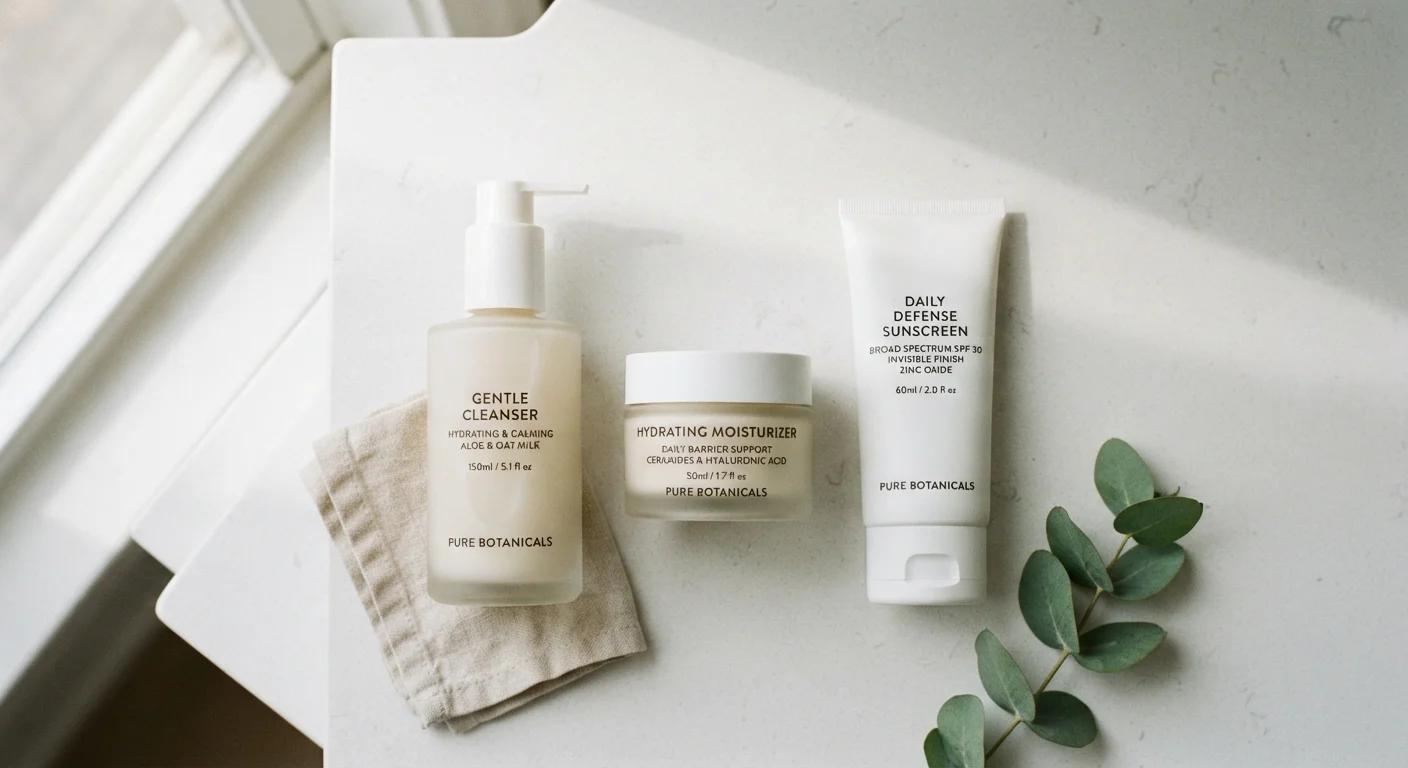
Photo: SummarizedReads.net | Just Read It! editorial
—— In This Article
Key Takeaways
- A three-step routine - cleanser, moisturizer, and SPF - covers the vast majority of daily skin needs.
- Most expensive or complex products are unnecessary for skin health; consistency matters more than quantity.
- Knowing your skin type helps you choose gentler, better-matched formulas from the start.
- A handful of well-researched ingredients (like niacinamide and ceramides) deliver reliable results at any price point.
- Patch testing every new product before full-face use can prevent avoidable irritation.
- Sunscreen is the single most evidence-supported skin-protection step available without a prescription.
Why Simple Routines Work
The skincare industry generates enormous revenue by convincing consumers that skin health requires a shelf full of specialized products. The science tells a different story. Dermatologists consistently note that the fundamentals - cleansing, moisturizing, and UV protection - address the root causes of most common skin complaints, from dryness and dullness to premature aging.
More products also means more variables. When something irritates your skin, a cluttered routine makes it nearly impossible to identify the culprit. Starting with three steps gives your skin a stable baseline and gives you useful information about what it actually needs. For a broader look at how habits outperform product collections, see consistent habits that support long-term skin health.
Less Is More - Especially at First
Starting with fewer products reduces your risk of irritation and makes it much easier to track what's helping or hurting. Give any new routine at least four weeks before judging results - skin cell turnover takes time, and early reactions sometimes settle as skin adjusts.
The Three Non-Negotiables
Regardless of skin type, three steps form the core of any functional routine:
- Cleanser - Removes dirt, excess oil, pollution, and sunscreen residue without disrupting the skin's natural barrier. Look for words like "gentle," "non-stripping," or "pH-balanced" on the label. If your skin feels tight or squeaky after washing, the cleanser is likely too harsh.
- Moisturizer - Replenishes water content and reinforces the skin's outer barrier, reducing sensitivity and keeping skin pliable. Even oily skin benefits; skipping moisturizer often triggers the skin to overproduce oil to compensate.
- Sunscreen (AM only) - Broad-spectrum SPF 30 or higher is the most consistently recommended single step for preventing UV-related skin damage and premature aging. It applies over moisturizer as the final morning step.
Need help distinguishing true essentials from optional extras? Skincare on a tight budget breaks this down in practical detail.
Matching Products to Your Skin Type
Choosing formulas that suit your skin type prevents most beginner frustrations. Here's a quick guide:
Skin barrier
The outermost layer of skin that acts as a protective shield, keeping moisture in and irritants out. A healthy barrier is key to comfortable, resilient skin.
Humectant
An ingredient that attracts and holds water molecules, helping to hydrate the skin. Common examples include glycerin and hyaluronic acid.
Broad-spectrum SPF
A sunscreen rating indicating protection against both UVA (aging) rays and UVB (burning) rays. SPF 30 or higher is the general minimum recommendation.
Non-comedogenic
A term used to describe products formulated to avoid clogging pores. Useful shorthand when choosing moisturizers for oily or acne-prone skin, though it isn't regulated or standardized.
Active ingredient
An ingredient included specifically to produce a measurable skin effect, such as reducing redness or exfoliating dead cells. Actives like niacinamide or retinol are distinct from base ingredients that give a product its texture.
| Skin Type | Cleanser | Moisturizer |
|---|---|---|
| Dry | Cream or milk cleanser | Rich cream with ceramides or shea |
| Oily | Foaming or gel cleanser | Lightweight, oil-free gel or lotion |
| Combination | Gentle foaming cleanser | Lightweight lotion or zone-specific application |
| Sensitive | Fragrance-free cream cleanser | Minimal-ingredient, fragrance-free cream |
| Normal | Any gentle formula | Medium-weight lotion |
If you're unsure of your skin type, a dermatologist can help confirm it - especially useful if you have persistent concerns that a basic routine doesn't resolve.
Ingredients Worth Paying Attention To
Not all ingredients on a skincare label deserve equal attention. The ones below have meaningful research behind them and appear in affordable formulas just as often as expensive ones:
- Ceramides - Lipids (fats) that naturally occur in skin. In moisturizers, they help reinforce the skin barrier and reduce water loss.
- Niacinamide - A form of vitamin B3 that research associates with reduced redness, improved texture, and pore appearance. Widely tolerated, including by sensitive skin types.
- Hyaluronic acid - A humectant that draws moisture into the skin. Most effective when applied to slightly damp skin before moisturizer.
- Glycerin - Another humectant; inexpensive and found in many basic moisturizers. Reliably effective for hydration.
For a more complete ingredient reference, the plain-language skincare ingredients glossary explains the most common actives in plain terms.
Fragrance Is a Common Irritant
Both synthetic and natural fragrances rank among the most frequent causes of contact irritation in skincare. If your skin is reactive or you're brand new to a routine, choosing fragrance-free formulas across all three steps reduces your chance of a reaction. "Unscented" and "fragrance-free" are not the same - unscented products may still contain masking fragrances.
What You Can Safely Skip
The following categories are commonly marketed as essential but are optional - especially for beginners on a budget:
- Toners - Originally designed to rebalance pH after harsh soaps. Modern gentle cleansers make this step largely redundant for most people.
- Eye creams - Typically a moisturizer in smaller, more expensive packaging. A well-formulated facial moisturizer applied gently around the eye area generally works just as well.
- Facial mists - Provide temporary refreshment but little lasting hydration benefit. Not harmful - just not necessary.
- Exfoliants (initially) - Chemical exfoliants like AHAs and BHAs can be genuinely useful for certain concerns, but introduce them only after your baseline routine is stable. Adding too many actives at once makes reactions harder to diagnose.
If you're curious about paring back even further, low-waste body care with fewer products applies the same minimal-product thinking to body care.
Don't Skip Sunscreen on Cloudy Days
UV radiation penetrates cloud cover and glass, meaning skin exposure happens even indoors near windows. Applying broad-spectrum SPF 30+ every morning - rain or shine - is one of the most consistently evidence-supported habits in dermatology. Skipping it on overcast days is one of the most common and consequential mistakes beginners make.
Building the Habit: Morning and Night
A routine only works when it's repeatable. Two simple sequences to follow:
Morning: Gentle cleanse → Moisturizer → Sunscreen
Evening: Gentle cleanse → Moisturizer
That's genuinely it to start. Before adding anything new - a serum, an exfoliant, even a new moisturizer - always patch test the product first. Apply a small amount to the inner arm or jawline for several days before using it on the full face. It's a small step that prevents avoidable setbacks.
Once this routine feels automatic, you'll be well-positioned to evaluate whether any additions are genuinely needed. A routine audit can help you assess whether what you're doing is actually working before spending more.
This article is for general informational purposes only and does not constitute medical or dermatological advice. If you have a skin condition or persistent concern, consult a qualified healthcare professional.
Frequently Asked Questions

Beauty Editorial Team
Beauty Editorial Team is the collective byline for our editorial team and contributor network. Articles published under this byline or an editorial pen name are researched, written, and reviewed according to our editorial standards for clarity, consistency, and independence before publication.
View author profile