
Ingredients Worth Knowing: A Plain-Language Glossary for Skincare Labels
Hyaluronic acid, ceramides, AHAs — skincare labels can feel overwhelming. This reference defines the most common active and functional ingredients clearly.
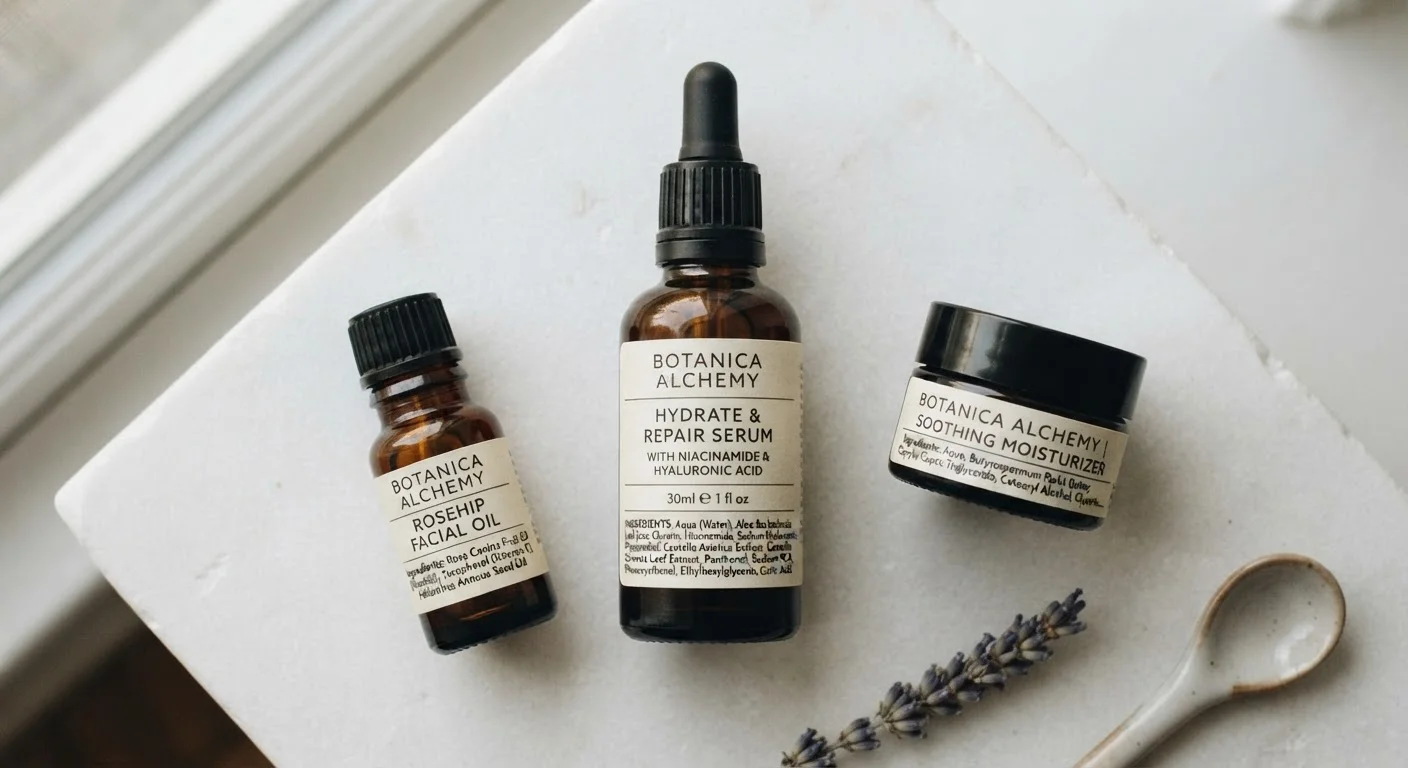
Photo: SummarizedReads.net | Just Read It! editorial
—— In This Article
Why Ingredient Labels Matter
Skincare marketing is full of promises - "radiance-boosting," "age-defying," "clinically proven." None of those phrases are regulated or standardized, but the ingredient list on the back of the bottle is. In the U.S., cosmetic ingredients must be listed in descending order by concentration, following INCI naming rules set by the FDA. That means the ingredient list is actually one of the most reliable pieces of information on any product.
The challenge is that INCI names can sound alien - "sodium ascorbyl phosphate" is just a stable form of vitamin C, for example. This glossary cuts through that complexity so you can read a label with confidence, whether you're shopping at a drugstore or evaluating a pricier option. If you're just getting started with skincare altogether, see our bare-bones skincare routine guide for foundational context.
| Who regulates cosmetic ingredients in the U.S. | The FDA (Food and Drug Administration) (FDA Cosmetics Overview) |
| Ingredient listing order | Descending by concentration (FDA labeling requirements) |
| Naming standard used | INCI (International Nomenclature of Cosmetic Ingredients) (Personal Care Products Council) |
| Common cause of skin sensitivity in products | Fragrance / parfum (American Academy of Dermatology) |
| Recommended daily SPF level | SPF 30 or higher, broad-spectrum (American Academy of Dermatology) |
The Core Ingredients Glossary
Below are the terms you'll encounter most often on skincare labels, grouped by function. Understanding what each ingredient does - and what it doesn't - helps you match products to your actual skin needs rather than marketing claims.
Hyaluronic Acid
A humectant - a molecule that draws water to the skin's surface. It can hold up to 1,000 times its weight in water, making it a staple in moisturizers and serums. Found naturally in the body, it's generally well-tolerated across skin types.
Ceramides
Lipids (fats) that make up a large portion of the skin's outer barrier. They help hold skin cells together and prevent moisture loss. Products containing ceramides are commonly recommended for dry or sensitive skin to reinforce the skin barrier.
Niacinamide
A form of vitamin B3 with a wide range of skin-supporting functions, including helping to regulate sebum production, minimize the appearance of pores, and even skin tone. It's considered gentle and compatible with most other ingredients.
AHAs (Alpha Hydroxy Acids)
Water-soluble acids - such as glycolic acid and lactic acid - that exfoliate the skin surface by loosening dead skin cells. They're used to improve texture and tone. Because they can increase sun sensitivity, sunscreen use is important when incorporating AHAs.
BHA (Beta Hydroxy Acid)
Salicylic acid is the most common BHA. Unlike AHAs, it's oil-soluble, meaning it can penetrate into pores to clear out excess sebum and debris. It's a common active in products formulated for acne-prone or oily skin.
Retinol / Retinoids
Vitamin A derivatives that encourage skin cell turnover. Retinol is the over-the-counter form; prescription retinoids are stronger. They're used for a range of concerns including uneven texture and visible signs of aging. Can cause initial dryness or flaking - introduction should be gradual.
Vitamin C (Ascorbic Acid)
An antioxidant that helps protect skin from environmental stressors and is used to address uneven skin tone and dullness. Pure ascorbic acid is effective but unstable; derivatives like sodium ascorbyl phosphate or ascorbyl glucoside are more shelf-stable alternatives.
Peptides
Short chains of amino acids that serve as building blocks for proteins like collagen and elastin. In skincare, they're used to support skin firmness and resilience. They're generally gentle and considered suitable for sensitive skin.
Occlusives
Ingredients that form a physical barrier on the skin surface to prevent water evaporation. Common examples include petrolatum, shea butter, and dimethicone. Often used in the final step of a skincare routine to seal in hydration.
Emollients
Ingredients that soften and smooth skin by filling gaps between skin cells. Oils, fatty acids, and butters typically serve as emollients. They improve skin texture and contribute to a moisturizer's feel on the skin.
SPF / Broad-Spectrum
SPF (Sun Protection Factor) measures a sunscreen's ability to block UVB rays, which cause sunburn. "Broad-spectrum" indicates the product also protects against UVA rays, associated with longer-term skin damage. Dermatologists widely recommend SPF 30 or higher daily.
Fragrance (Parfum)
An umbrella term on ingredient lists that can represent dozens of undisclosed chemical compounds used to scent a product. Fragrance is one of the most common causes of skin sensitivity reactions; those with reactive skin may benefit from fragrance-free formulas.
For a deeper look at how moisturizing ingredients interact on the skin, our companion piece on body lotion ingredients explains humectants, emollients, and occlusives in more detail. And if you're unsure which skin type you're shopping for, skin types decoded is a useful reference before investing in actives.
Concentration Matters More Than Presence
Seeing an ingredient on a label doesn't guarantee it's present in a meaningful amount. Ingredients listed near the end of a formula - after preservatives or thickeners - are typically present at very low concentrations. For actives like niacinamide or vitamin C, many formulators and dermatologists suggest looking for them within the first third to half of the ingredient list for effective concentrations, though some actives work at lower percentages.
Once you've identified ingredients that suit your skin, a practical next step is understanding which products are genuinely necessary. Our guide to skincare on a tight budget can help you avoid spending on unnecessary extras.
How to Use This Reference Practically
Knowing what an ingredient is called doesn't automatically tell you how much of it is in the formula - concentration matters for efficacy. A product listing niacinamide near the bottom of a long ingredient list contains very little of it. Look for active ingredients in the first half of the list for meaningful amounts, though exceptions exist for potent ingredients effective at low concentrations (like retinol).
1,000×
Water hyaluronic acid can hold relative to its weight
Frequently cited in dermatology education materials explaining hyaluronic acid's humectant mechanism.
~50%
Of the skin barrier's lipid composition made up of ceramides
Referenced in multiple peer-reviewed dermatology sources discussing stratum corneum structure.
Top 5
Ranking of fragrance as a contact allergen in cosmetics
The American Contact Dermatitis Society consistently lists fragrance among the most common causes of allergic contact dermatitis.
Introducing multiple new actives at once is a common mistake. If you're adding acids, retinoids, or vitamin C to your routine for the first time, doing so gradually reduces the risk of irritation. Our article on introducing active ingredients without irritating your skin walks through a measured approach. For terminology that overlaps with broader wellness trends, common self-care terms decoded provides helpful context.
This article is for general informational and educational purposes only. It is not a substitute for advice from a qualified dermatologist or healthcare professional. If you have a skin condition, allergy, or medical concern, consult a licensed professional before changing your skincare routine.

Beauty Editorial Team
Beauty Editorial Team is the collective byline for our editorial team and contributor network. Articles published under this byline or an editorial pen name are researched, written, and reviewed according to our editorial standards for clarity, consistency, and independence before publication.
View author profile