
Fixed vs. Variable Expenses: Why the Difference Shapes Your Whole Budget
Understanding what's fixed and what's flexible in your spending is the foundation of any workable budget. Here's how to tell them apart.
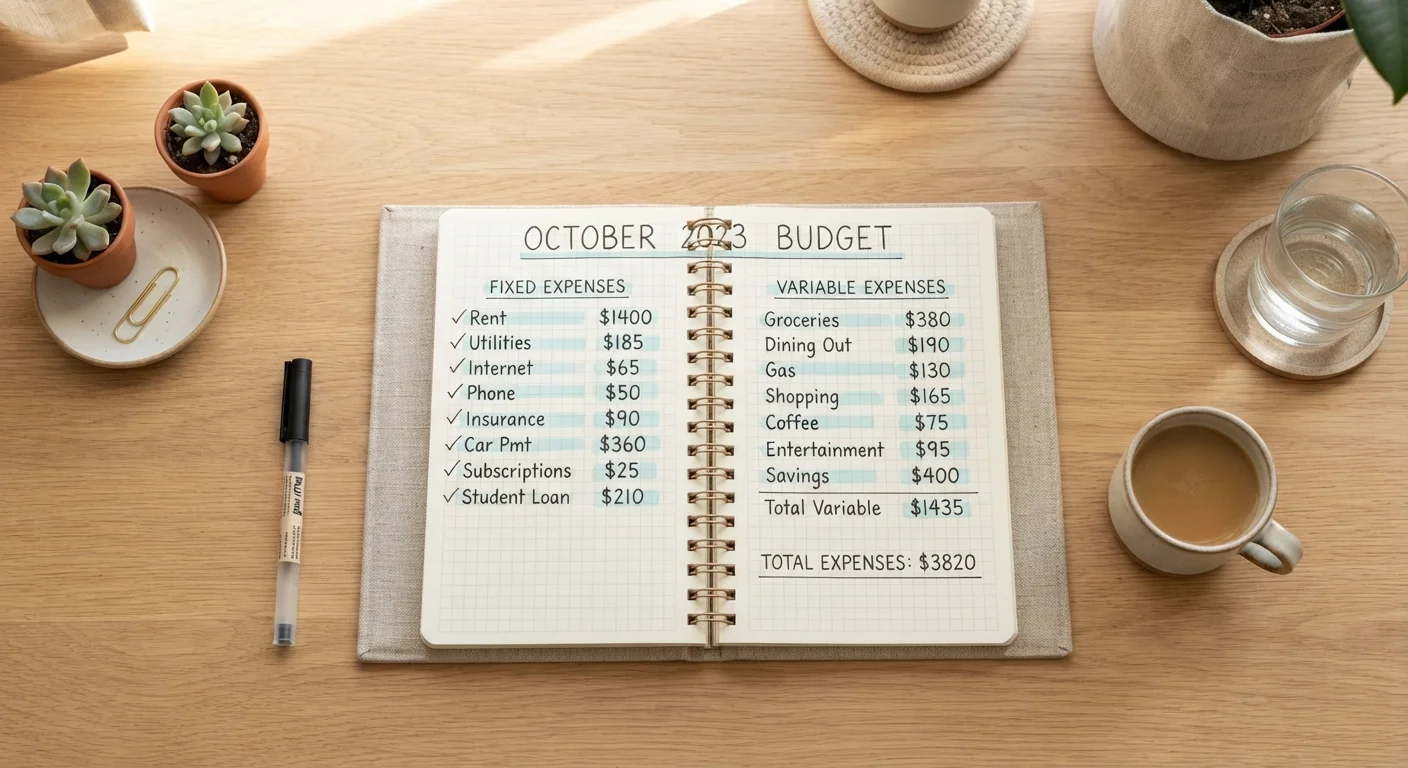
Photo: SummarizedReads.net | Just Read It! editorial
—— In This Article
Key Takeaways
- Fixed expenses stay the same each month; variable expenses fluctuate based on usage and choices.
- Knowing which category each cost falls into tells you where you have real control.
- Variable expenses are where most day-to-day budget adjustments are possible.
- Some expenses are periodic or irregular - they need separate planning even if predictable.
- A working budget accounts for both types so nothing comes as a surprise.
What Makes an Expense 'Fixed'
A fixed expense is one that costs the same amount every billing cycle, regardless of how much you use it or what's happening in your life. Rent or mortgage payments, car loan installments, insurance premiums, and fixed-rate utility plans all fit this description. The number doesn't change whether you had a great month or a rough one.
This predictability is useful. Because you know exactly what these costs will be, you can subtract them from your income immediately when mapping out a budget. What's left is what you actually have to work with. Fixed expenses form the non-negotiable foundation of any spending plan - skip one and there are real consequences: late fees, damaged credit, or losing your home or vehicle.
That said, fixed doesn't mean permanent. A lease can be renegotiated, a loan can be refinanced, and some subscriptions can be cancelled. The costs are fixed within a billing period - over time, they can change if you make deliberate decisions to restructure them. See the complete budgeting overview for how fixed costs fit into broader financial planning.
What Makes an Expense 'Variable'
Variable expenses shift from month to month. Groceries, gas, dining out, household supplies, clothing, and entertainment all fall into this category. Some variation is tied to need - your grocery bill might spike in a week when you're hosting family. Other variation is purely discretionary - an extra few dinners out, an impulse streaming subscription, or a weekend trip.
This is where most people's budget actually lives and breathes. Variable costs are harder to track precisely, but they're also the expenses you have the most control over. When money is tight, a fixed expense is difficult to immediately reduce - but you can decide tonight not to order takeout.
Variable expenses can also be non-discretionary. Medical costs, car repairs, and utility bills (when usage-based) all fluctuate without reflecting a lifestyle choice. These require a different kind of planning - typically a buffer or emergency fund - rather than simple spending discipline. The relationship between variable spending and debt strategy is worth understanding if you're trying to redirect money toward financial goals.
| Criterion | Fixed Expenses | Variable Expenses |
|---|---|---|
| Amount each month | Stays the same | Changes month to month |
| Examples | Rent, loan payments, insurance | Groceries, gas, dining, utilities |
| Control in the short term | Low - hard to change quickly | High - adjustable with daily choices |
| Budget planning role | Sets the spending floor | Defines the flexible range |
| Risk if ignored | Late fees, credit damage, loss of asset | Overspending, savings shortfall |
| Where cuts are easiest | Requires renegotiation or lifestyle shift | Immediate reduction possible |
The Category That Trips People Up: Periodic Expenses
Between fixed and variable sits a third pattern worth naming: periodic expenses. These are costs that are predictable in amount but don't hit every month - car registration, annual insurance premiums, back-to-school supplies, holiday spending, or a yearly subscription renewal.
People often treat these as surprises, but they don't have to be. The practical fix is to divide the annual cost by 12 and mentally set that amount aside each month. When the bill arrives, the money is ready. This technique - sometimes called sinking funds - keeps periodic costs from landing like emergencies.
Don't Forget Irregular But Predictable Costs
Periodic expenses - like annual fees, vehicle registration, or holiday spending - are neither truly fixed nor variable. They're predictable if you look ahead, but easy to forget in a monthly budget. Divide each annual cost by 12 and reserve that amount monthly so these bills don't catch you off-guard. This approach is commonly called a sinking fund and is a straightforward way to smooth out irregular cash flow.
For a detailed look at how these categories map to a full spending plan, the budget categories reference guide breaks down where different expense types typically belong.
How This Distinction Shapes Your Budget Strategy
Once you can label each expense as fixed or variable, budgeting becomes more strategic. Start by totaling your fixed costs. That number tells you the minimum your income must cover before you have any flexibility. If your fixed costs consume more than 50% of your take-home pay - a rough threshold from the widely cited 50/30/20 framework - that's a signal worth examining.
Next, audit your variable expenses. These are your negotiating room. Tracking just two or three months of variable spending typically reveals patterns most people don't notice in the moment - small recurring costs that quietly accumulate into significant sums. That visibility is where the budget actually gets built.
Whether you prefer a traditional spend-first approach or a savings-first philosophy, the fixed/variable distinction applies equally. Pay-yourself-first vs. traditional budgeting explores how different budget philosophies handle these categories. And if you're weighing rigid categories against a more flexible approach, the pros and cons of strict budget categories offers a balanced look at both sides.
This article is for general informational purposes only and does not constitute personalised financial advice. Consult a qualified financial professional for guidance specific to your situation.

Finance Editorial Team
Finance Editorial Team is the collective byline for our editorial team and contributor network. Articles published under this byline or an editorial pen name are researched, written, and reviewed according to our editorial standards for clarity, consistency, and independence before publication.
View author profile