
The Credit Scoring Models Lenders Actually Use
FICO, VantageScore, and industry-specific models all exist. Here's a reference guide to the main scoring systems and what sets them apart.
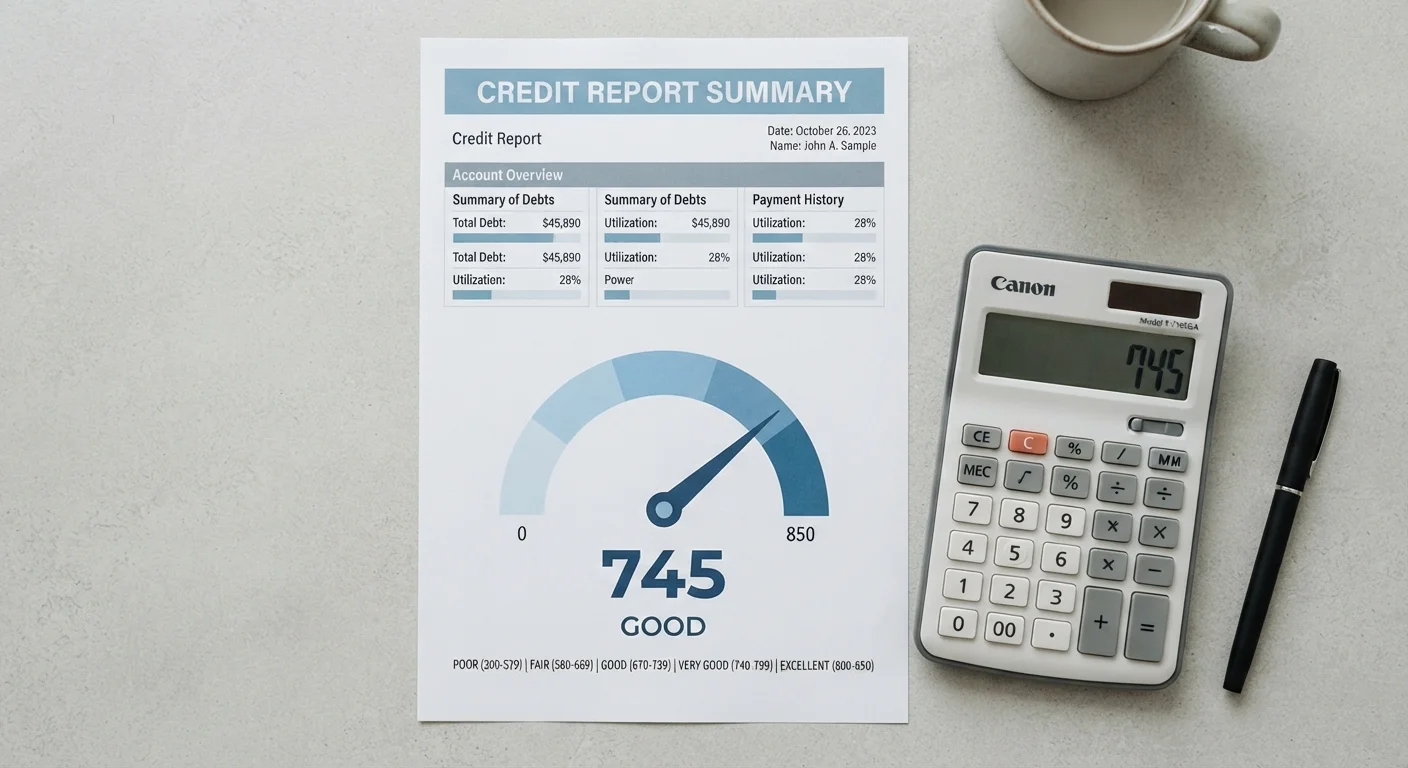
Photo: SummarizedReads.net | Just Read It! editorial
—— In This Article
Why There Isn't Just One Credit Score
Many consumers are surprised to learn that they don't have a single credit score - they have dozens. Different lenders may pull different scores depending on what they're lending for, which credit bureau they use, and which scoring model version they've subscribed to. Understanding the main systems helps you interpret the numbers you see and anticipate what a lender might be evaluating.
For a broader foundation, see our guide to credit scores vs. credit reports - it explains how underlying report data feeds into any scoring model.
| FICO Score Range | 300-850 (Fair Isaac Corporation) |
| VantageScore Range (3.0 & 4.0) | 300-850 (VantageScore Solutions) |
| Industry-Specific FICO Range | 250-900 (Fair Isaac Corporation) |
| Most Widely Used Base Model | FICO Score 8 (Broadly cited by lenders across the industry) |
| Mortgage Score Versions Used | FICO 2, 4, and 5 (bureau-specific) (Per government-backed loan guidelines) |
| VantageScore Created By | Equifax, Experian, and TransUnion (jointly) (VantageScore Solutions) |
The Major Scoring Models at a Glance
FICO Score
The FICO Score, developed by Fair Isaac Corporation, is the most widely used credit scoring model in the United States. Most mortgage, auto, and credit card lenders rely on some version of it. FICO scores range from 300 to 850. The model weighs five factors: payment history (35%), amounts owed (30%), length of credit history (15%), credit mix (10%), and new credit (10%).
FICO releases updated versions periodically - FICO 8 remains the most commonly used across lenders, while FICO 9 and FICO 10 exist but have seen slower adoption. Industry-specific FICO scores (discussed below) use a different range.
VantageScore
VantageScore was created jointly by the three major credit bureaus - Equifax, Experian, and TransUnion - as an alternative model. VantageScore 3.0 and 4.0 are the versions most lenders use today. Like FICO, VantageScore 3.0 and 4.0 use a 300-850 range, making scores easier to compare at a glance.
VantageScore weighs factors somewhat differently: total credit usage, balances, and available credit carry the most influence, followed by credit mix and experience, payment history, age of credit, and new accounts. VantageScore 4.0 is also notable for incorporating trended data - looking at how balances change over time, not just a snapshot. For more on how utilization specifically affects your score, see why credit utilization has an outsized effect.
FICO Score
A credit score produced by Fair Isaac Corporation and used by the majority of U.S. lenders. It ranges from 300 to 850, with higher scores indicating lower credit risk.
VantageScore
A credit scoring model created by the three major credit bureaus as an alternative to FICO. Versions 3.0 and 4.0 also use a 300-850 range and factor in similar but differently weighted criteria.
Tri-Merge Report
A combined credit report that pulls data from all three major bureaus - Equifax, Experian, and TransUnion - simultaneously. Common in mortgage underwriting.
Trended Data
Credit information that tracks how a borrower's balances change over several months, rather than just a single point-in-time snapshot. Used in VantageScore 4.0.
Industry-Specific Score
A FICO scoring variant optimized for a particular lending category - such as auto loans or credit cards - that uses a wider range of 250 to 900.
Industry-Specific FICO Scores
Beyond base FICO scores, Fair Isaac produces models tailored to specific lending decisions. These use a 250-900 range and are optimized to predict risk in their specific context more precisely than a general-purpose score.
- FICO Auto Score - Used by auto lenders; places greater weight on auto loan payment history.
- FICO Bankcard Score - Used by credit card issuers; emphasizes revolving credit behavior.
- FICO Mortgage Score - Used in home lending, often pulled from all three bureaus simultaneously; based on older FICO versions (FICO 2, 4, and 5) per government-backed loan guidelines.
What This Means When You Apply for Credit
When you apply for a mortgage, the lender typically pulls a tri-merge report - your credit file from all three bureaus - and uses the middle of three FICO scores. For auto and card products, they may pull from just one bureau using a version you've never directly seen. This is why the score you see through a free monitoring service may differ from what a lender pulls.
Hard inquiries - the kind generated when you apply for new credit - appear on your report and can influence your score. Understanding hard vs. soft inquiries helps you time applications strategically without unnecessary score impact.
The practical takeaway: focus less on chasing a specific number and more on the underlying behaviors every model rewards - paying on time, keeping balances low relative to limits, and avoiding unnecessary new credit applications. Those habits translate well across all scoring systems.
For a comprehensive overview of how credit works as a whole, the Credit Explained hub covers scores, reports, and cards in one place.
This article is for general informational purposes only and does not constitute personalized financial or credit advice. Consult a licensed financial professional for guidance specific to your situation.

Finance Editorial Team
Finance Editorial Team is the collective byline for our editorial team and contributor network. Articles published under this byline or an editorial pen name are researched, written, and reviewed according to our editorial standards for clarity, consistency, and independence before publication.
View author profile