
A Plain-Language Glossary of Fitness Terms Every Beginner Encounters
Reps, sets, RPE, progressive overload—fitness jargon can be a barrier. This quick-reference glossary defines the terms you'll run into most often.
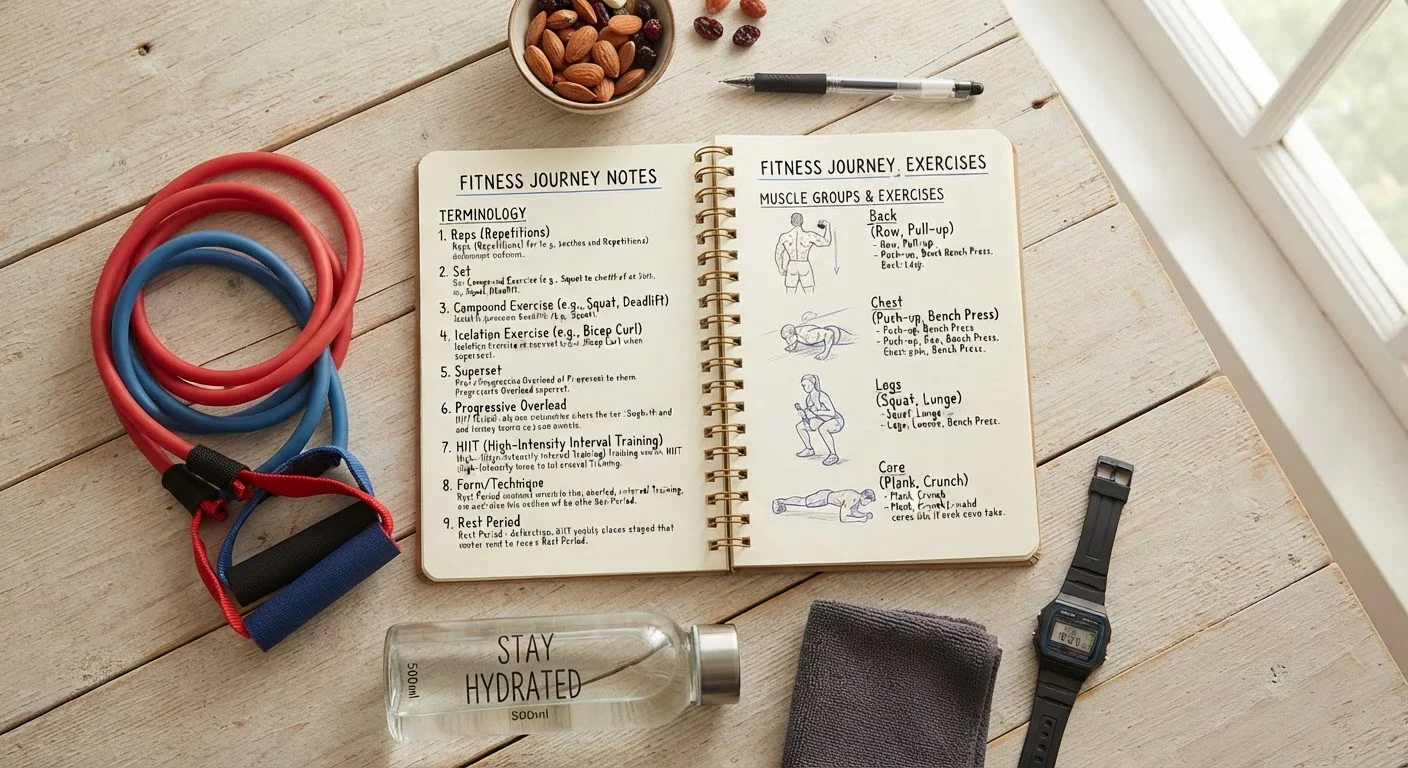
Photo: SummarizedReads.net | Just Read It! editorial
—— In This Article
Why Fitness Jargon Matters-and How to Use This Glossary
Walk into any gym, open a workout app, or scroll a fitness forum and you'll quickly encounter a wall of abbreviations and shorthand: AMRAP, RPE, 3×10, progressive overload. For beginners, this language can feel like a barrier before a single rep is completed.
It doesn't need to be. Understanding the vocabulary helps you follow instructions accurately, communicate with coaches or workout partners, and make informed decisions about your own training. This glossary defines the terms you are most likely to encounter-whether you're working out at home, in a park, or at a community center, with no equipment budget required.
For a broader look at how common wellness language works across health and self-care, see our self-care terms glossary. And if fitness myths have ever held you back, this evidence-based look at common misconceptions is worth reading alongside this reference.
This Is General Information, Not Medical Advice
The definitions and guidance in this article are intended for general educational purposes only. They do not replace the advice of a qualified healthcare provider, personal trainer, or registered dietitian. If you have an existing health condition or injury, consult a professional before starting or changing any exercise program.
Core Training Terms: Reps, Sets, and How Workouts Are Structured
Most workout instructions are built from a handful of foundational terms. Once you understand these, written programs become much easier to follow.
When you see 3×10 on a program, it means three sets of ten reps. Rest intervals between sets are often listed too-pay attention to them, since rest duration meaningfully affects how the workout functions. A short rest keeps intensity high; a longer rest allows for heavier loads.
Understanding progressive overload is particularly valuable. It explains why the same routine eventually stops producing results: your body adapts. Gradually increasing challenge-even by adding one extra rep per week-is how sustainable fitness gains are built over time.
| Common rep range for beginners (strength) | 8-12 reps per set (American College of Sports Medicine general guidelines) |
| Typical rest between sets | 30 seconds to 3 minutes (Varies by training goal (endurance vs. strength)) |
| Standard RPE scale range | 1 (very light) to 10 (maximum effort) (Borg CR10 Scale, adapted for fitness coaching) |
| Minimum weekly movement (adults) | 150 min moderate or 75 min vigorous activity (U.S. Department of Health and Human Services Physical Activity Guidelines) |
Effort and Intensity: RPE, HIIT, and VO2 Max
Intensity terms help you calibrate effort rather than chase arbitrary numbers. RPE is especially practical because it is self-referential-it accounts for how you actually feel on a given day, which can vary due to sleep, stress, or nutrition.
For context on how nutrition connects to training energy, the Nutrition Basics hub offers straightforward guidance on macros and everyday eating habits.
HIIT is widely referenced in fitness content because research has consistently shown it can improve cardiovascular fitness efficiently. However, high-intensity work is not appropriate for everyone, particularly those managing certain health conditions-always check with a healthcare provider before starting an intense program.
VO2 max is a term you may see in fitness tracker apps. It is a useful general indicator of aerobic capacity but is best understood as one data point among many, not a definitive measure of overall health.
For a deeper look at how movement terms map to real-life function, what functional fitness actually means provides grounded context on a frequently misunderstood concept.
This article is for informational purposes only and is not a substitute for professional medical or fitness advice. Consult a qualified healthcare provider before beginning any new exercise program, especially if you have an existing health condition.

Health Editorial Team
Health Editorial Team is the collective byline for our editorial team and contributor network. Articles published under this byline or an editorial pen name are researched, written, and reviewed according to our editorial standards for clarity, consistency, and independence before publication.
View author profile