
Journalling for Mental Clarity: Getting Started Without Overthinking It
Journalling can reduce anxiety and sharpen thinking — but only if you actually do it. Here's a practical, low-pressure way to build the habit.
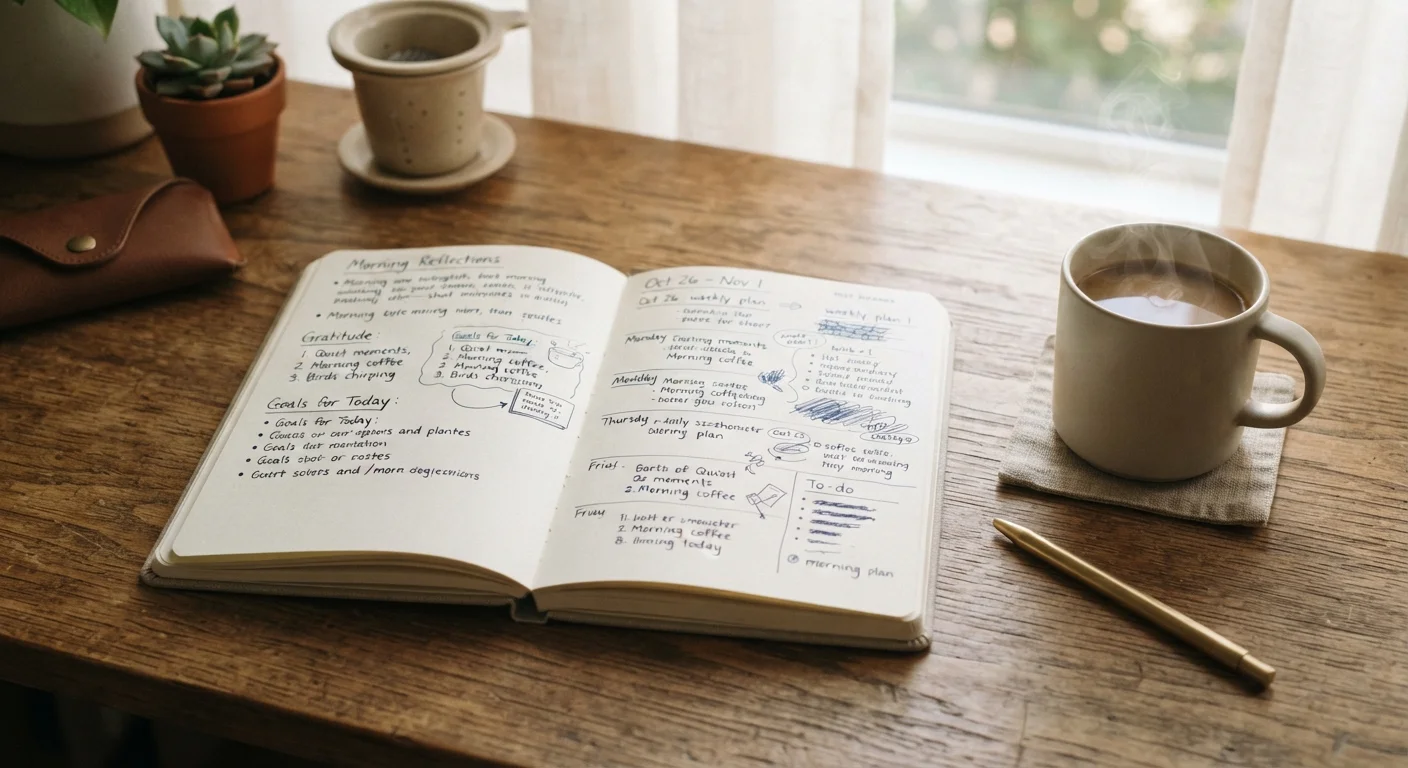
Photo: SummarizedReads.net | Just Read It! editorial
—— In This Article
Key Takeaways
- Research links expressive writing to reduced anxiety and improved emotional processing.
- You don't need a special notebook, a set routine, or perfect prose to start journalling.
- Short, consistent sessions of five to ten minutes tend to outperform occasional hour-long dumps.
- Prompts and simple formats lower the barrier when a blank page feels paralyzing.
- Journalling is a supportive tool, not a replacement for professional mental health care.
What the Research Actually Says
Journalling has decades of credible research behind it - this isn't wellness folklore. Psychologist James Pennebaker's widely cited work on expressive writing found that writing about thoughts and feelings surrounding stressful events was associated with measurable improvements in psychological well-being. Subsequent studies have linked regular reflective writing to reduced symptoms of anxiety and depression, improved immune markers, and better emotional regulation.
The mechanism appears to involve putting language around experiences that feel overwhelming or diffuse. When you write about an emotion rather than just feeling it, you engage the brain's prefrontal cortex - the reasoning center - alongside the limbic system, which processes emotion. This can reduce emotional intensity and help you see patterns you'd otherwise miss.
It's worth being clear about what the research doesn't say: journalling is not a clinical treatment, and it isn't appropriate as a standalone response to serious mental illness. Think of it as a low-cost, evidence-informed habit that supports mental clarity - much like pairing it with the broader strategies in a practical weekly mental health check-in.
Expressive writing
A specific form of journalling where you write openly about your thoughts and feelings around stressful or emotional experiences, rather than just recording events.
Cognitive offloading
The process of transferring thoughts from your mind onto paper or screen to free up mental bandwidth and reduce the feeling of being overwhelmed.
Emotional regulation
The ability to manage and respond to emotional experiences in a healthy, flexible way - rather than being overwhelmed by or suppressing them.
Habit stacking
A behaviour-change technique where you attach a new habit to an existing one, using the established routine as a reliable trigger for the new one.
Reflective writing
Writing that involves looking back on experiences or feelings with the intention of understanding them better, not just describing what happened.
What You Need to Begin (Almost Nothing)
One of the most common obstacles to starting a journalling practice is the idea that you need the right notebook, the right pen, or the right mindset. You don't. A spare notebook from the back of a drawer, a free notes app, or a basic word processor is entirely sufficient.
If you'd like to invest a little, an affordable lined notebook and a pen you find comfortable to hold are genuinely all you need. Keeping your setup simple also keeps the barrier low - if journalling requires hunting for supplies, you won't do it. That same principle of removing friction underlies nearly every sustainable wellness habit, as explored in our self-care starter framework.
Keep Your Setup Boring on Purpose
Resist the urge to buy a beautiful journal before you've built the habit - it creates an unspoken pressure to produce worthy content. Start with whatever writing surface you already own. Once you've journalled consistently for a few weeks, you'll know whether an upgrade actually motivates you.
Simple Formats That Actually Work
A blank page can feel paralysing, especially at first. Structured formats eliminate that hesitation.
- Brain dump: Write everything on your mind without editing or filtering for five minutes. Don't reread it immediately. The goal is cognitive offloading, not literary output.
- Three things: Record three specific events, interactions, or observations from your day - factual, not evaluative. This builds an attention habit and grounds you in concrete experience.
- Prompted reflection: Use a single question to anchor the session. Examples include 'What am I avoiding right now?' or 'What would make tomorrow feel more manageable?'
- Gratitude with specificity: Rather than listing abstract positives, write one thing you're grateful for and exactly why. Specificity is what makes gratitude journalling research-supported rather than superficial.
You don't have to commit to one format permanently. Rotating approaches prevents the practice from becoming mechanical and keeps you genuinely engaged with the content.
Building the Habit Without Burning Out
The most common reason journalling habits collapse isn't lack of motivation - it's unrealistic expectations. Committing to a daily hour of self-reflection before you've managed five minutes is a setup for abandonment. Start with a realistic minimum: five minutes, at a time that already has a natural pause built in, such as morning coffee or the few minutes before bed.
Habit stacking - anchoring journalling to an existing routine - makes it easier to remember and sustain. You can also pair it with a weekly self-care audit to track whether the habit is holding.
Privacy matters too. If you're worried someone might read your journal, you won't write honestly. Decide upfront where you'll store it - a password-protected app or a physical journal kept somewhere private both work. Honest writing is where the benefit lives.
Missed Days Are Normal, Not Failures
Research on habit formation consistently shows that occasional missed days don't derail a habit - what matters is returning to the practice without self-criticism. If you miss several days, simply restart with a short session rather than trying to 'catch up.' Perfectionism is the most reliable way to abandon a journalling habit.
When Journalling Isn't Enough
Journalling is a wellness support tool, not a substitute for professional care. If you're experiencing persistent low mood, significant anxiety, trauma responses, or thoughts of self-harm, please reach out to a qualified mental health professional. Writing about difficult feelings can be a useful complement to therapy, but it doesn't replace it.
That said, journalling can be a meaningful first step toward recognising patterns in your mental state - noticing that your anxiety tends to spike on Sundays, for example, or that your mood consistently dips when sleep suffers. That kind of self-awareness is genuinely valuable data to bring to a therapist or primary care provider.
If you travel frequently and find that changes in routine affect your mental state, the grounding practices in this article translate well - see also our piece on managing anxiety while traveling for additional strategies suited to that context.
This article is for general informational and educational purposes only and does not constitute medical or mental health advice. If you have concerns about your mental health, please consult a qualified healthcare professional.
Frequently Asked Questions

Health Editorial Team
Health Editorial Team is the collective byline for our editorial team and contributor network. Articles published under this byline or an editorial pen name are researched, written, and reviewed according to our editorial standards for clarity, consistency, and independence before publication.
View author profile