
Managing Anxiety While Traveling: Practical Approaches for Nervous Travelers
Travel anxiety is common and valid. This article explores general coping strategies and preparation habits — not a substitute for professional support.
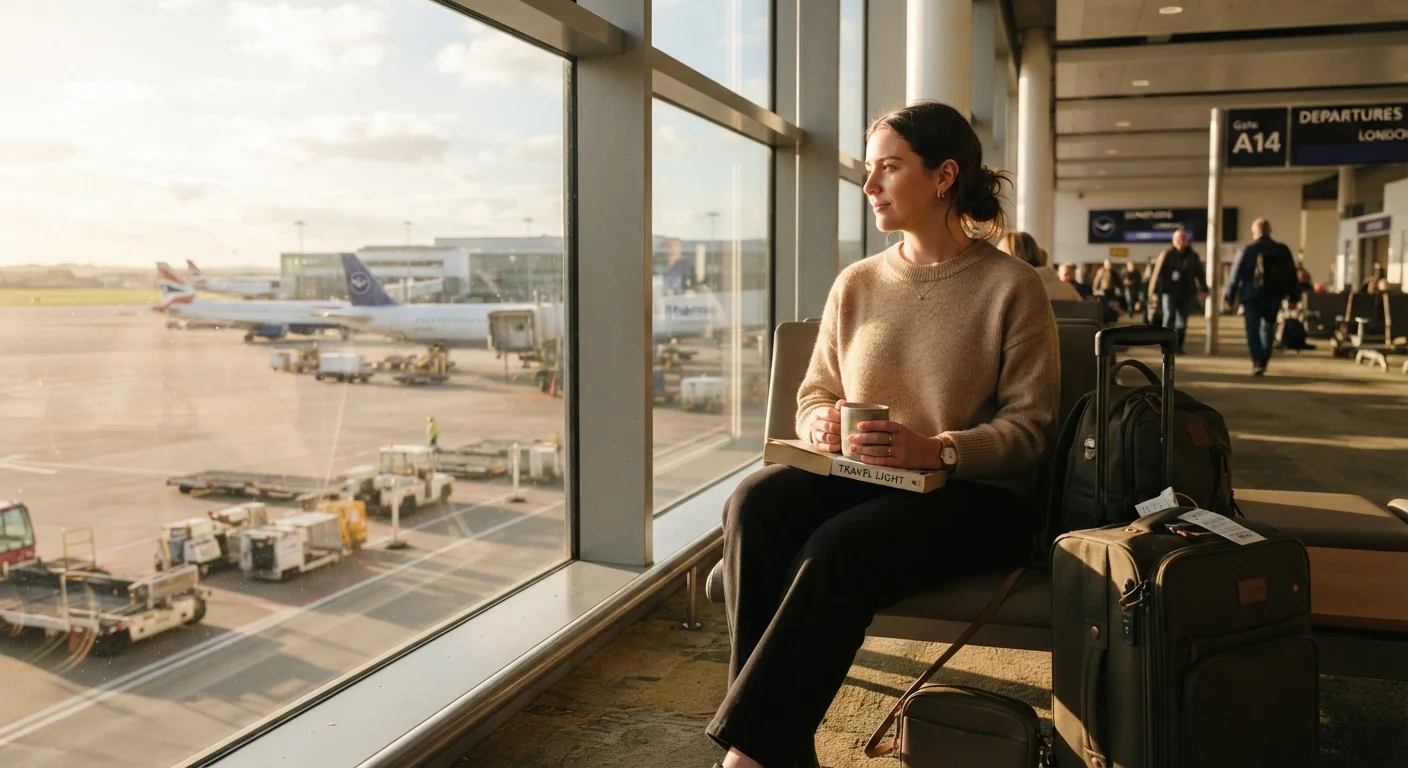
Photo: SummarizedReads.net | Just Read It! editorial
—— In This Article
Key Takeaways
- Travel anxiety is a common experience that preparation and planning can meaningfully reduce.
- Grounding techniques and breathing exercises are accessible tools that require no equipment.
- Avoiding triggers like excessive caffeine and doom-scrolling can prevent anxiety from escalating.
- Knowing your emergency contacts and backup plans in advance removes a major source of uncertainty.
- If anxiety regularly disrupts travel or daily life, consulting a mental health professional is worthwhile.
Why Travel Triggers Anxiety — and Why That's Normal
Unfamiliar environments, disrupted routines, and a sense of lost control are a reliable recipe for heightened stress. For some people, that stress tips into genuine anxiety — racing thoughts before departure, physical tension at airports, or persistent worry about what could go wrong. None of this makes someone a bad traveler. It makes them human.
Travel anxiety tends to cluster around a few predictable pain points: flying, navigating foreign systems, health concerns abroad, and the fear of something going wrong far from home. The good news is that most of these triggers respond well to preparation and deliberate coping habits. The strategies below are general approaches, not a clinical prescription — if anxiety significantly interferes with your daily life or travel, speaking with a qualified mental health professional is the right first step. For broader context on what quietly worsens anxiety, see common patterns that reinforce anxiety.
Over-prepare your logistics, not your imagination
Anxiety thrives in information gaps. When you don't know where your gate is, how long immigration typically takes, or what happens if your bag is delayed, your brain fills those gaps with worst-case scenarios. The antidote is structured preparation — not obsessive planning, but enough groundwork that the basics feel solved.
Write down your confirmation numbers, hotel address, and one local emergency contact. Know the rough layout of your arrival airport. Understand your travel insurance basics. Each item you confirm is one fewer thing your mind can catastrophize about on the plane.
Structured preparation closes the information gaps that anxiety feeds on.
Use controlled breathing when stress spikes in the moment
When anxiety escalates — in a security line, on a turbulent flight, or in an unfamiliar transit system — controlled breathing is one of the most accessible interventions available. A common approach is box breathing: inhale for four counts, hold for four, exhale for four, hold for four. Repeat several cycles.
This isn't a cure, but it engages the parasympathetic nervous system in a way that can dampen the physical stress response. It requires no equipment, no app, and no explanation to anyone around you. Practice it before your trip so it feels natural when you actually need it.
Box breathing is a no-equipment tool that can interrupt the physical stress response on the spot.
Limit caffeine and alcohol, especially during transit
Both caffeine and alcohol can amplify the physiological symptoms of anxiety — elevated heart rate, shallow breathing, difficulty sleeping — even when consumed in modest amounts. During the already-stressful transit phase of travel, this effect tends to be more pronounced.
This doesn't require abstinence. It means being deliberate: skipping the third airport coffee, declining the complimentary wine on a redeye if you're already tense. Staying hydrated with water is a simple replacement that supports general comfort on long flights — a topic explored further in our guide to managing long-haul flight discomforts.
Caffeine and alcohol can intensify anxiety symptoms — limit both during high-stress transit periods.
Create a grounding routine for disorienting moments
Arriving somewhere unfamiliar at an odd hour, jet-lagged and overstimulated, can make even confident travelers feel untethered. Having a small grounding routine can help — something as simple as finding a quiet corner, doing a sensory check (name five things you can see, four you can hear, three you can feel), and giving yourself five minutes before making decisions.
Jet lag compounds disorientation significantly. Understanding what's actually happening to your body across time zones — and realistic expectations for adjustment — can itself be reassuring. See our explainer on how the body responds to jet lag for more context.
A short grounding routine can anchor you during the disorienting first hours at a new destination.
Write through the worry before and during travel
Anxiety often circulates as vague, looping dread rather than specific, solvable problems. Writing forces it into concrete language, which tends to reduce its emotional charge. Before a trip, try writing out your specific worries and then noting — honestly — what you've already done to address each one. During the trip, a brief daily journal entry can process accumulated stress before it builds.
Journaling doesn't require skill or a special notebook. A notes app works. For anyone new to the habit, our guide on starting a journaling habit without overthinking it offers a practical, low-pressure approach.
Writing specific worries down shifts them from vague dread into concrete, addressable concerns.
Know your emergency plan before you need it
A significant source of travel anxiety is the fear of something going wrong with no plan in place. Spend twenty minutes before departure mapping out your basic emergency framework: who do you call if your passport is lost, which number is on your travel insurance card, where is the nearest embassy or consulate, and does someone at home have copies of your key documents?
Having clear answers to these questions doesn't mean you expect disaster — it means you've removed the uncertainty around worst-case scenarios. That removal is itself calming. For first-timers, the travel safety fundamentals guide walks through these contingencies in detail.
Knowing your emergency plan in advance removes uncertainty — the core fuel of travel anxiety.
Building Confidence Before You Leave Home
Much of travel anxiety feeds on uncertainty, and uncertainty shrinks when you do your homework. Walking through a solid pre-departure routine — documents, bookings, contingency contacts — eliminates entire categories of worry. Our pre-trip checklist covers the practical ground worth confirming before departure day.
If health concerns are part of your anxiety, a pre-trip conversation with your doctor is especially valuable. Our guide on what to discuss with a doctor before you depart outlines exactly what to raise. And if you're a first-time independent traveler, the travel safety fundamentals article is worth reading before you go.
Start with shorter trips to build confidence
If travel anxiety feels overwhelming, there's no rule requiring you to begin with a long international trip. A weekend road trip or a short domestic flight can serve as a genuine trial run for your coping strategies. Gradually increasing the complexity of your travel builds familiarity and confidence over time. The trip planning basics hub has practical guidance for trips at every scale.
This article is for general informational purposes only and is not a substitute for advice from a qualified mental health professional. If anxiety significantly affects your daily life or travel, please seek support from a licensed provider.

Travel Editorial Team
Travel Editorial Team is the collective byline for our editorial team and contributor network. Articles published under this byline or an editorial pen name are researched, written, and reviewed according to our editorial standards for clarity, consistency, and independence before publication.
View author profile