
Appliance Energy Ratings Explained: What the Labels Actually Tell You
Energy labels can be confusing. Here's what efficiency ratings really mean and how they affect your electricity bills over time.
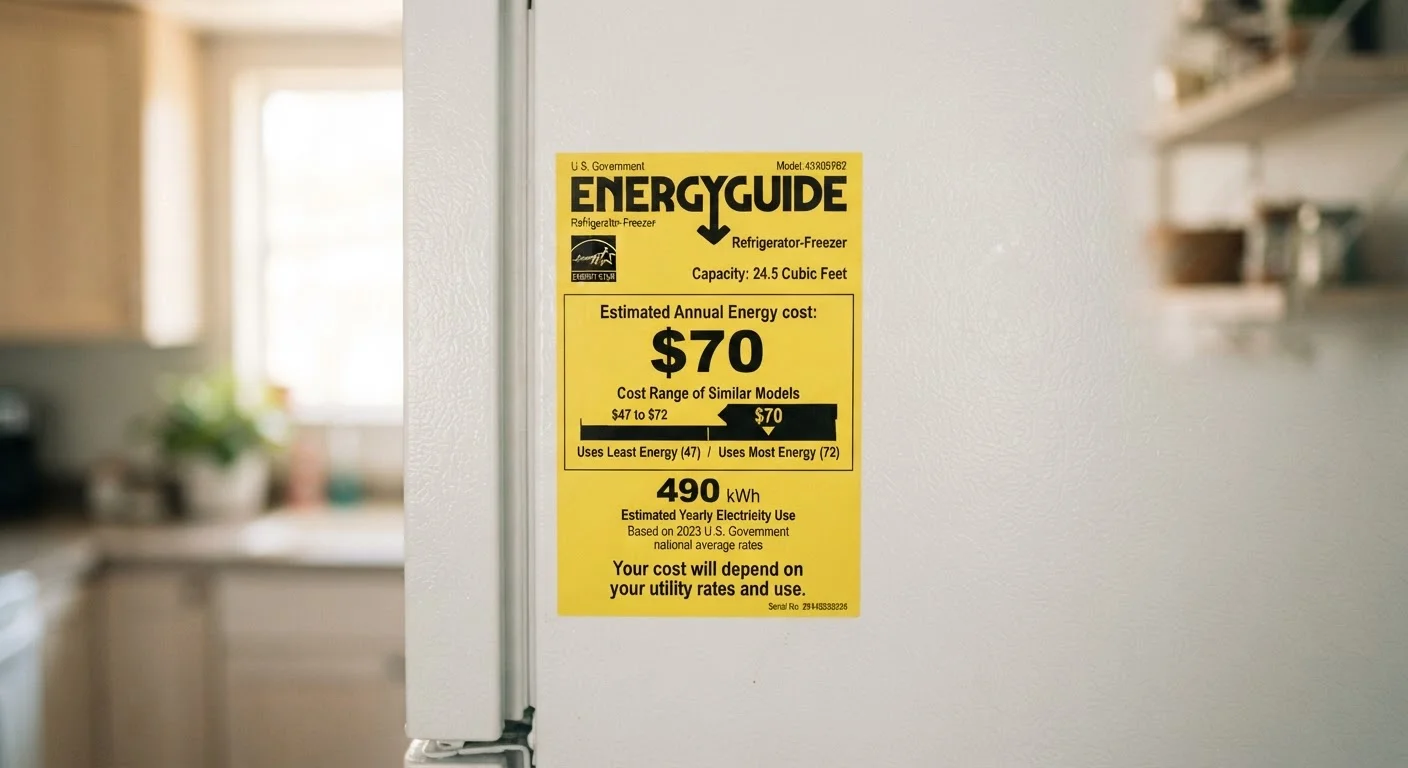
Photo: SummarizedReads.net | Just Read It! editorial
—— In This Article
Key Takeaways
- The yellow EnergyGuide label shows estimated annual energy use in kWh and an estimated yearly operating cost.
- The cost estimate on the label uses a national average electricity rate, not your actual local rate.
- ENERGY STAR certification means an appliance meets efficiency standards set above the federal minimum.
- A lower kWh number - not just a lower purchase price - often means lower lifetime cost.
- Energy ratings are most meaningful when comparing similar appliance types and sizes.
What the Yellow Label Is Actually Telling You
Walk into any appliance section and you'll see them immediately - large yellow tags hanging from refrigerators, washing machines, and dishwashers. These are EnergyGuide labels, and they're required by the Federal Trade Commission (FTC) on most major home appliances sold in the United States.
The label has three core pieces of information:
- Estimated annual energy use - measured in kilowatt-hours (kWh) per year, this tells you how much electricity the appliance is expected to consume over 12 months of typical use.
- Estimated annual operating cost - a dollar figure calculated using a national average electricity rate. This is a benchmark for comparison, not a bill prediction.
- A comparison bar - a scale showing where this model falls relative to similar models in the same category and size class.
The comparison bar is often overlooked but genuinely useful. It tells you at a glance whether you're looking at one of the more efficient options in its class or one of the least. Two refrigerators with the same capacity can vary significantly in annual energy use - sometimes by 100 kWh or more per year.
EnergyGuide Labels Don't Cover Every Appliance
The FTC's EnergyGuide requirement applies to specific categories: refrigerators, freezers, dishwashers, clothes washers, water heaters, room and central air conditioners, heat pumps, furnaces, and pool heaters, among others. Small countertop appliances - microwaves, toasters, coffee makers - are not required to carry the label. For those, manufacturer spec sheets or third-party testing resources may provide consumption data.
ENERGY STAR: What the Badge Means Beyond the Label
Many appliances carry an additional blue ENERGY STAR logo alongside their EnergyGuide label. This certification, administered by the U.S. Environmental Protection Agency (EPA), signals that the appliance meets efficiency thresholds set above the federal minimum - typically by 10-50% depending on the category.
ENERGY STAR is voluntary, which means manufacturers submit their products for testing and certification. Not every efficient appliance carries the badge, but it offers a quick shorthand when you're comparing options without wanting to do the math yourself.
It's worth noting that ENERGY STAR thresholds vary by appliance type. The standards for a certified dishwasher are separate from those for a certified refrigerator, so the badge is most meaningful when comparing within a category, not across different appliance types.
Check Your Utility's Rebate Programs
Many electric utilities offer cash rebates for purchasing ENERGY STAR certified appliances, particularly for refrigerators, washing machines, and heat pump water heaters. Rebate amounts and eligibility vary significantly by provider and location. Search your utility provider's website or visit energystar.gov to find programs available in your area before finalizing a purchase.
Why the Cost Estimate on the Label May Not Match Your Bill
The operating cost figure printed on the EnergyGuide label uses a national average electricity rate set by the FTC - not your local utility rate. Depending on where you live, your actual rate could be meaningfully higher or lower than that average.
To get a realistic estimate for your home, use this simple calculation:
- Find the appliance's annual kWh figure on the EnergyGuide label.
- Locate your electricity rate on your utility bill (look for a line showing cents per kWh).
- Multiply: annual kWh × your rate = your estimated annual cost.
For example, a washing machine rated at 120 kWh per year costs roughly $14.40 annually at $0.12/kWh - but closer to $22.80 at $0.19/kWh, which is common in higher-cost states. Over a 10-year lifespan, that difference compounds significantly.
This is also why it's worth thinking about energy efficiency alongside appliance longevity. See our appliance lifespan reference guide to understand how long each type of appliance typically lasts - an important variable in any real cost calculation.
~$300
Lifetime savings from efficient refrigerator choice
Based on a 130 kWh/year difference between models over a 15-year lifespan at $0.15/kWh - illustrating how small annual gaps compound over time.
10-50%
Efficiency gain required for ENERGY STAR certification
According to the U.S. EPA, ENERGY STAR thresholds vary by appliance category, with some requiring only a modest improvement and others requiring significantly more.
kWh/year
The key figure to focus on when comparing appliances
Kilowatt-hours per year is the standardized energy consumption figure on every EnergyGuide label, and the most reliable basis for cost comparisons between models.
How to Use Energy Ratings to Make Smarter Decisions
Energy ratings are a tool - they're most powerful when used in context. Here's how to apply them practically:
- Compare within the same size class. A compact refrigerator will almost always use less energy than a full-size model, so comparing their kWh numbers directly isn't meaningful. Use the comparison bar on the label to benchmark within a category.
- Think in total cost, not just purchase price. A model with a higher upfront cost but significantly lower annual energy use may cost less over its lifetime. Add up estimated operating costs over the appliance's expected lifespan alongside the sticker price.
- Check for utility rebates. Many local utilities offer rebates for purchasing ENERGY STAR certified appliances. These programs vary by provider and region, so check your utility's website directly.
- Usage habits affect real-world results. The energy figures on the label are based on standardized test conditions. How you actually use an appliance - how often, on what settings, whether it's properly maintained - influences real consumption. Our guide on getting the most from every appliance you own covers practical habits that affect performance and efficiency.
For a broader look at how appliance choices fit into your home's overall energy picture, see our article on energy efficiency upgrades that actually change your bills.
Frequently Asked Questions

Home Editorial Team
Home Editorial Team is the collective byline for our editorial team and contributor network. Articles published under this byline or an editorial pen name are researched, written, and reviewed according to our editorial standards for clarity, consistency, and independence before publication.
View author profile