
Appliance Warranties and Extended Cover: What the Terms Actually Mean
Manufacturer guarantees and extended warranties come with important limitations. Learn what's typically covered, what's excluded, and when extra cover is worth considering.
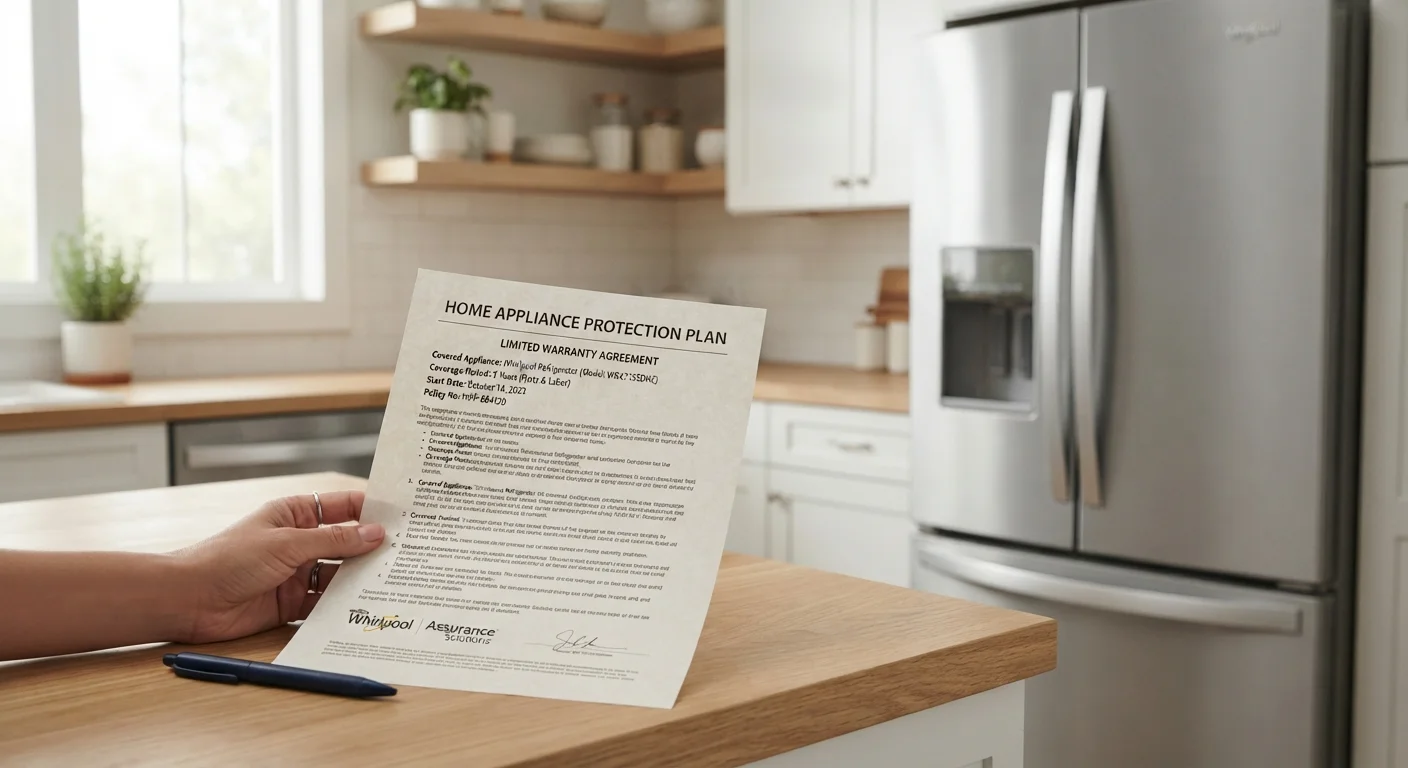
Photo: SummarizedReads.net | Just Read It! editorial
—— In This Article
Key Takeaways
- Manufacturer warranties typically cover defects in materials or workmanship, not damage from misuse or normal wear.
- Extended warranties are separate contracts - always read them independently from the manufacturer's coverage.
- Common exclusions include cosmetic damage, filters, light bulbs, and problems caused by improper installation.
- Keeping your purchase receipt and registration is essential to making a valid warranty claim.
- Extended coverage may be worth considering for high-cost appliances with complex electronics or compressors.
- Warranty length alone does not indicate quality - the scope of coverage and exclusions matter far more.
What a Manufacturer's Warranty Actually Promises
When you buy a major appliance, a manufacturer's warranty comes included - but "included" doesn't mean "comprehensive." These warranties are essentially a guarantee that the product will work as described under normal use conditions for a defined period. If it doesn't due to a manufacturing or materials defect, the maker agrees to repair or replace it at no cost to you.
The critical phrase is defect in materials or workmanship. This covers scenarios like a motor that burns out prematurely, a control board that fails without external cause, or a drum that cracks under standard use. It does not cover:
- Accidental damage (drops, spills, impacts)
- Damage from improper installation or voltage issues
- Normal wear and tear on parts like door seals or filters
- Cosmetic issues such as dents or surface scratches
- Pest or environmental damage
Coverage periods vary by appliance category and component. A typical structure might offer one year of full coverage on parts and labor, with an additional limited warranty on specific components - compressors in refrigerators, for instance, sometimes carry five- to ten-year coverage. Always read the actual warranty document rather than relying on the summary on a product page.
Product Registration and Your Rights
Registering your appliance with the manufacturer is strongly recommended but, under the Magnuson-Moss Warranty Act, a manufacturer generally cannot require registration as a condition of warranty coverage. That said, registration simplifies the claims process and ensures you receive safety recall notices. Keep your original receipt regardless - it remains your primary proof of purchase date.
How Extended Warranties and Service Contracts Work
An extended warranty - more accurately called a service contract - is a paid agreement that either picks up where the manufacturer's warranty ends or runs concurrently with it. These are sold by retailers, appliance manufacturers directly, and independent third-party administrators.
The key distinction consumers often miss: a service contract is a separate legal document with its own terms, exclusions, and claim procedures. Buying one does not simply extend the original warranty - it replaces it with a new set of rules. Before purchasing any plan, ask specifically:
- Does coverage begin immediately, or only after the manufacturer's warranty expires?
- Is there a deductible per service visit?
- Who authorizes and performs repairs - the manufacturer's network or a third party?
- What is the process if a repair is deemed uneconomical?
- Are parts covered at full replacement cost or depreciated value?
For a broader look at how warranty fine print shapes the value of any plan, see our guide to warranty terms and exclusions.
~$100-$300
Typical annual cost of a home appliance service contract
Cost varies by number of appliances covered, appliance type, and provider; always compare against estimated repair costs for the specific appliance.
1 year
Standard manufacturer warranty on parts and labor
One year is the most common baseline for major home appliances in the U.S., though component-specific coverage (e.g., compressors) is often longer.
5-10 years
Common sealed-system warranty on refrigerators
Many refrigerator manufacturers separately warrant the compressor and sealed refrigerant system for a longer period than the general parts and labor coverage.
Common Exclusions That Catch Consumers Off Guard
Both types of warranty documents contain exclusion lists - sections that enumerate what they will not cover. These are often written in dense legal language, but a few categories appear consistently enough to be worth knowing in advance.
Wear-and-tear items
Parts designed to be replaced periodically - water filters, light bulbs, door gaskets, belts, and similar components - are almost never covered. They are considered consumables, not defects.
Secondary or consequential damage
If a faulty ice maker leaks and damages your hardwood floor, most warranties will cover the ice maker repair but not the flooring. Consequential damage is a standard exclusion. Your homeowner's insurance may be more relevant for that type of loss.
Pre-existing conditions and installation issues
Damage that existed before the coverage began, or that resulted from improper installation, is routinely excluded. This is why professional installation - especially for gas appliances or built-in units - is important both for safety and for preserving warranty eligibility.
"Acts of God" and external causes
Power surges, floods, fire, and similar external events fall outside typical warranty coverage. A surge protector is inexpensive insurance for electronics-heavy appliances; for more serious events, homeowner's or renter's insurance is the relevant protection.
If you're also evaluating coverage for newer connected appliances, see our overview of smart appliance capabilities and limitations.
Keep a Simple Appliance File
Create a folder - physical or digital - for each major appliance. Store the purchase receipt, warranty booklet, installation records, and any service visit documentation. If you need to make a claim, having this information organized can significantly speed up the process and reduce disputes about coverage eligibility.
Deciding Whether Extended Coverage Is Worth the Cost
There's no universal answer, but a few practical considerations can guide the decision:
Appliance complexity and repair cost: Appliances with inverter compressors, integrated smart systems, or sealed refrigeration units tend to have expensive repairs. For those, extended coverage may offset meaningful risk. For a basic electric kettle or small countertop appliance, the math rarely works out in the consumer's favor.
Plan cost relative to appliance value: As a rough general principle, if a service contract costs more than 20-25% of the appliance's purchase price, it deserves careful scrutiny. Factor in the deductible per visit, if any.
Your existing protections: Some credit cards automatically extend manufacturer warranties by one year on purchases made with that card. Check your card benefits before paying for a separate plan. Additionally, some homeowner's and renter's insurance policies include appliance breakdown coverage as an add-on.
The administrator's reputation: Third-party service contracts are only as reliable as the company standing behind them. Research the administrator - not just the retailer selling the plan - before committing. Disputes about denied claims are common with less reputable providers.
It's also worth noting that extended warranties are frequently a high-margin product for sellers, which is why they're often presented at checkout. Understanding that dynamic - similar to add-ons that quietly inflate a final price - helps you evaluate the offer more objectively.
Frequently Asked Questions

Home Editorial Team
Home Editorial Team is the collective byline for our editorial team and contributor network. Articles published under this byline or an editorial pen name are researched, written, and reviewed according to our editorial standards for clarity, consistency, and independence before publication.
View author profile