
Smart Home Appliances: Capabilities, Limitations, and What the 'Smart' Label Really Means
Wi-Fi-connected appliances promise convenience, but the reality is more nuanced. Here's an honest look at what smart features do — and don't — deliver.
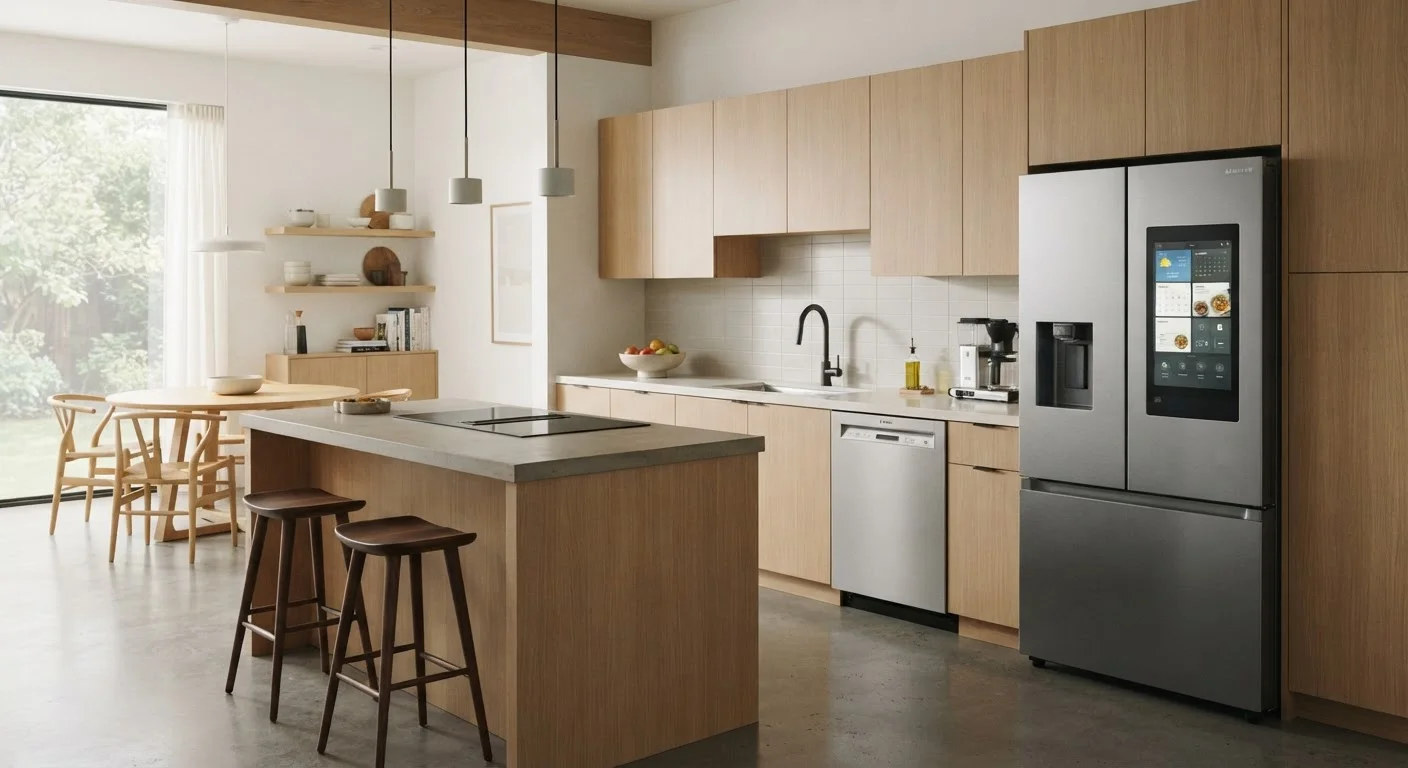
Photo: SummarizedReads.net | Just Read It! editorial
—— In This Article
Key Takeaways
- The 'smart' label covers a wide range of features, from basic Wi-Fi scheduling to complex AI-driven automation.
- Many smart appliance features require ongoing app support, cloud services, or subscriptions that can disappear over time.
- Smart appliances don't automatically save energy - how you use them matters more than connectivity alone.
- Compatibility with your home's Wi-Fi, voice assistant, or smart hub isn't guaranteed without checking specifications first.
- Understanding a product's actual feature set - not its marketing headline - is essential before purchasing.
What Does 'Smart' Actually Mean on an Appliance?
Walk through any appliance showroom and you'll see the word 'smart' applied to everything from refrigerators to toaster ovens. But the term has no standardized legal definition. In practice, 'smart' typically signals one or more of the following: Wi-Fi or Bluetooth connectivity, remote control via a smartphone app, compatibility with a voice assistant, automated scheduling, or the ability to send diagnostic notifications.
The catch is that manufacturers apply the label selectively and inconsistently. A washing machine that lets you start a cycle remotely and one that monitors detergent usage, learns your habits, and adjusts water temperature automatically can both carry the 'smart' badge. Before attributing value to the label, it helps to identify exactly which features are included - and whether those features solve a real problem in your household.
For a broader look at what to prioritize when setting up your home, see our first-time buyer's orientation to home appliances.
Common Myths About Smart Appliances - Corrected
Consumer expectations around smart appliances are often shaped by marketing rather than hands-on experience. The myth-and-fact pairs below address the most persistent misconceptions, drawn from how these products actually perform in everyday homes.
Myth
Smart appliances automatically save energy just by being connected.
Fact
Connectivity alone doesn't reduce energy use - only deliberate scheduling or behavioral changes driven by usage data can do that.
The assumption is that a Wi-Fi-enabled appliance optimizes itself. In reality, most smart appliances simply report data or allow remote control. An app that shows you your refrigerator's energy consumption doesn't lower it - you have to act on that information. Scheduling features can help if your utility offers time-of-use pricing, but that requires setup and an eligible rate plan. The U.S. Department of Energy notes that behavioral changes, not connectivity, drive meaningful home energy savings.
Myth
All smart appliances work seamlessly with any voice assistant or smart hub.
Fact
Compatibility depends on the specific ecosystem each appliance supports, and not all devices work across all platforms.
A refrigerator marketed as 'smart home compatible' may only integrate with one or two platforms - for example, Amazon Alexa but not Google Home, or vice versa. Matter, an industry interoperability standard launched in 2022, aims to improve cross-platform compatibility, but not all appliances support it, and implementation varies. Always verify specific ecosystem compatibility before purchasing, particularly if you've already invested in one platform's devices.
Myth
Smart appliances are more reliable because they can diagnose their own problems.
Fact
Self-diagnosis features can flag error codes and alert you to issues, but they don't prevent breakdowns or replace professional repair.
Remote diagnostics - the ability for an appliance to send error alerts to your phone or to a service center - is a genuine convenience. It can speed up service calls by giving technicians advance information. However, added electronics and connectivity components introduce their own failure points. Touchscreens, wireless modules, and proprietary sensors can malfunction and may be expensive to replace. An appliance with more technology is not inherently more durable than a simpler one.
Myth
Once you buy a smart appliance, its features are yours permanently.
Fact
Many smart features depend on manufacturer cloud servers and apps that can be discontinued, disabling those functions without warning.
This is one of the most consequential limitations consumers overlook. When a manufacturer ends support for its smart platform - which has happened with multiple appliance and electronics brands - app-dependent features such as remote control, scheduling, or voice integration can stop working. The appliance's core mechanical function usually continues, but any 'smart' features tied to discontinued services are lost. This risk is especially relevant for appliances expected to last a decade or more.
Myth
A smart appliance's app interface makes it easier for everyone to use.
Fact
App-based controls add steps for tasks that physical controls handle more directly, and usability varies widely between manufacturers.
For some users - particularly those with mobility limitations who benefit from remote control - app interfaces genuinely improve accessibility. For most everyday tasks, however, requiring a smartphone, a Wi-Fi connection, and an app login to start a wash cycle adds friction rather than removing it. App quality also varies significantly: some are well-designed and regularly updated, while others are poorly maintained, slow, or require frequent re-authentication. Reading independent user reviews of the companion app - not just the appliance - is a worthwhile step before buying.
Hidden Costs and Long-Term Considerations
Smart appliances typically cost more upfront than their conventional counterparts. That premium might be justified - but only if the features you're paying for remain functional over the appliance's lifespan, which can be ten to fifteen years or longer.
One underappreciated risk is software obsolescence. Manufacturers aren't required to support apps or cloud platforms indefinitely. If a company discontinues its smart platform - as several appliance brands have done - connected features can stop working entirely, leaving you with a conventional appliance at a smart-appliance price.
App Discontinuation Is a Real Risk
Several appliance manufacturers have shut down smart platforms in the past, disabling connected features for existing customers. Before paying a premium for smart functionality, check whether the manufacturer has a published software support policy and what happens to features if the service is discontinued. There is currently no industry-wide standard requiring manufacturers to maintain app support for any set period.
Running costs deserve equal scrutiny. Smart displays, always-on Wi-Fi radios, and companion hubs all draw standby power. For a realistic picture of what your appliances cost to run day-to-day, our article on the hidden costs of running household appliances breaks this down clearly. Warranty terms are another variable - check whether smart-specific components (screens, sensors, connectivity modules) are covered separately or excluded, as explained in our guide to appliance warranties and extended cover.
Getting Real Value From Connected Appliances
Smart features deliver genuine value when they align with how you actually live. Remote monitoring is genuinely useful if you travel frequently. Scheduling dishwasher or laundry cycles to run during off-peak electricity hours can reduce costs - but only if your utility offers time-of-use rates and you actively configure the schedule. Energy-use dashboards are informative, though the savings they generate depend entirely on whether you change your habits in response.
Before buying, ask four practical questions: Does this feature work without an internet connection? Will it still function if the companion app is discontinued? Is it compatible with the voice assistant or smart hub I already own? And is there a subscription required for full functionality?
Understanding the efficiency rating of any appliance - smart or not - remains equally important. Our explainer on appliance energy ratings covers what those labels genuinely tell you versus what they omit. And regardless of how connected your appliances are, everyday habits have an outsized effect on performance and longevity - see our practical guide on getting the most out of every appliance you own.
~30%
Smart appliance premium over standard models
Industry analysts generally estimate smart appliances carry a 20-40% price premium over comparable non-connected models, varying by category and feature set.
2-5 years
Typical manufacturer app support window
Consumer advocacy research suggests many manufacturers provide software updates and app support for only two to five years post-launch, well short of typical appliance lifespans.

Home Editorial Team
Home Editorial Team is the collective byline for our editorial team and contributor network. Articles published under this byline or an editorial pen name are researched, written, and reviewed according to our editorial standards for clarity, consistency, and independence before publication.
View author profile