
The Hidden Costs of Running Household Appliances
Purchase price is just the beginning. Learn how running costs, maintenance, and repair fees add up across common home appliances.
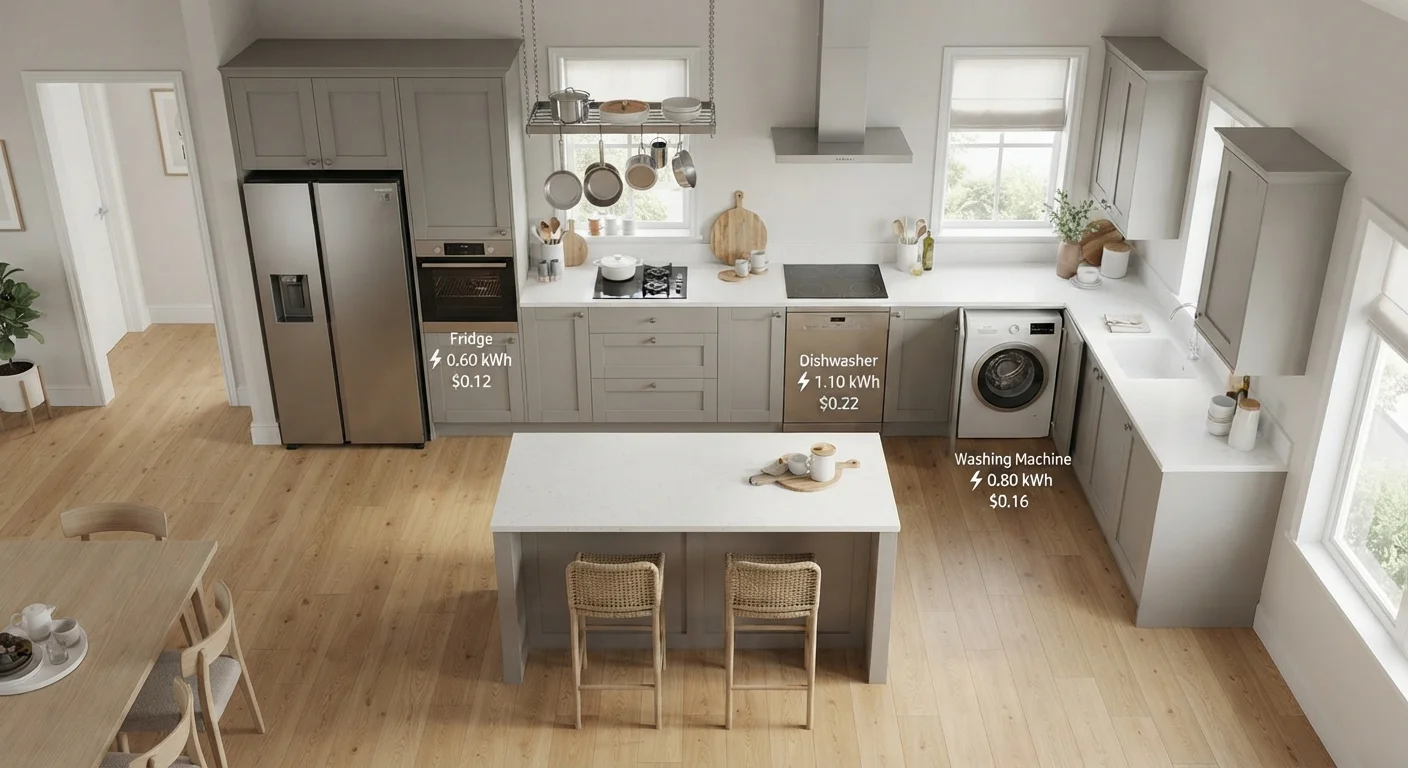
Photo: SummarizedReads.net | Just Read It! editorial
—— In This Article
Key Takeaways
- Running costs - electricity, water, and consumables - often surpass the original purchase price over an appliance's lifetime.
- Energy efficiency ratings directly affect how much you pay on utility bills each month.
- Routine maintenance extends appliance lifespan and reduces the risk of costly repairs.
- Older, inefficient appliances can cost significantly more to run than newer, efficient models.
- Repair costs and parts availability should factor into any appliance purchase decision.
- Small habits - like full loads and temperature settings - meaningfully reduce daily running costs.
Why the Purchase Price Is Only the Beginning
When a household appliance catches your eye, the price tag is usually the first number you see. It's rarely the most important one. The electricity it draws every day, the water it consumes, the filters it needs, and the technician you'll eventually call - these costs accumulate over years and, for many appliances, comfortably exceed what you paid at the register.
This concept is known as Total Cost of Ownership (TCO). Our total cost of ownership guide explains the full framework, but the core idea is straightforward: evaluate what an appliance costs to live with, not just to buy. A cheaper unit with higher energy consumption can cost more over five years than a pricier, efficient alternative.
If you're setting up a home for the first time, our first-time buyer's orientation covers how to prioritize appliance choices before running costs even enter the picture.
Energy Consumption: Your Biggest Ongoing Expense
Electricity is the largest recurring cost for most appliances. In the U.S., the Federal Trade Commission requires appliance manufacturers to attach an EnergyGuide label to most major appliances. This yellow label estimates annual energy consumption in kilowatt-hours (kWh) and projects a typical yearly operating cost based on national average electricity rates - giving you a direct comparison point between models before you buy.
~$2,000
Average U.S. annual household electricity bill
According to the U.S. Energy Information Administration, the average American household spends approximately this amount on electricity each year, with appliances accounting for a large share.
13-14%
Share of home electricity used by refrigerators
The U.S. Department of Energy estimates that refrigerators account for roughly 13-14% of a typical home's electricity consumption due to continuous operation.
10-50%
Potential energy reduction from efficient appliances
The EPA's ENERGY STAR program indicates that certified appliances can use 10-50% less energy than standard models, depending on appliance category.
Refrigerators and freezers run continuously, making them steady contributors to your electricity bill. Clothes dryers and electric water heaters are high-draw appliances that cycle on frequently. Dishwashers and washing machines are more controllable - running full loads and using lower temperature settings are among the simplest ways to reduce their energy footprint.
For a deeper look at how cooktop type affects energy costs, see our induction vs. gas vs. electric cooktop comparison.
Use the EnergyGuide Label Before You Buy
Every major appliance sold in the U.S. is required to display an EnergyGuide label showing estimated annual energy use and operating cost. Comparing these labels side-by-side between two models takes seconds and gives you a concrete, apples-to-apples cost comparison. The projected annual cost is based on national average electricity rates - if your local rate is higher, your actual cost will be too.
Maintenance, Repairs, and the Cost of Neglect
Routine maintenance is the most underbudgeted appliance expense. Skipping it doesn't eliminate the cost - it defers and amplifies it. Clogged dryer vents reduce efficiency and create fire risk. Dirty refrigerator condenser coils force the compressor to work harder, shortening its life. Limescale buildup in dishwashers and washing machines degrades performance and damages internal components over time.
Repair costs vary considerably by appliance type and age. Labor charges alone can run $75-$150 per service call in many U.S. markets before any parts are replaced. For older appliances, parts may be difficult to source, pushing repair costs higher. Our appliance lifespan reference provides typical longevity benchmarks that can help you judge whether repair or replacement makes more sense at a given point in an appliance's life.
Extended warranties and service plans are another cost category worth scrutinizing. They can provide peace of mind, but it's worth reading the terms carefully - many have exclusions, deductibles, or caps that limit their practical value.
Water, Consumables, and the Costs You Forget to Count
Beyond electricity, several appliances carry water and consumable costs that are easy to overlook. Dishwashers use detergent, rinse aid, and water - typically 3-5 gallons per cycle for modern units. Washing machines require detergent and, in hard-water areas, water-softening products. Refrigerators with water dispensers and ice makers need filter replacements, usually every six months.
These costs are individually small but they're persistent. A filter replacement twice a year, detergent purchased monthly, and descaling tablets quarterly all add up to a meaningful annual sum across multiple appliances.
For a thorough breakdown of how these costs play out for one specific appliance, our guide on everything that goes into owning a dishwasher walks through the full picture from installation to daily use.
Practical Habits That Lower Running Costs Over Time
Many running costs respond directly to how you use and care for your appliances. Small, consistent habits compound into meaningful savings over the years an appliance is in service.
- Run full loads. Dishwashers and washing machines use roughly the same energy and water whether full or half-full. Waiting for a full load is one of the easiest efficiency improvements available.
- Match temperature to the task. Cold-water washing cycles work well for most laundry and consume significantly less energy than hot-water cycles. Lower oven temperatures and shorter preheat times reduce cooking costs.
- Clean and inspect regularly. Check dryer lint traps after every load, clean refrigerator coils annually, and descale water-using appliances every few months - especially in hard-water regions.
- Don't ignore warning signs. Unusual noises, longer cycle times, or unexpected increases in your utility bill often signal a component that needs attention before it fails entirely.
For a comprehensive set of appliance care habits, see our guide on getting the most out of every appliance you own. And if you're exploring broader ways to cut home energy use, energy efficiency upgrades that actually change your bills covers improvements beyond individual appliances.
Frequently Asked Questions

Home Editorial Team
Home Editorial Team is the collective byline for our editorial team and contributor network. Articles published under this byline or an editorial pen name are researched, written, and reviewed according to our editorial standards for clarity, consistency, and independence before publication.
View author profile