
Induction vs Gas vs Electric Cooktops: A Practical Comparison for Home Cooks
Each cooktop type has real strengths and limitations. This side-by-side comparison covers performance, safety, running costs, and installation.
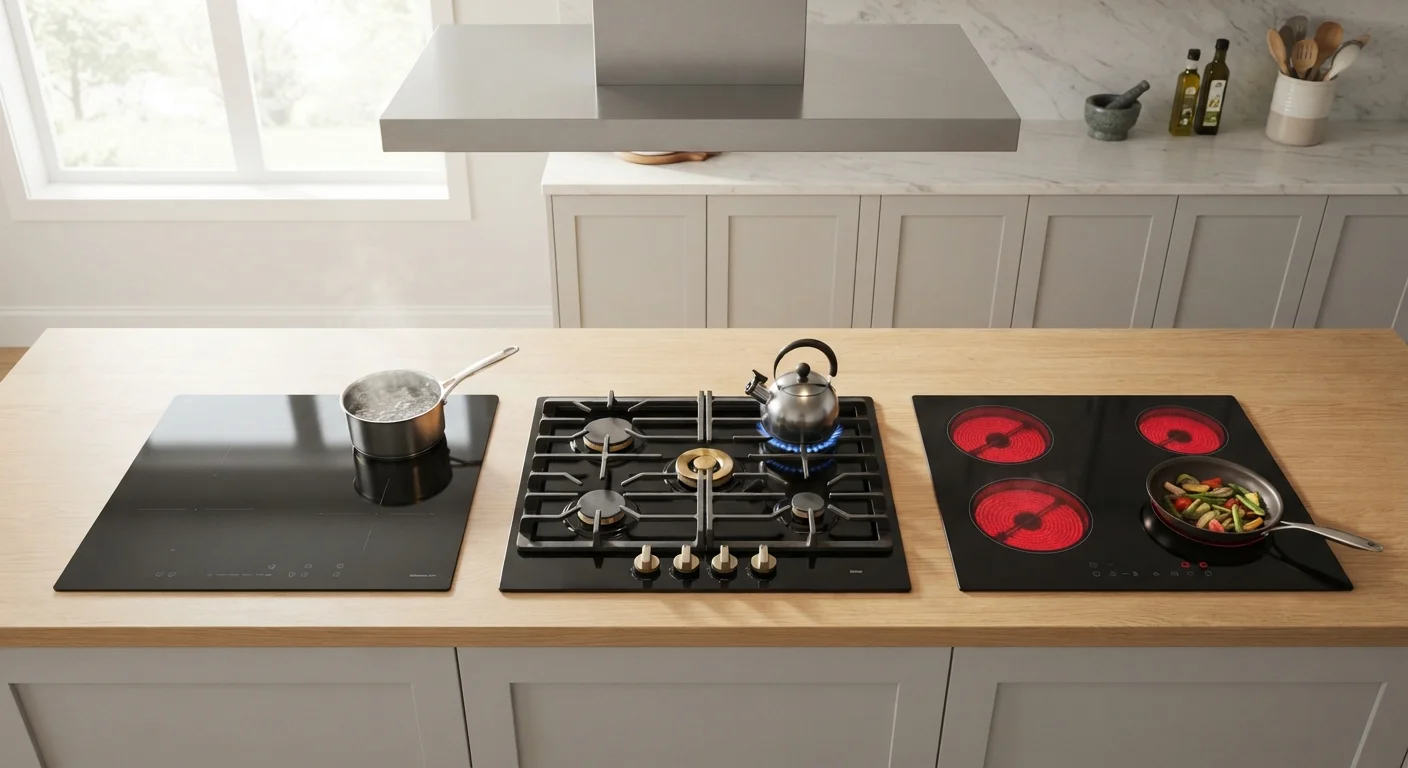
Photo: SummarizedReads.net | Just Read It! editorial
—— In This Article
Key Takeaways
- Induction cooktops heat faster and use less energy than gas or electric, but require compatible cookware.
- Gas cooktops offer instant, visible flame control and work during power outages, but involve combustion and ventilation concerns.
- Electric coil and smooth-top electric cooktops are generally the least expensive to purchase but can be slower and harder to control precisely.
- Installation requirements - gas lines, electrical circuits, ventilation - can significantly affect overall project cost.
- Running costs depend on local utility rates; comparing electricity vs. gas prices in your area matters more than national averages.
How Each Cooktop Type Works
Understanding the underlying technology helps explain each type's strengths and trade-offs.
- Gas cooktops burn natural gas or propane through open burners, producing a visible flame. Heat is immediate and fully adjustable by turning a knob.
- Electric coil and smooth-top (radiant) cooktops pass electricity through heating elements beneath a ceramic or coil surface. Heat builds gradually and dissipates slowly after you turn them off.
- Induction cooktops use electromagnetic fields to heat the cookware itself - not the surface. The glass top stays relatively cool to the touch, and only the pan gets hot.
This fundamental difference in how heat is generated shapes everything from cooking performance to safety and energy bills. For a broader look at how appliance technology affects long-term costs, see our guide to hidden appliance running costs.
Performance: Heat Control, Speed, and Precision
For most home cooks, performance comes down to three things: how fast the cooktop heats up, how precisely you can control temperature, and how evenly heat distributes across a pan.
| Induction | Gas | Electric | |
|---|---|---|---|
| Heat-up speed | Very fast | Fast | Slow to moderate |
| Temperature precision | Excellent | Excellent | Fair |
| Surface burn risk | Low (cool surface) | Moderate (open flame) | High (stays hot after use) |
| Energy efficiency | ~85-90% | ~40% | ~74% |
| Installation complexity | 240V circuit required | Gas line required | 240V circuit (common) |
| Cookware restriction | Magnetic pans only | Any cookware | Any flat-bottomed cookware |
| Typical unit price range | Mid to high | Mid to high | Low to mid |
| Works during power outage | No | Usually yes | No |
Gas offers the most intuitive control - you can see the flame size and adjust instantly. Induction matches or exceeds gas in response time and is measurably faster at bringing water to a boil in independent testing by consumer organizations. Electric smooth-tops heat evenly but respond slowly; coil elements are the least consistent.
If your cooking style relies on techniques like searing, rapid simmering adjustments, or wok cooking over high heat, the differences between these types will be more noticeable in practice.
Safety Considerations
Safety is a meaningful differentiator, especially in households with children or older adults.
Gas Cooktops and Indoor Air Quality
Gas combustion releases nitrogen dioxide and other byproducts into kitchen air. Studies from health and environmental researchers suggest these levels can be a concern, particularly in smaller or poorly ventilated kitchens. If you use a gas cooktop, a range hood vented to the outdoors - rather than a recirculating filter model - provides meaningfully better air exchange. Consult an HVAC professional if you are unsure about your current ventilation setup.
- Gas involves open flame and combustion byproducts. Indoor air quality can be affected without adequate ventilation. A gas leak - while uncommon with properly installed equipment - poses a serious hazard. Ventilation hoods rated for gas cooking are strongly recommended.
- Electric surfaces stay hot long after being turned off, which increases burn risk. However, there is no combustion risk or gas-related air quality concern.
- Induction surfaces are the coolest to the touch during and after cooking. Only the cookware heats up, which significantly reduces accidental burn risk. There is no open flame and no combustion.
Research published by health and environmental organizations has raised questions about indoor nitrogen dioxide levels from gas cooking. If you have a gas cooktop, running a range hood vented to the outdoors - not just a recirculating filter - is considered good practice.
Installation and Compatibility Requirements
Installation is one area where costs can diverge sharply from the sticker price of the appliance itself.
Check Before You Commit to a Switch
Before purchasing a new cooktop type, confirm what infrastructure your kitchen already has - gas line, electrical panel capacity, and circuit type. Getting a quote from a licensed electrician or plumber before buying the appliance can prevent budget surprises. Permit requirements for gas work vary by locality, so check with your local building department as well.
- Gas requires an existing gas line or the cost of running one, plus a licensed plumber or gas fitter. In kitchens without gas infrastructure, this can add hundreds to over a thousand dollars to the project.
- Electric smooth-top and coil cooktops typically need a dedicated 240-volt circuit, which most modern kitchens already have. Replacement is usually straightforward.
- Induction also requires a 240-volt circuit. If your kitchen currently has gas, switching to induction means electrician work and potentially updating your panel - costs worth factoring in upfront.
Cookware compatibility is an additional induction-specific consideration: pots and pans must be magnetic (cast iron and most stainless steel work; aluminum and copper typically do not). A simple magnet test at the bottom of a pan confirms compatibility. Replacing incompatible cookware is an often-overlooked line item. Overlooked compatibility factors like this can change the total cost picture significantly.
Running Costs: What You'll Actually Pay Over Time
Purchase price is only part of the equation. Running costs accumulate quietly over years of daily use.
~85-90%
Induction cooking energy efficiency
The U.S. Department of Energy estimates induction cooking transfers roughly 85-90% of energy directly to cookware.
~40%
Gas cooktop energy efficiency
Gas cooktops lose a significant portion of heat to the surrounding air, making them considerably less efficient than induction.
- Induction is the most energy-efficient option. Because heat transfers directly to the cookware with minimal loss, less energy is wasted. The U.S. Department of Energy has noted induction cooking is roughly 85-90% efficient, compared to about 74% for smooth-top electric and 40% for gas.
- Gas costs depend on local natural gas rates, which vary widely by region. In areas where gas is cheap relative to electricity, gas can still be cost-competitive despite lower efficiency.
- Electric running costs depend entirely on local electricity rates. In regions with high electricity prices, electric cooktops can be more expensive to run than gas over time.
The practical takeaway: check your own utility rates before assuming one type is cheaper to operate. Your local utility provider's website or a recent bill will show your per-kilowatt-hour and per-therm rates, which you can use to estimate real monthly cooking costs.
For help building a fuller comparison tailored to your situation, see how to conduct your own structured appliance comparison.

Home Editorial Team
Home Editorial Team is the collective byline for our editorial team and contributor network. Articles published under this byline or an editorial pen name are researched, written, and reviewed according to our editorial standards for clarity, consistency, and independence before publication.
View author profile